On February 27, 2026, the Gender and Queer Studies Working Group at JCU hosted “Feminist Futures 2,” a full-day event dedicated to collaborative learning and exchange. Recently formed by faculty committed to strengthening gender and queer studies at the University, the working group organized the event with sponsorship from the Gender Studies minor and in collaboration with the Queer Alliance student club. “Feminist Futures 2” brought together more than 50 students, faculty, and staff members for a rich exploration of scholarship, pedagogy, and praxis.
The day began with a workshop led by Professor Marie Moïse, who guided an embodied activity interwoven with short readings of works by Black feminist scholars and activists, including Angela Davis and Alexis Pauline Gumbs. The session invited participants to situate gender studies within lived and embodied experiences, inspiring dialogue among participants. The morning continued with a creative workshop, led by Professors Eleonora Diamanti and Anna Gorchakovskaya, on the histories and meanings of the international feminist strike. Participants examined the transnational dimensions of the transfeminist movement and the ongoing political resonance surrounding it.
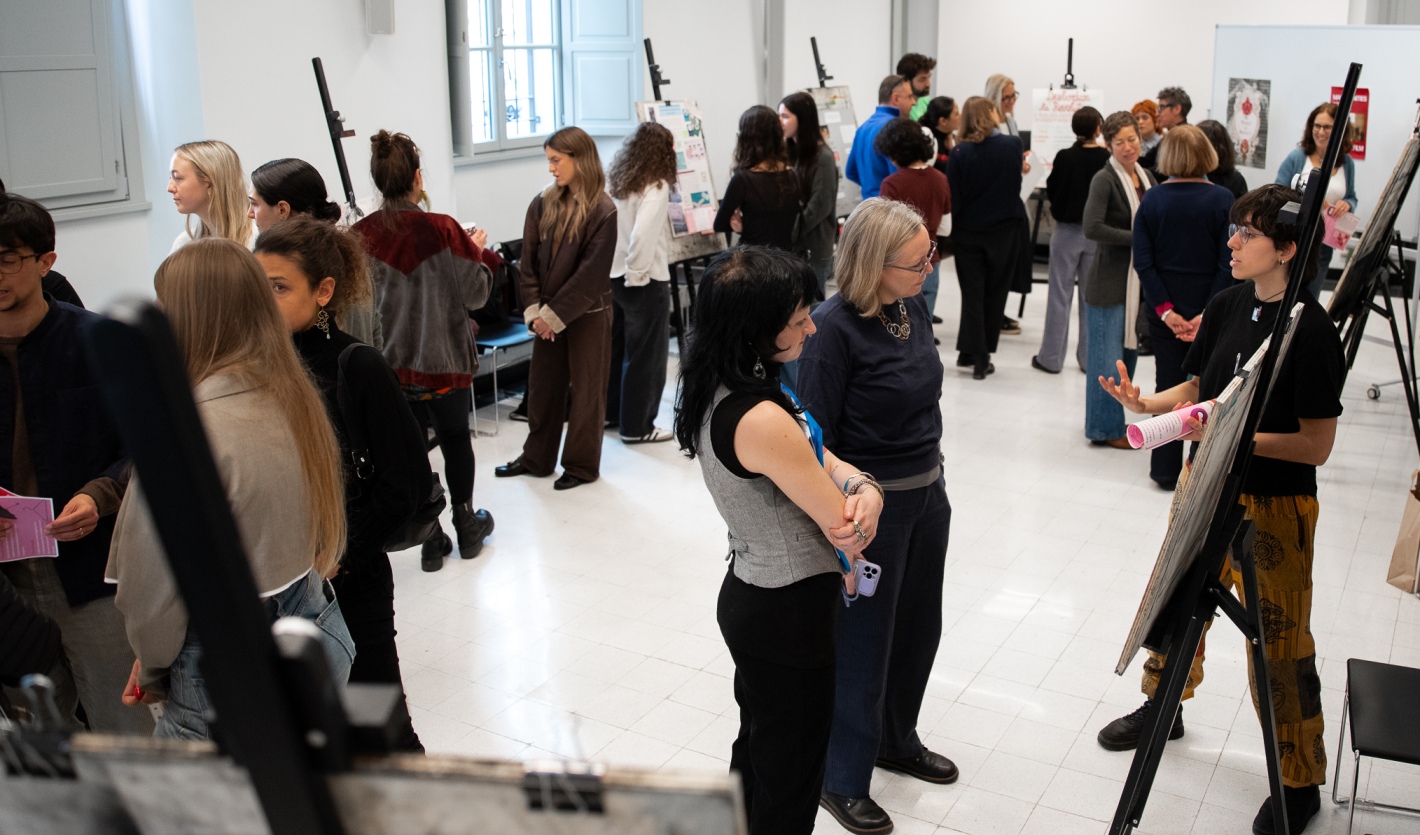
After lunch, the afternoon shifted to a research and teaching showcase. Short presentations and a poster session highlighted the diversity of work being produced within the University community. Projects focused on a wide range of topics, including the political valences of Mexican women’s embroidery practices, the limited attention to sexual and gender minorities’ health in Brazilian medical education, and the representation of diverse masculinities in film.
Professor Tara Keenan, a member of the Gender and Queer Studies Working Group, emphasized the intentional structure of the event. She said, “We wanted to put together an event that combined student and professors' scholarship with a praxis-oriented approach through the morning workshop. By bringing together this diverse group of students, scholars, and professionals to explore the concepts of feminism, queer, and gender studies, we wanted to cultivate a liberal arts approach. that comes to life in the space between disciplines. In these spaces, we can all find connection and inspiration for future projects and community action.”
Professor Miriam Tola, Coordinator of the Gender Studies Minor and member of the Working Group, underscored the collaborative spirit of the event and expressed appreciation for students’ contributions. “This event was truly a collective effort. Its success speaks to the vitality of gender and queer studies at JCU. I was particularly impressed by the breadth and scope of students’ projects, ranging from research on queer migration in the United States, to the visual communication of women’s movements in Poland, to the intersections between race, gender, and reproductive injustices,” she said.
Students echoed the importance of community-building and interdisciplinary dialogue. Charlie Massa (class of 2026) shared, “Events like this have spoken to my education because they have helped me build a community and expand my horizons. A lot of these topics I had never heard of.” Lu Whitaker (class of 2027) and Caleigh Forti (MA class of 2026) reflected on the day and shared, “Events like these are important as they bridge gaps between students and professionals from diverse backgrounds. We have the opportunity to make a change by creating a space for intersectional ideas to be discussed without fear of judgment or intervention.”
By combining scholarship with creative practices and community exchanges, “Feminist Futures 2” demonstrated the interdisciplinary nature of gender and queer studies. The event not only showcased current research and teaching at JCU but also paved the way for future academic and community initiatives.