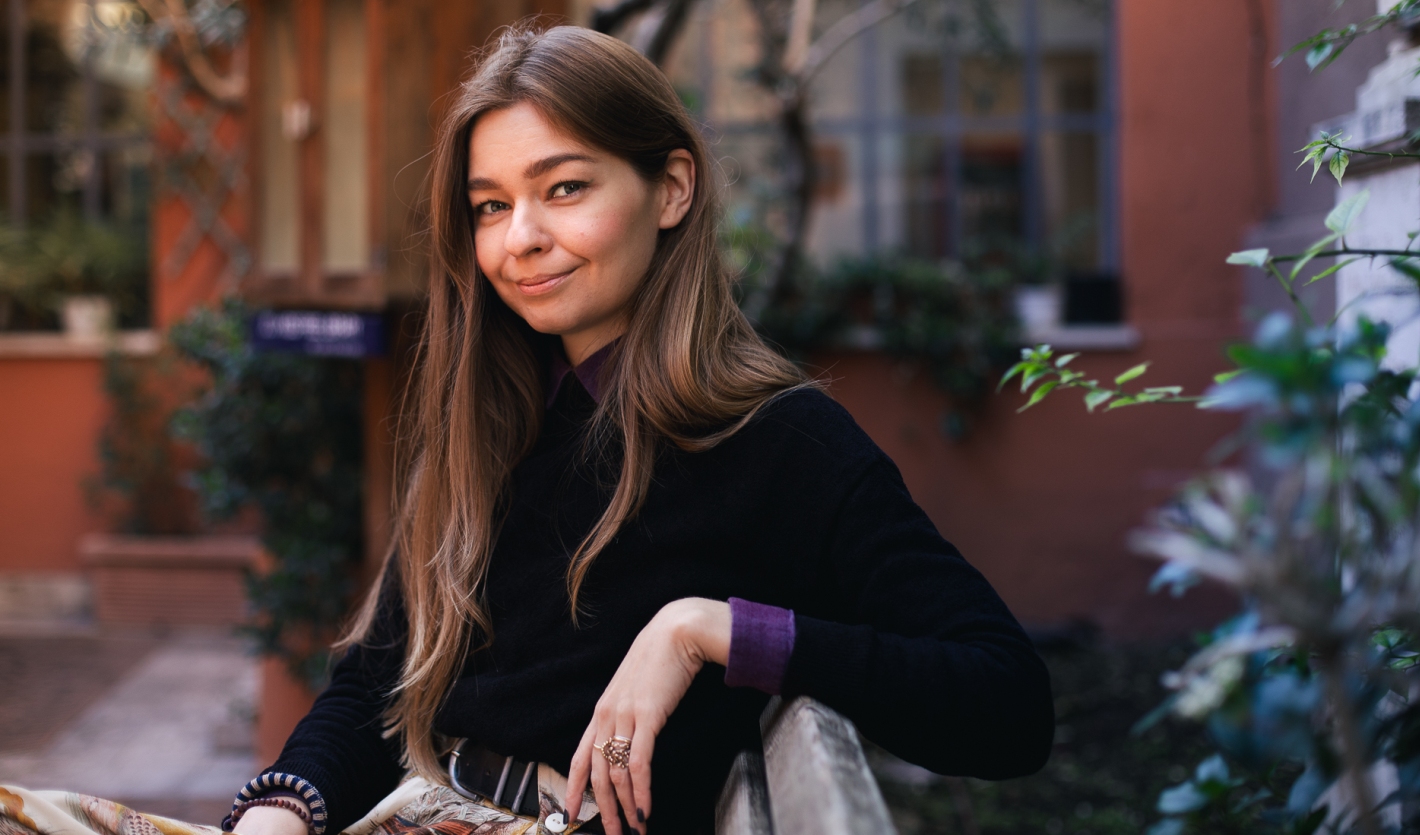
Anna Gorchakovskaya teaches in the Department of Communication and Media Studies. She is originally from Russia, and she came to Italy in her early 20s to study Art History in Bologna. She later pursued an MA degree in Gender Studies in Rome. She has worked as a curator and researcher for many museums, such as MAXXI and the National Gallery of Modern and Contemporary Art in Rome.
How did you go from studying literature and art history to teaching visual culture and visual activism?
I studied in what you would say is a liberal arts school, taking courses in art, literature, and linguistics. I already knew then of my interest in art history and the themes related to it. In the end, visual culture, media and cultural studies is where my interest has always lain. I just kept adding different things to my original field of studies, until it got to what I’m working on now, namely visual/cultural activism and protest aesthetics, often applied to the city of Rome.
What made you decide to pursue a career in education?
Even while I was working in curating and the art field in general, I was always interested in the “aftermath” of an exhibition. For me, the most important aspect of a showcase was the educational one: how the audience can make sense of images based on the viewing conditions we create.
When I was working at the MAXXI Museum as an Assistant Curator, I did a lot of guided tours and contributed to the public program accompanying the shows. I liked the idea of finding ways and languages to narrate the artworks. When I started teaching it felt like a very natural transition, but actually it wasn’t even a transition but more of an addition; I still work on curatorial projects.
What is your teaching philosophy?
I care a lot about creating a safe space for learning, but also for unlearning, given what I teach. Also, I think teaching is not just about creating that space single-handedly; it’s more about co-creating it with my students. It’s a mutual responsibility. It’s also important for me to make them feel like they are locals while they’re here. Through my classes, I try to give them an opportunity to work on things that are site-specific and community oriented. After all, they could be taking a visual culture course anywhere in the world, but they’re not; they are in Rome and I want their experience to be situated.
What I ask myself every semester is, how can we talk about the theory but also build a sort of a toolkit that students can use going forward? In the end, my aim is to make sure that the concepts we explore in the classroom can then be adapted to specific contexts.
Plus, since I work in the art world, I can create connections for my students. During my classes, they have multiple opportunities to meet practitioners, activists, and artists, and ask them questions.
Let’s talk about the lecture and workshop you organized, “Subjective Mapping: A Methodology of Participative Cartography.” How did you get the idea? How has the project evolved?
The idea was born a year ago, when I attended a workshop led by Annelys De Vet, the founder of Subjective Editions, in Amsterdam. Subjective Atlas has existed for 20 years at this point. The idea of the Atlas is to create maps or, to be more precise, counter maps of each location, based on how the community engages with the place they inhabit. The idea is to engage people who are not usually included in the map-making process and to question the presumed objectivity of a map-making process. The whole point is to invite locals to produce their subjective maps of the city and reveal the power dynamics that are intrinsic to it.
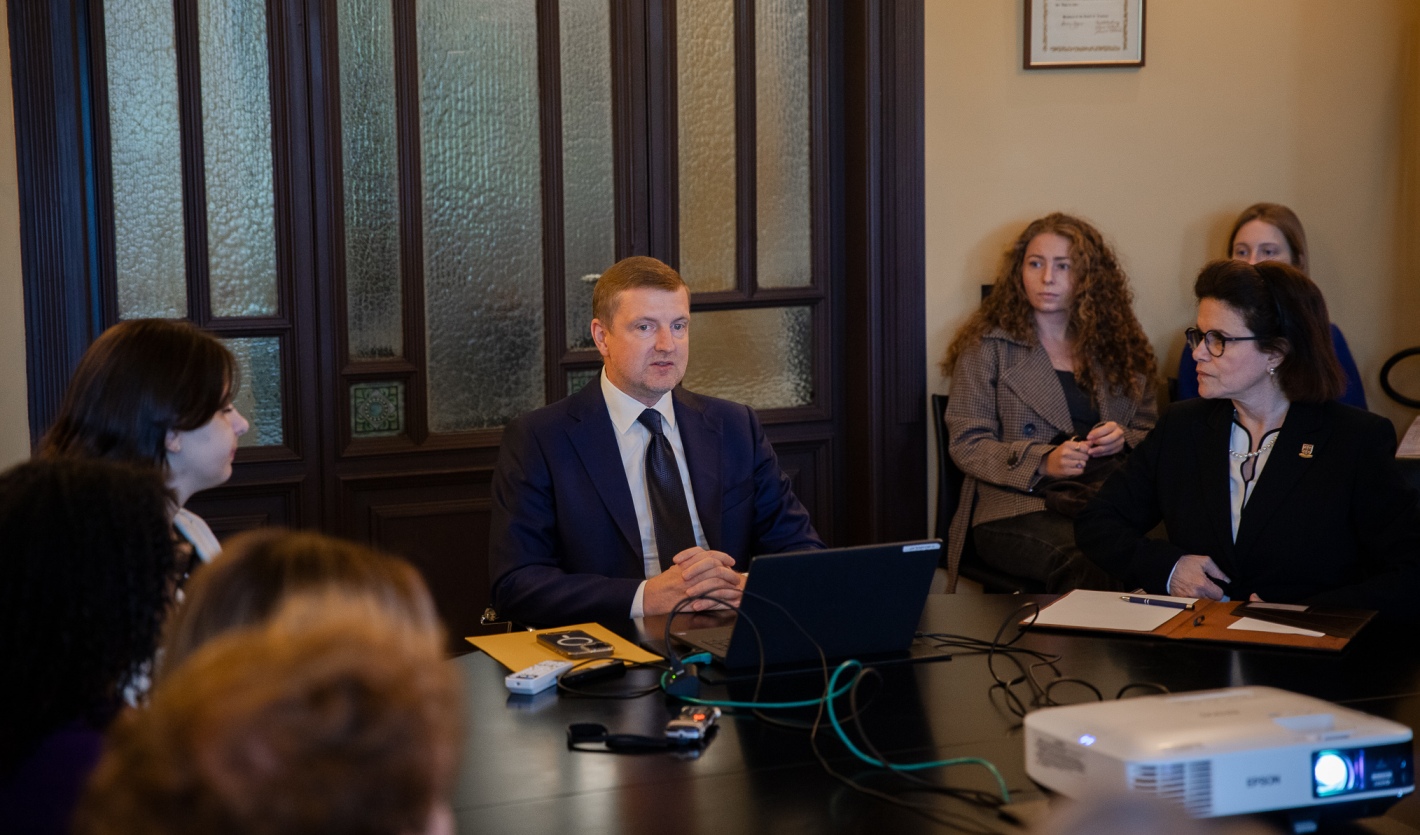
Now, together with Chiara Garlanda, we are working on the Subjective Atlas of Rome. I organized a talk at JCU back in November 2025 to launch the project and we talked about the methodology and the critical aspects of cartography. The talk was followed by a workshop, during which we asked students and faculty to map Rome based on their relationship with the city, including the difficulties they experience daily. The maps are hand-drawn, and then they’re photographed, elaborated, and put together into an edition of the Subjective Atlas. The JCU workshop was a very important first step into what will end up being a 3-year-long project. It’s mainly thanks to the JCU Department of Communication and Media Studies that we were able to start this process.
Are you working on any other projects?
I have other curatorial projects going on, and most of them are community oriented. I’ve been volunteering for several years now with Refugees Welcome here in Rome, and we have a kind of informal group called Intersezioni (Intersections). We work on the role of the body in the context of activism and on the importance of intersectionality within the Refugees Welcome community.
Mostly, I’ll be working on the Subjective Atlas of Rome in the next few months. Hopefully, once it’s out, we’ll be able to use the publication to organize alternative guided tours of the city of Rome. And that is going to become a form of “embodied counter mapping” of complex and contested places in the city.