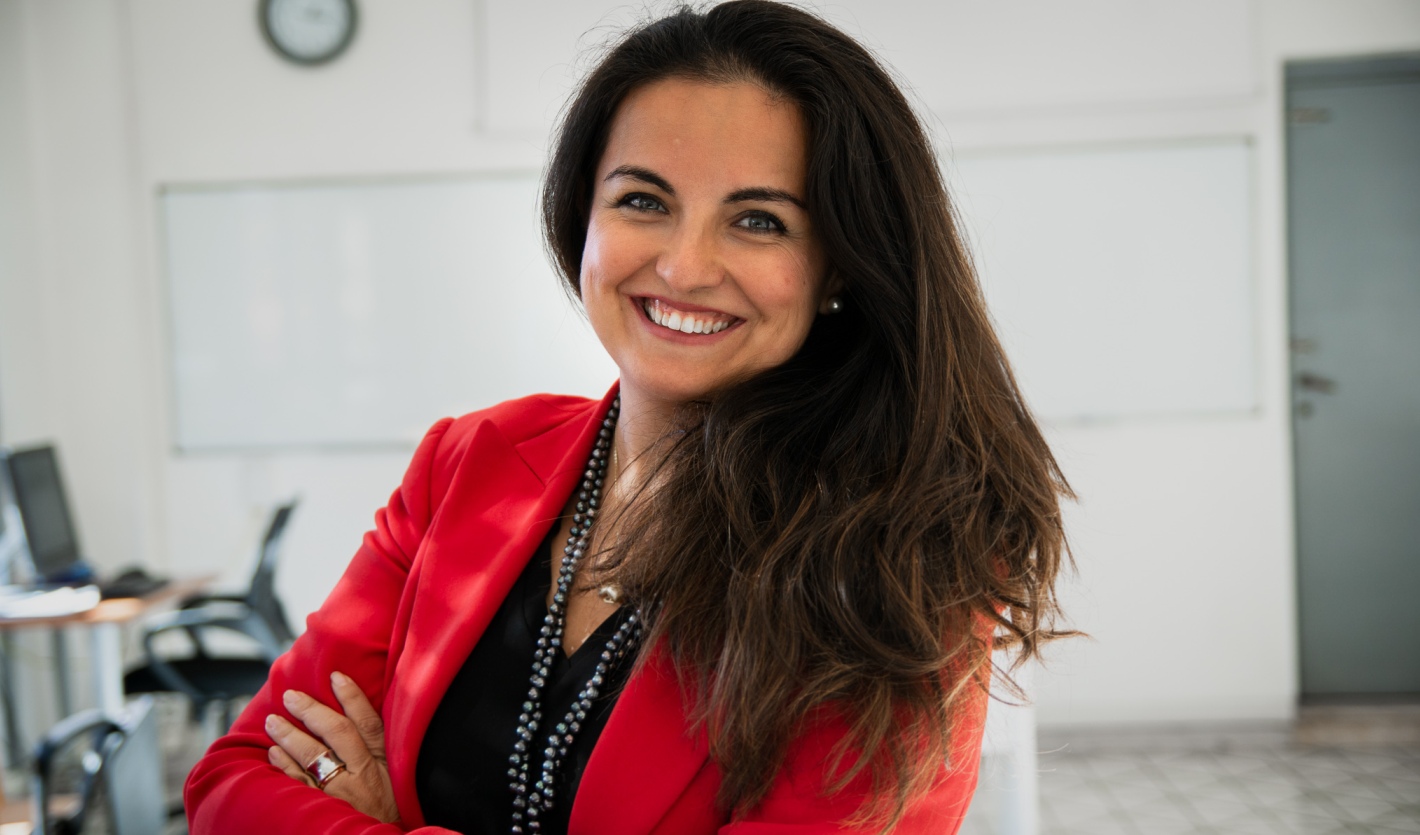
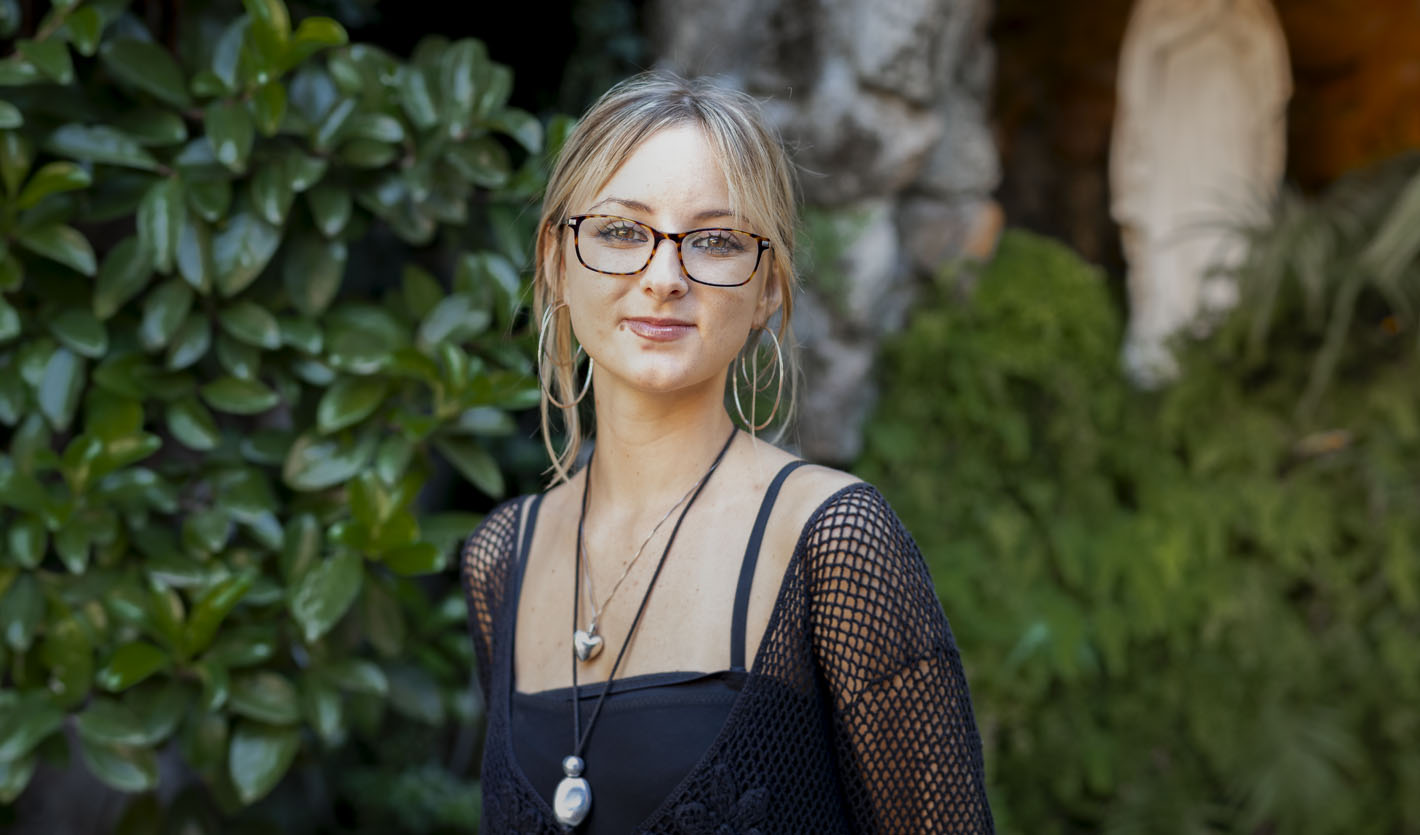
Maham Insha is an alumna from Karachi, Pakistan. After graduating from JCU in 2024 with a major in Communications and minors in Entrepreneurship for Arts and Humanities, and Art and Design, Maham is currently pursuing her MSc in Visual, Material and Museum Anthropology at the University of Oxford.
Tell us about your background and how you ended up at JCU.
I was born and raised in Karachi, Pakistan and was pursuing a degree there when I decided to apply to John Cabot. For years I had wanted to receive an education abroad: I longed for a new urban and cultural landscape to push me out of my comfort zone. I stumbled upon JCU during my search for universities in Europe and intuitively felt like it was the right place for me, although I didn’t yet know why. It was the only school I applied to, and I was very lucky to receive the Presidential Transfer Scholarship, which covered my entire tuition fees. I would never have been able to attend JCU without it.
I chose the combination of a major in Communications and minors in both Entrepreneurship for Arts and Humanities and Art and Design because it helped me merge all of my desired pursuits in a very complementary way.
I also used JCU as an anchor to explore the urban landscape of Rome, particularly through the lens of the arts and culture community spaces it breeds. During this time, I was also able to start my own business, “Strange Magic.” I was able to bring my own interests and apply them to the work I did in my courses, which made my academic life feel much more fruitful – I found that this is something that JCU professors encouraged.
How did you navigate the challenges of securing funding for your studies abroad, and what advice would you give to other students facing similar hurdles?
The idea of applying to Oxford first emerged during my last semester at John Cabot. I knew that I would not be able to afford an education at Oxford, so this venture would have to be two-fold: first, I had to be accepted into a program and college, and then I had to receive full aid somehow. I was not able to secure any of the scholarships I was eligible for and got quite disheartened. Then, just before the financial declaration deadline, I was offered an interest-free loan.
My advice is to never lose hope and work toward securing funding until the deadline. I think it is imperative to subscribe to the belief that it’s not over until it's over. Have faith and believe that if something is meant for you, it will happen. The Oxford scholarships are extremely competitive, so make sure to look into all the options that are offered. A lot of countries – including Pakistan – have several scholarships specifically for prospective Oxford students who have never studied abroad before. Also make sure to do your scholarship research before the application deadline; I missed out on a lot of funding opportunities because I didn’t understand the timelines.
What excites you most about your MSc at Oxford, and what do you hope to achieve during your time there?
The lectures and seminars are already off to an incredible start, and it is so amazing to be able to learn from anthropologists from all over the world. It’s a very ‘perspective-expanding’ space to be in. I am also very enthusiastic about receiving training on how to make use of various ethnographic methods, which can be applied to all sorts of research questions outside of the field. I am deeply invested in the ethics and advantages of autoethnographic practices, and in the ritual use of objects across cultures that reinforce a sense of spiritual connection. I am hoping to write a dissertation that demonstrates how to bridge the gaps between theory and application in unexpected but valuable ways in support of sustainable societal satisfaction.
What are your career or research goals after completing your Master’s degree? How do you hope to make an impact in your field?
I would love to use anthropological theory and research methods as tools to propel systems rethinking in urban landscaping, community building, or within education models! I haven’t chosen which industry I feel most inclined towards, but I do believe that there is a lot that can be done with an anthropology degree outside of academia. This is a belief that I am also hoping to promote through other entrepreneurial ventures.
Do you have anything to add about your time at JCU?
It's not a hyperbolic statement when I say I reminisce about my time at JCU almost every day. It has had a profound impact on me, and it's a university that I will always advocate for. JCU isn't going to provide you with a traditional campus experience by any means- it is small and very intimate, but that is exactly what makes it so unique. It will give you the space and resources to nurture who you really want to be academically, while allowing you to cultivate your other interests as well.
Within my major, Professor Eleonora Diamanti's Urban Media course was one of my favorites. I was also her research assistant for a semester, when I helped her expand on some ideas she had about night ethnography. It is possible that these two experiences played a large part in me pursuing visual and material anthropology at Oxford; they might even influence what I choose to do for my dissertation.