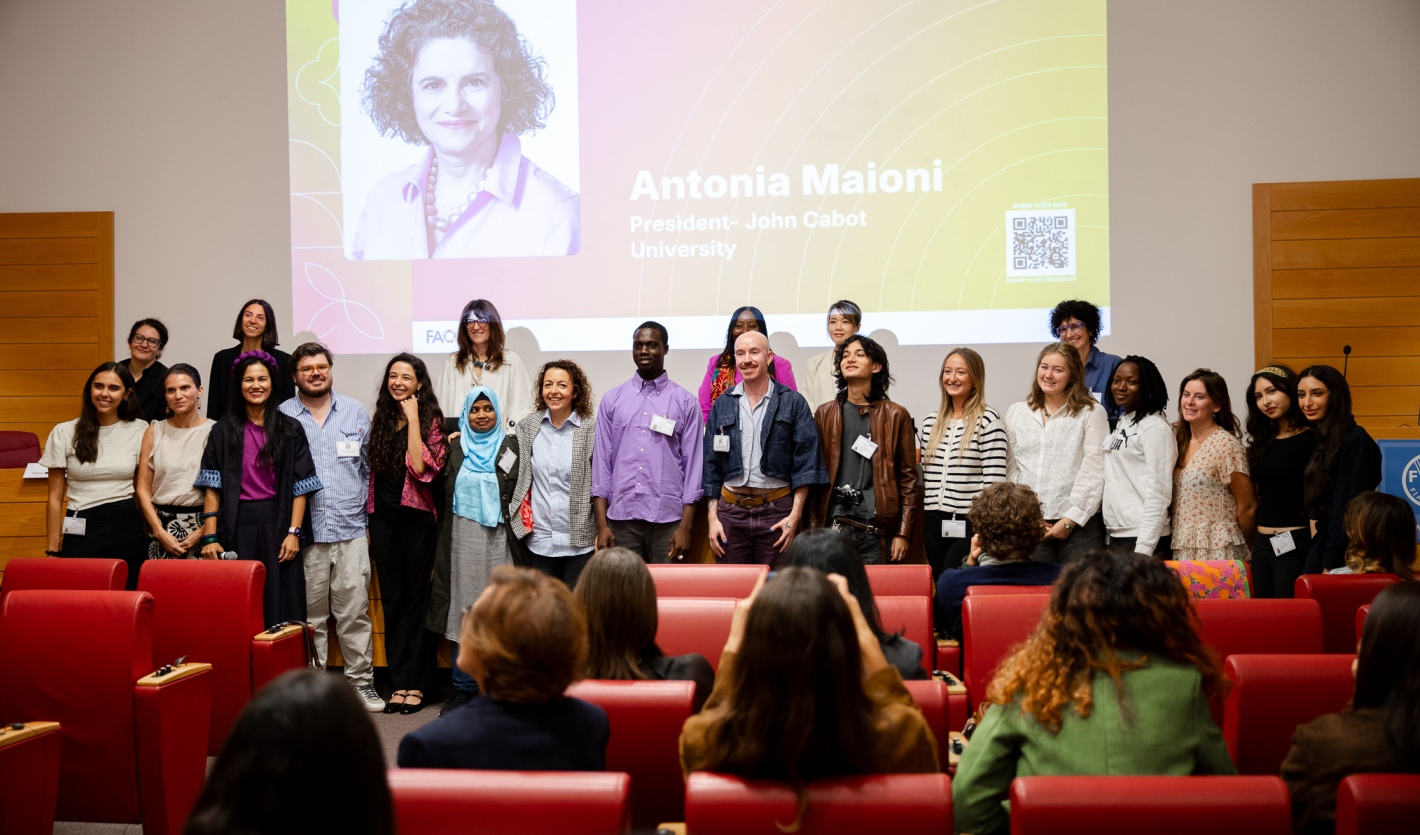
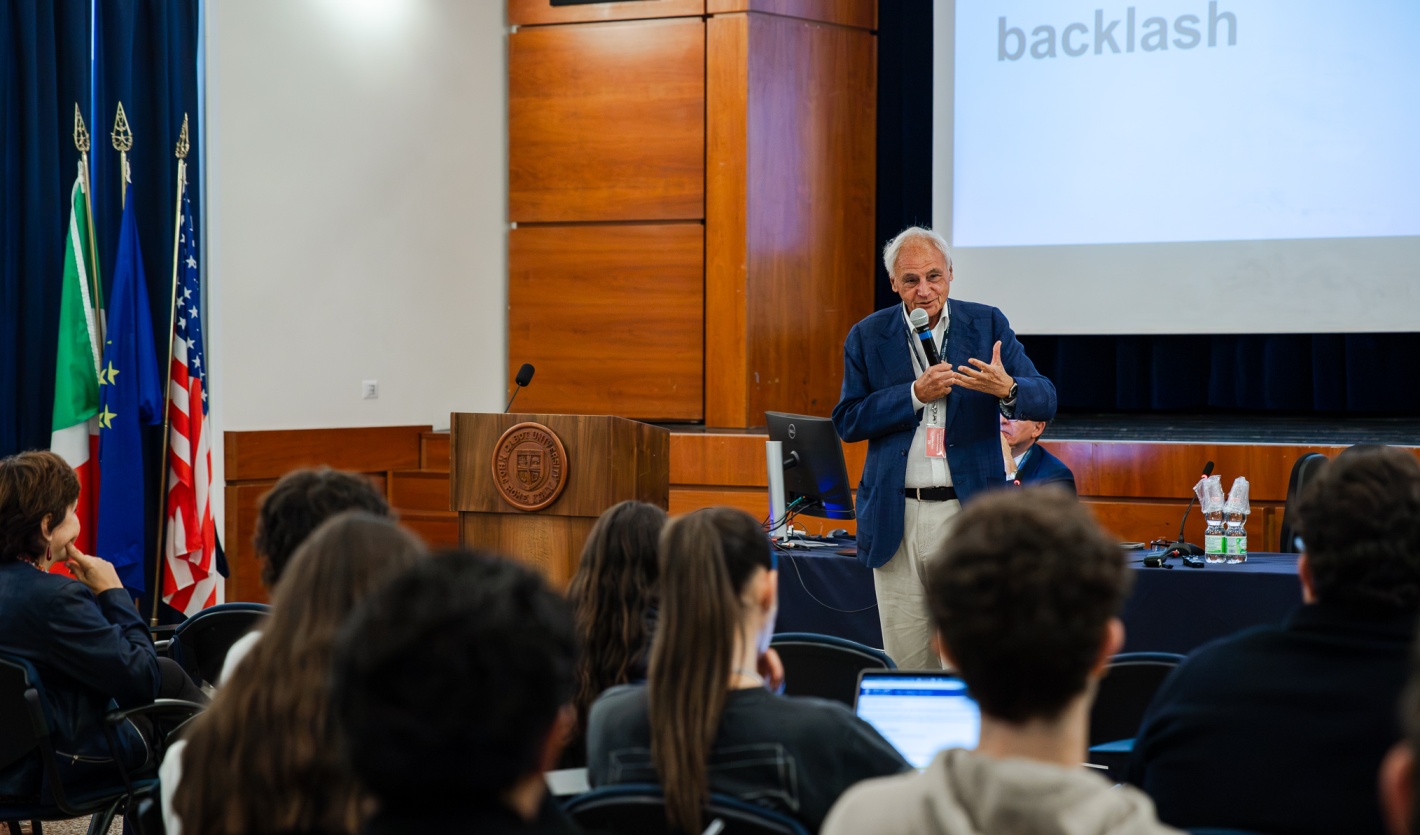
John Cabot University students participated in the AgriThreads challenge in collaboration with the social fashion studio Coloriage. The results were presented at the Food and Agriculture Organization (FAO) headquarters in Rome on October 13, 2026. The project was organized by FAO’s Office of Innovation and Office of Climate Change, Environment & Bioeconomy and was part of the World Food Forum flagship event.
The AgriThreads challenge brought together students from John Cabot University and Coloriage to explore bio-based materials through fashion. Coloriage is a social fashion studio in Trastevere. It started as a free fashion school open to designers and students who arrived in Italy as refugees and migrants. During the event, Coloriage was represented by founder Valeria Kone and the students who worked with the JCU fabrics to create unique clothes.
“Our students explored sustainable fabrics from around the world, researching the communities they came from, and the methods used to produce them,” explained Professor James Gardner, chair of the Art and Design department at JCU. “Coloriage then developed garments from their textiles, often combining samples by different students within a single piece.”
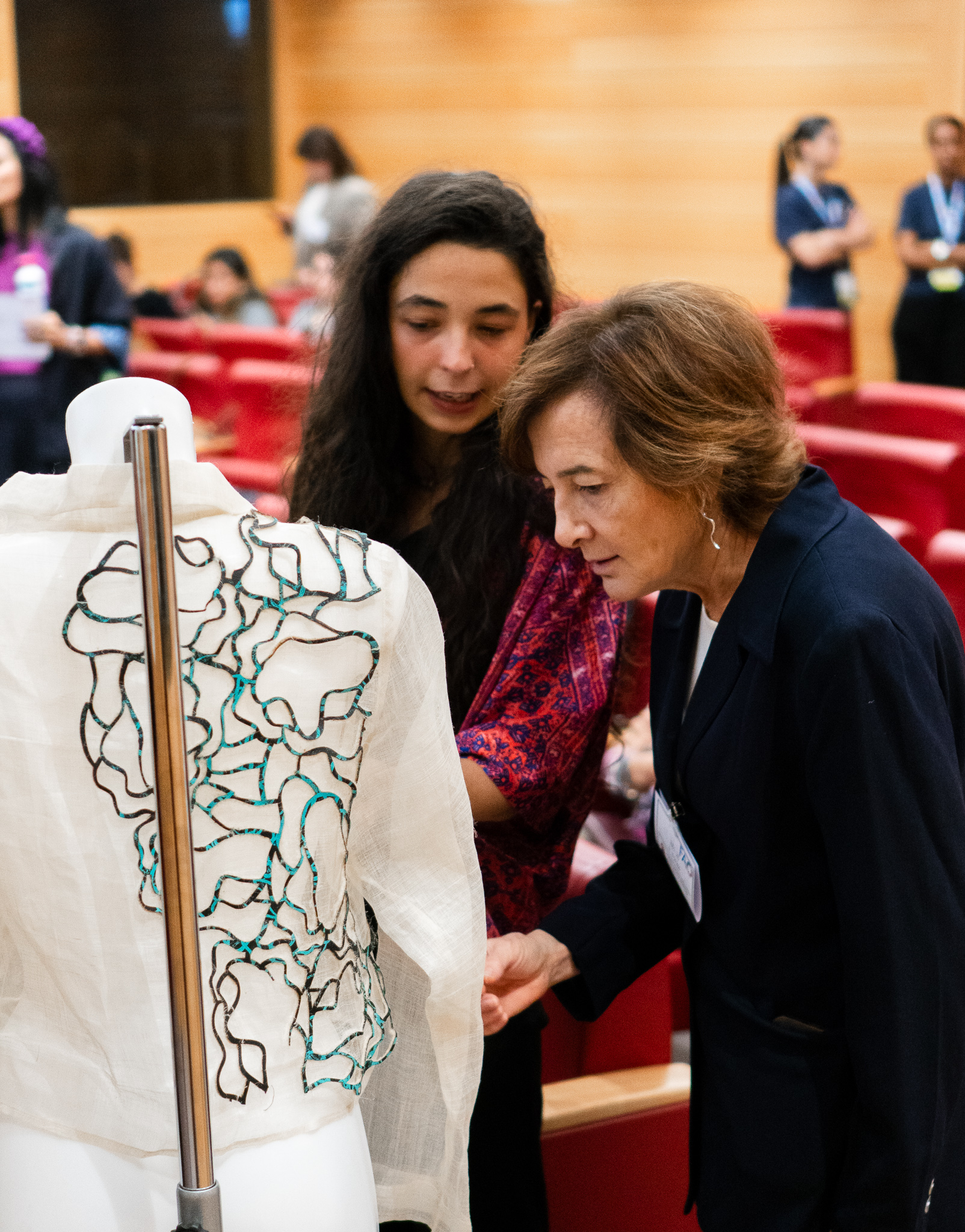
A student and Prof. Michèle Favorite
Professor Gardner added: “AgriThreads is an opportunity for our students to engage with the professional world of art and design. It gave them firsthand experience of how ideas develop through collaboration, bringing together different skills, perspectives, and cultures.”
This challenge gave students a chance to rethink materials we might otherwise reject and explore how innovation can help communities create value from resources that are usually considered waste. “The project was about turning something that would go to waste into something treasured,” said Vincent Martin, director of the FAO Office of Innovation.
Textile Research
The wool from an FAO project in Turkey offers one example. It does not meet the fashion industry’s usual standards, FAO had been exploring other uses, including insulation and stuffing. Using JCU equipment and facilities, the students have found ways to give this wool a place in fashion, too. “Don’t waste it, wear it,” said Piedad Martin, director of the Office of Climate Change, Environment and Bioeconomy.
Students from Professor James Gardner’s Introduction to Textiles and Fiber class received the materials from FAO at the end of September. They experimented with printing, knitting, weaving, bonding, embroidery, and felting to transform the fibers in innovative ways.
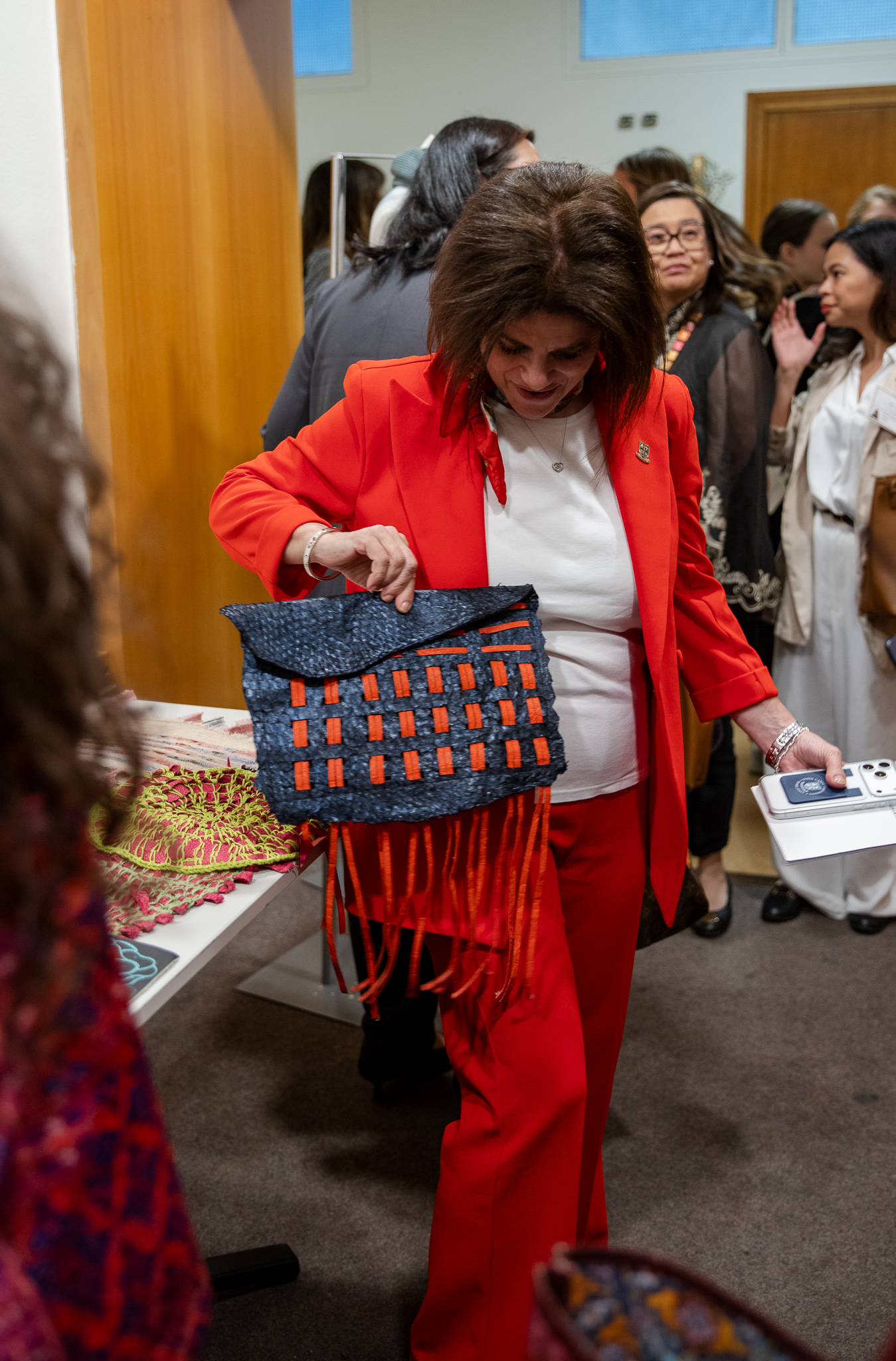
Student Jacob Hall (double major in Business Administration and Art and Design) worked on banana fiber imported from Pakistan. Through trial and error, he explored its surface properties and potential applications in bags and outerwear. “I was really glad to collaborate with my classmates,” Jacob said. “It’s great to work with FAO on a very innovative project and see what the future of fashion and sustainability could be.”
Student Rebecca Aist (Psychological Science major) used algae yarn from Iceland to create a knitted top. She explained to the panel that oceans are now full of algal blooms, which have a negative impact on the environment. “The algae turn the whole ocean pink, which is why I used the colors pink and green in my project,” she said.
President Maioni with a bag designed by students
Panel Discussion
Students’ presentations were followed by questions and a discussion with panelists from various backgrounds, ranging from fashion industry experts to innovation and sustainability specialists: Elif Malkoclar (Founder, CRAAFTS), Zoe Ziyi Liu (Senior Editor, WWD China), Sara Loppo (CEO and Founder, YCMC), Manuela Bucciarelli (Innovation Specialist, FAO; Founder, Proietto Lamin), Laura Boffi (Food Waste and Loss Designer, NABA), Tacko NDiaye (Gender Team Leader and artist, FAO).
JCU President Antonia Maioni offered a few closing remarks. “FAO's vision of transforming discarded resources from agrifood systems to generate new materials used in the fashion industry is truly inspiring and deserves the attention of all stakeholders, from responsible investors to fashion brands and the media,” said President Maioni.
The AgriThreads project is a result of JCU’s ongoing commitment to sustainability and long-term collaboration with FAO. Other initiatives resulting from this partnership include Triggering Change, the Women in Leadership Program, and FAO representatives' participation at the Career Fair.