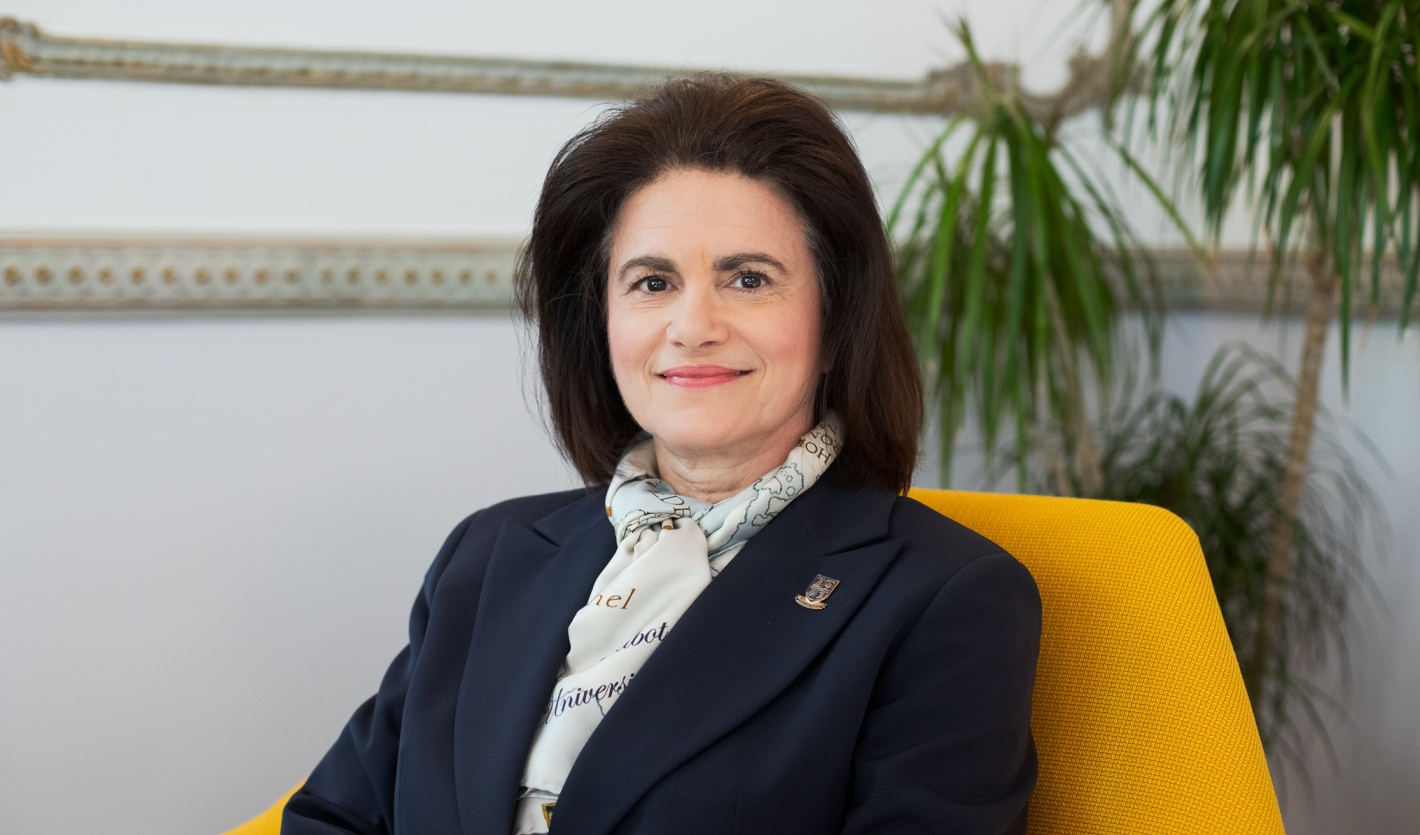
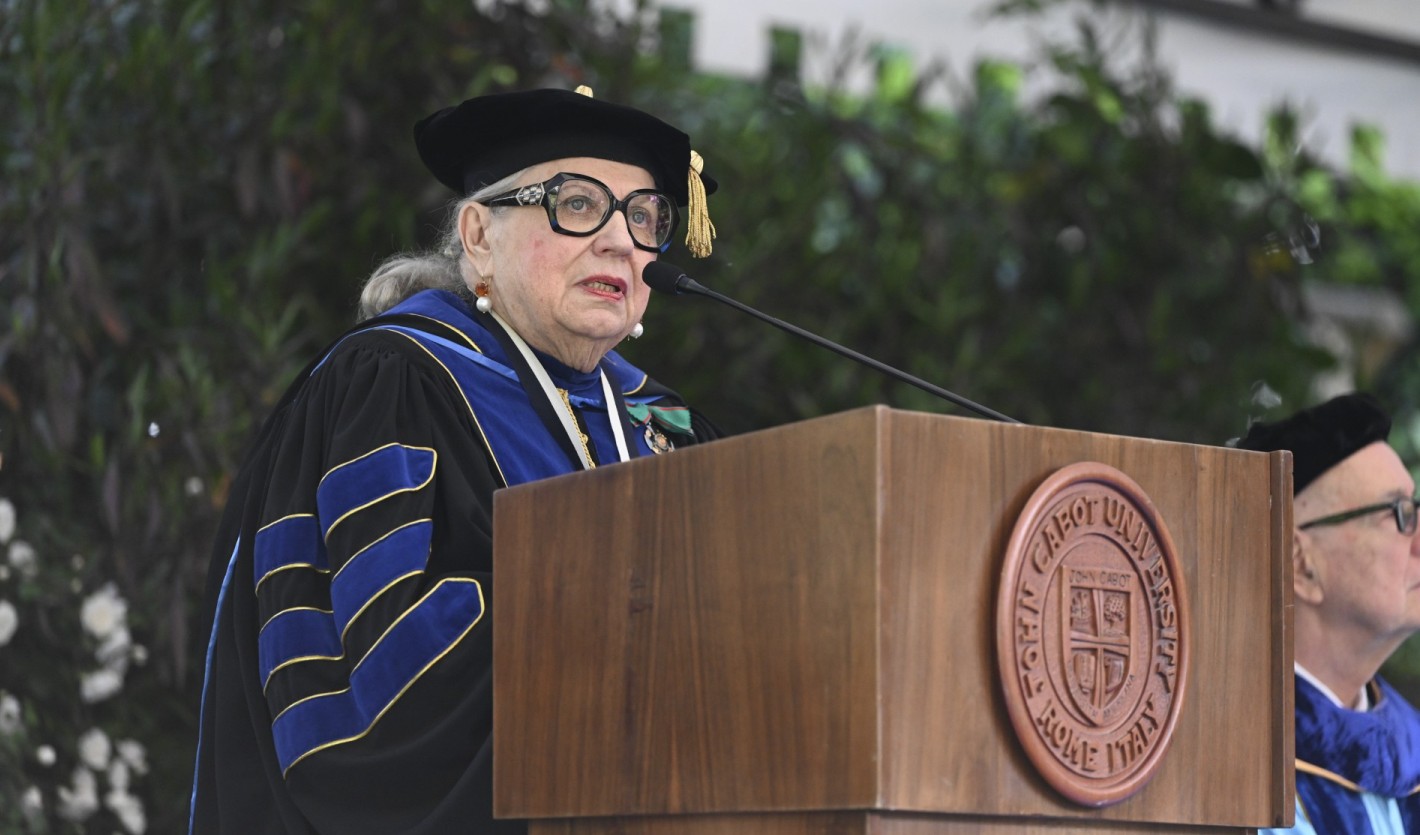
John Cabot University welcomed Dr. Antonia Maioni as its seventh President on July 1, 2026. The first woman to lead JCU, President Maioni was born and raised in Montreal, Canada, and joined JCU following a long and distinguished career at Montreal’s McGill University. A scholar of political science and public policy with a PhD from Northwestern University, she has built an international reputation for her research in comparative health policy and politics.
From 2016 to 2021, President Maioni served as McGill’s Dean of the Faculty of Arts—the first woman to lead the university’s largest faculty, which encompasses the social sciences, humanities, and liberal arts. She has held visiting and research appointments at institutions around the world, including serving as the William Lyon Mackenzie King Professor at Harvard University’s Weatherhead Center for International Affairs and as a Fellow at Johns Hopkins SAIS in Bologna. A dual citizen of Canada and Italy, Dr. Maioni speaks English, French, and Italian.
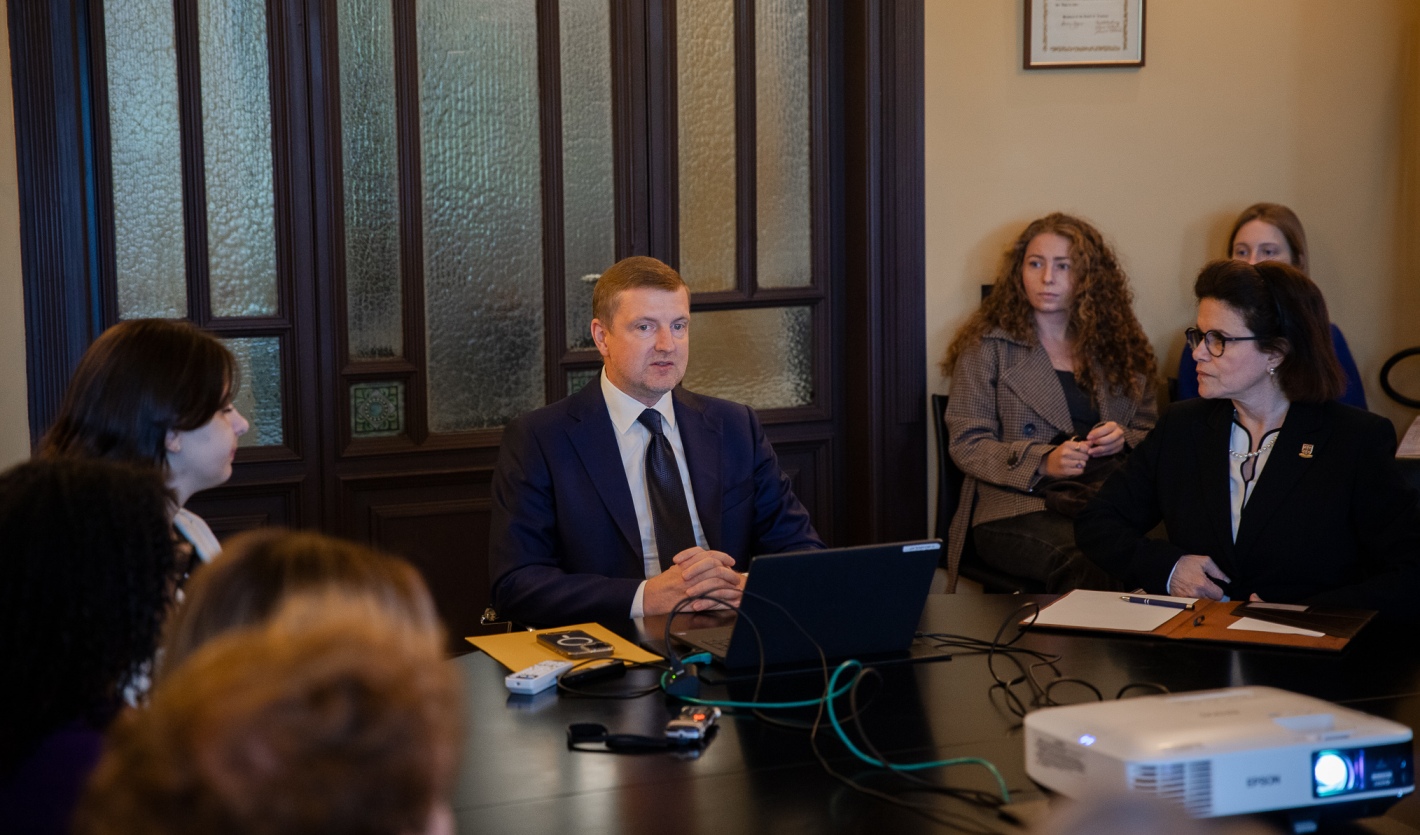
JCU’s Director of Web Communications, Berenice Cocciolillo, recently interviewed President Maioni.
President Maioni, welcome! What were your first impressions of John Cabot University, and what ultimately convinced you to accept the presidency?
My first impressions are likely similar to those of everyone who encounters John Cabot University, from students to scholars and staff: this is a wonderfully diverse and welcoming community, dedicated to excellence in teaching and learning, and to making the experience of living in Rome an integral part of both academic and personal growth.
I have long been committed to the importance of student-centered education, experiential learning, and contributing to the mentorship of future generations. All those are qualities that stand out at John Cabot University as a first-rate liberal-arts institution that offers students a truly remarkable experience in the vibrant setting of Rome.
Accepting the presidency of John Cabot University was a decision that came easily, given the energy of the student body, the commitment of the people who make the place work, and the sense I have that I can clearly make a difference here. In a way, my decision likely mirrors why students and scholars choose John Cabot themselves: to combine the quality of an American higher education setting with the unique experience of living in Rome, the world’s historic crossroads.
What first sparked your interest in political science and public policy, and how has that shaped your leadership approach?
Leadership, like public policy, is an exercise in embracing complexity. My field of study is fundamentally about the design and governance of institutions that work in the best interest of citizens. In many ways, the study of public policy is about imagining a better future, making choices about how to get there, and problem-solving along the way to ensure that people and organizations can best respond to challenges and change. This can range from international relations to domestic politics but, ultimately, it is about shaping the world we live in and providing hope for a better life for future generations. In my own specific field of comparative health policy, one can easily understand how policy choices can shape an entire system that affects people’s lives in the most fundamental way.
Studying public policy also makes you aware of all the ways in which even the best-laid plans can go wrong! For example, in the struggle between self-interest and the interest of the whole, or when aspirations are misaligned with evidence, resources, or community culture, or when organizations are so entrenched in their ways of doing things that they can’t adapt to change.
How have your previous experiences in academia, including your time as Dean of Arts at McGill University, prepared you for your role at JCU?
Throughout my career, I have been a motivated teacher across a variety of domains, while always retaining the importance of broader and deeper understanding through the liberal arts. I’ll give you an example: for years, I taught first-year medical students about the “anatomy” of the Canadian health care system – which is just as complex as the anatomy of the human body! I also endeavored to contribute to student and alumni engagement, mentoring efforts in leadership organizations, and contributing a voice to public commentary. Beyond McGill, my teaching experiences in the United States also contributed to my understanding of American university culture. I even spent a sabbatical living in a faculty apartment that was part of a student residence at a major US institution. This made me more sensitive to the importance of creating and maintaining a true sense of community. Also, for many years, I taught at McGill’s summer school in Florence, which was inspirational in seeing how a study-abroad experience in Italy could transform student lives.
As for university administration, I’ve had experience in a variety of positions that set the stage for this role at JCU. For example, I led a liberal arts-based interdisciplinary institute, whose curriculum combined research innovation and undergraduate student excellence, and offered a window into academic outreach and public policy debates. On the research side, my appointment as associate vice-principal allowed me to understand the place of the liberal arts in a wider university setting.
Just as I am the first woman to be named president at JCU, I was the first woman to be appointed as McGill’s Dean of Arts. It was a wonderful challenge to lead such a large faculty, renowned for its extensive coverage of arts, humanities and social science disciplines, and to engage with a vibrant student population, including so many American and international students. The Faculty of Arts collaborated in a wide variety of initiatives, such as recruiting and retaining teaching staff, improving student services and academic offerings, encouraging study abroad and global experiences, and ensuring alumni and donor engagement. It was also, of course, an experience in facing challenges – notably budget pressures and managing the pandemic crisis.
What are your top three priorities for the upcoming academic year?
My overall priority is to obviously get to know John Cabot University better, its people and processes, while adapting to the challenges of leading, learning and living in Rome. The university has been successfully led through many years by my predecessor Franco Pavoncello and his exceptional team, so I consider myself privileged to be able to step into this role with a mandate for both continuity and change.
As for the top three priorities, I would emphasize what John Cabot University does best. First, in order to continue to provide the best conditions for student success, we need to enhance the skills students must develop to face our rapidly changing world, support our faculty and staff development, and maintain the beautiful facilities of our campus environment. Second, we need to prepare students for the world through a rich liberal arts education that provides the foundation for knowledge and understanding, by continuing to attract a global community of students and scholars. Third, we need to further promote JCU’s image and status in the ecosystem of American universities abroad, as well as continue to deepen our unique relationship with the international city we call home, Rome.
What role do you see faculty playing in shaping JCU’s future, and how do you plan to support their work in both teaching and research?
John Cabot University already has the foundation of what it needs to succeed: a dedicated and talented faculty, well-versed in a variety of disciplines and committed to a liberal arts education. I believe this is also a hidden superpower of JCU in terms of the quality of our teaching staff in higher education offerings abroad. Students need professors who can provide the most incisive knowledge, help them navigate change, and encourage their career aspirations. In an environment of fundamental technological and economic change, we need to find ways to support faculty development and student services so that we can truly fulfill our mission. I obviously have a great deal to learn about all the members of our faculty, and that’s why one of my first goals as president is to get to know them as well as I can, to understand their research interests and teaching experiences, and to hear their ideas about the future of JCU.
What do you see as the greatest opportunity—and the greatest challenge—for an American liberal arts university in Italy over the next decade?
The challenges we all face are increasingly global. We need to be able to sustain and encourage both the liberal arts and American universities abroad to promote and enhance transatlantic linkages. Politicians talk about “soft power,” and the role of international institutions such as universities can contribute to that. I also believe that John Cabot University, as a premier American liberal arts institution abroad, can best prepare students to face the world with courage and confidence. JCU contributes to this as a rich international crossroads, with a diverse and international population of students, scholars, and staff, and located in the “caput mundi” – the world’s capital that is Rome. In addition to its incomparable historical legacy, Rome continues to be an exceptional environment of beauty, creativity, diplomacy, and economic innovation. And with the global challenges facing our students today, JCU’s location in Rome, where history literally comes alive, and in the vibrant neighborhood of Trastevere, where students interact with people from so many cultures and horizons, provides a well of knowledge far richer than a typical campus experience and far deeper than anything artificial intelligence can provide!
What message would you like to share directly with JCU students as you begin your presidency?
I am really delighted to have joined the John Cabot University community, and the most important element for me is to focus my energies on making the student experience here as rich as it can be, in order to contribute to your academic and personal success. All of us – professors, staff, administrators, and trustees – are committed to this endeavor. There is no place like JCU: it offers you an incredible opportunity to become part of a learning culture and openness to the world that will help you reach your global aspirations. Like you, I am fascinated by the challenge of living and learning in Rome, discovering this superb city and the unmatched opportunities this experience will provide. As our motto Explorando Excello says, we are all explorers together here – discovering new avenues of knowledge and adapting to new lifestyles. Every day will be an exercise in experiential learning!