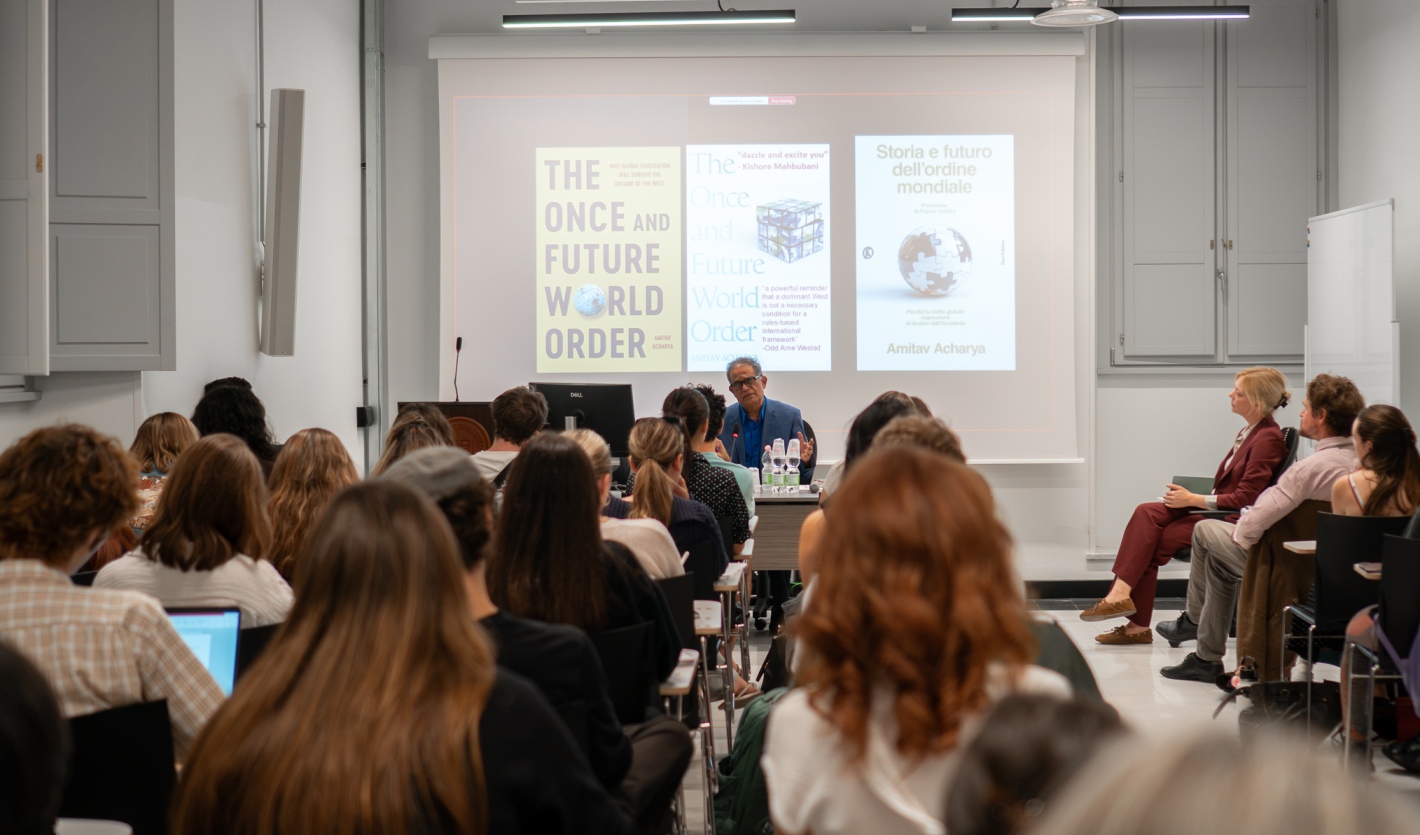
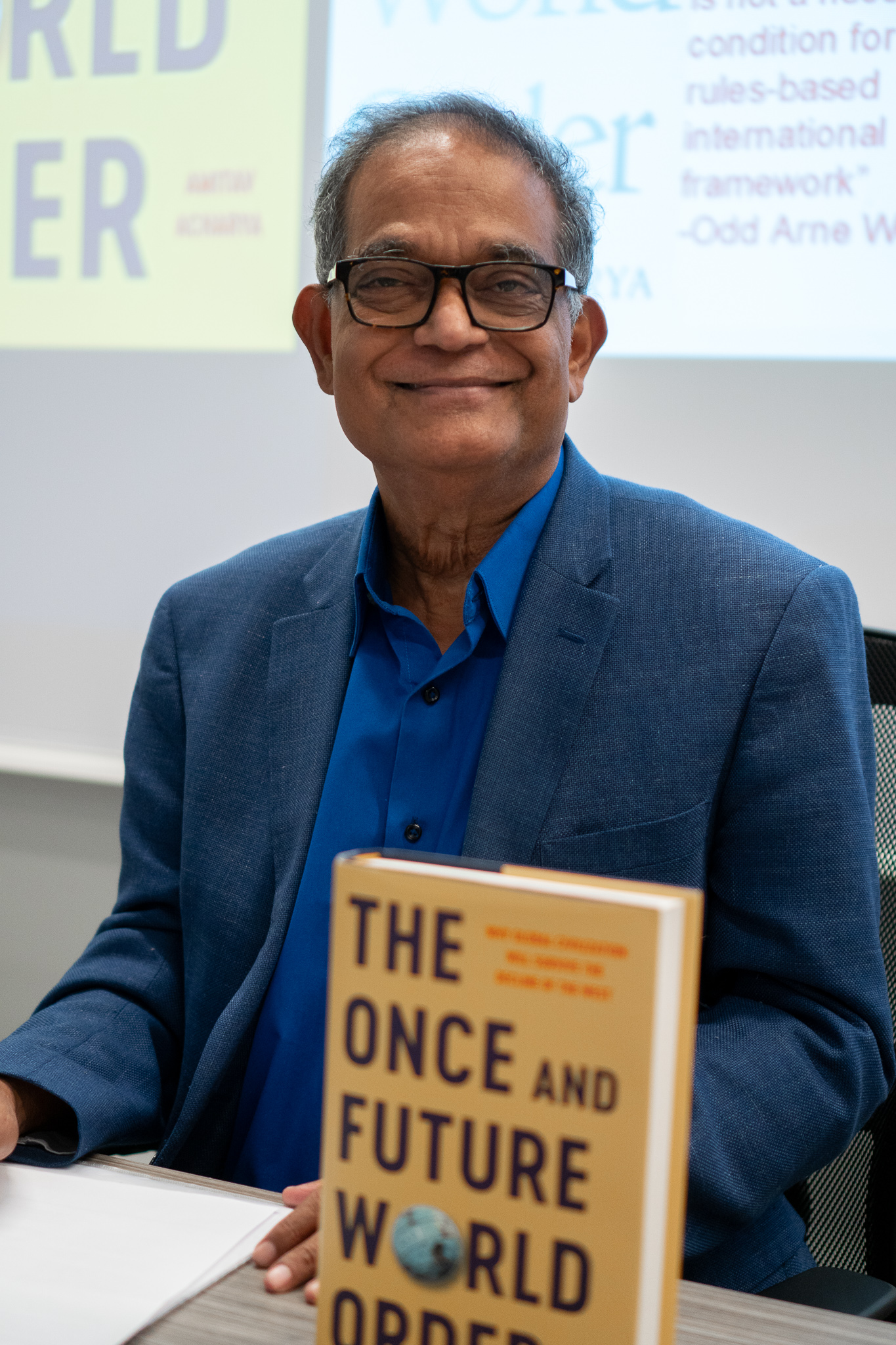
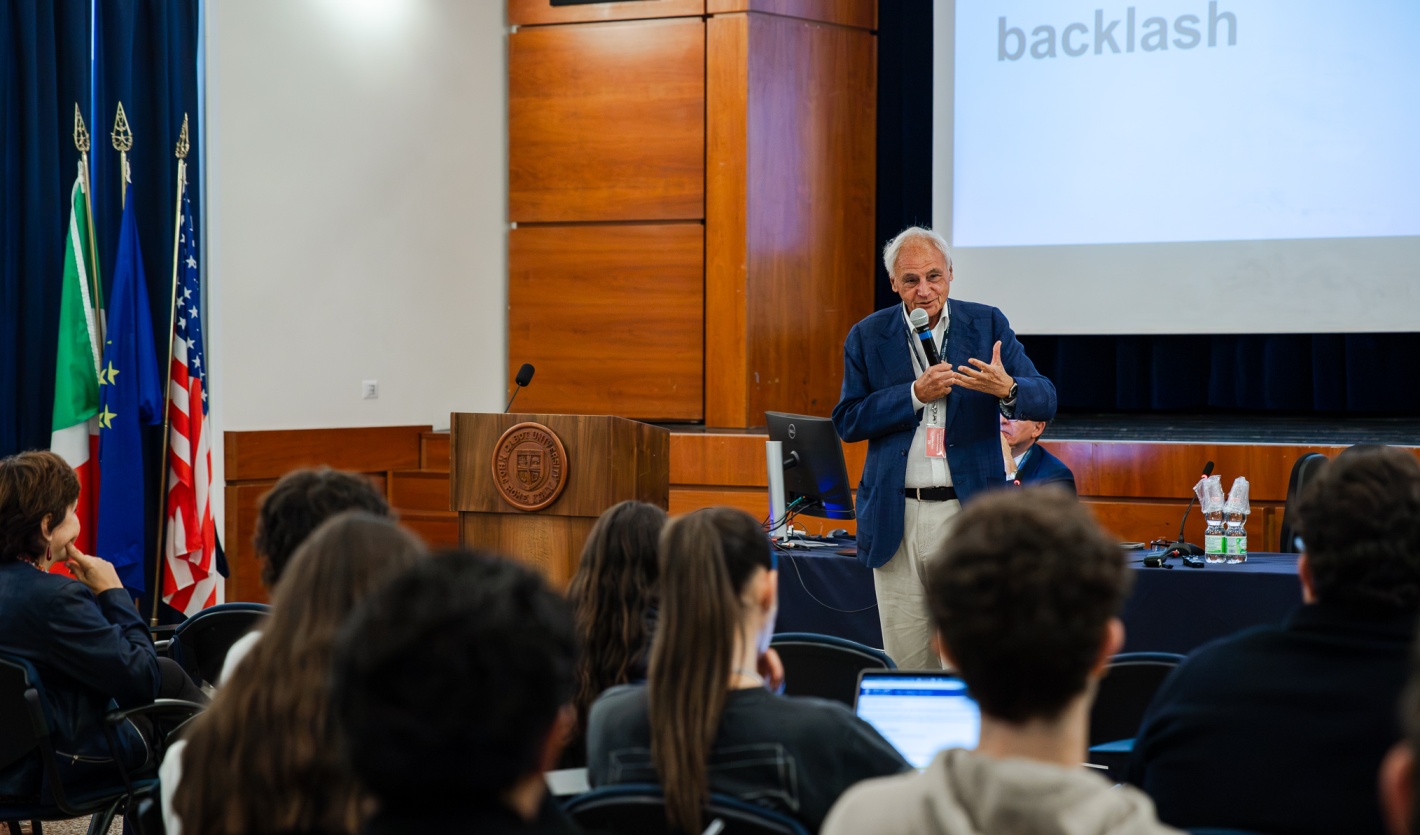
On October 6, 2026, John Cabot University hosted Professor Amitav Acharya, Chair in Transnational Challenges and Governance at the School of International Services at American University, in Washington, DC. Acharya presented his book The Once and Future World Order: Why Global Civilization Will Survive the Decline of the West (Basic Books, 2025), which was recently published in Italian by Fazi Editore.
Professor Acharya has held affiliations and fellowships at the universities of Harvard and Oxford and was the first non-Western scholar to be elected president of the International Studies Association in 2014.
The global order as we know it is undergoing a seismic shift, leading many to wonder what rules, institutions, and powers will define the future of international relations. According to Acharya, understanding where we are headed requires studying our history.
In his presentation, Acharya outlined a historical framework that reshapes how we view global power, multilateralism, and the institutions that govern human interaction. While only about 10% of his book focuses directly on contemporary events, the rest explores 5,000 years of global history, beginning with Sumer and Egypt around 3000 BCE. Acharya’s argument is that the modern world order was not invented by the West alone, or by any single civilization, but is the product of a shared, human endeavor. In his book, Acharya demonstrates that the idea of “empire” developed across diverse societies, and that progress has always depended on the circulation of ideas, technologies, and trade.
No World Order is Truly Global or Permanent
Acharya identifies two defining characteristics of world order: globality and time. When we speak of world orders, whether the Pax Romana, the Chinese concept of Tianxia (“All Under Heaven”), or the post-1945 American-led liberal order, we often assume that they exercisedall-encompassing influence. Acharya points out that, instead, no past order was ever truly global.
“An order consists of ideas, institutions, and practices developed within a region by a dominant civilization or coalition that possessed the capacity and ambition to project its vision outward,” explained Acharya.
The second dimension is time. “No order is permanent,” said Acharya. “The decline of the Western-dominated global order after 300 years is not an anomaly; it is the historical norm.” He pointed out that, before the 18th century, China and India were among the world’s leading economic powers for millennia. The concentration of global economic and political power in the West over the last few centuries represents a relatively brief chapter in world history.
It’s Only the End of an Era
As multilateralism faces mounting pressure today, Acharya describes his outlook as “cautiously pessimistic or moderately optimistic.” If we view global order as a modern invention belonging exclusively to one civilization, its decline feels like the end of order itself. Yet world order encompasses international rules, diplomacy, trade, and humanitarian norms, aking it part of humanity’s collective heritage.
The future world order will not belong to a single power. Instead, it will inevitably draw upon a broader, more inclusive array of voices, societies, and traditions, just as it always has over the last 5,000 years.