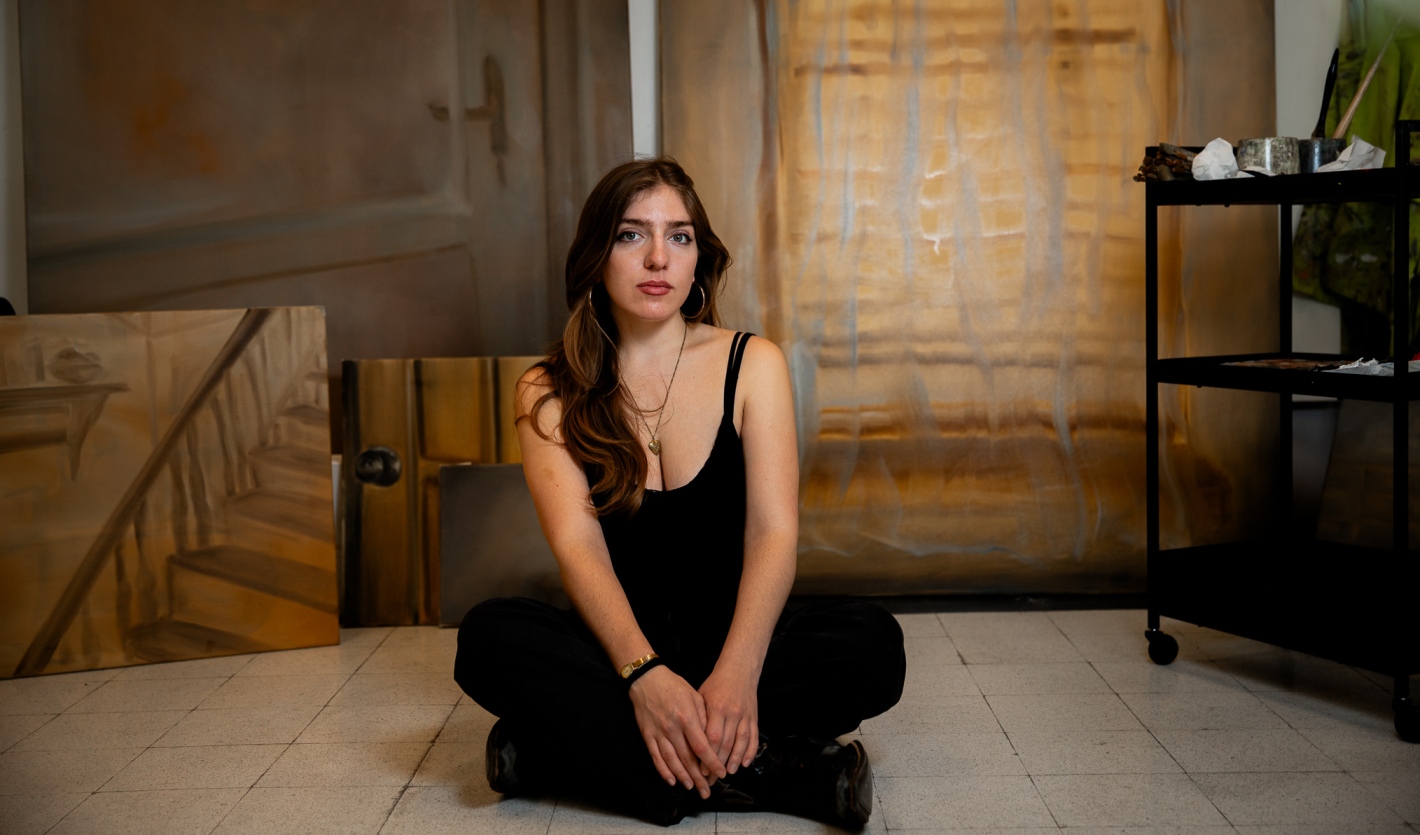
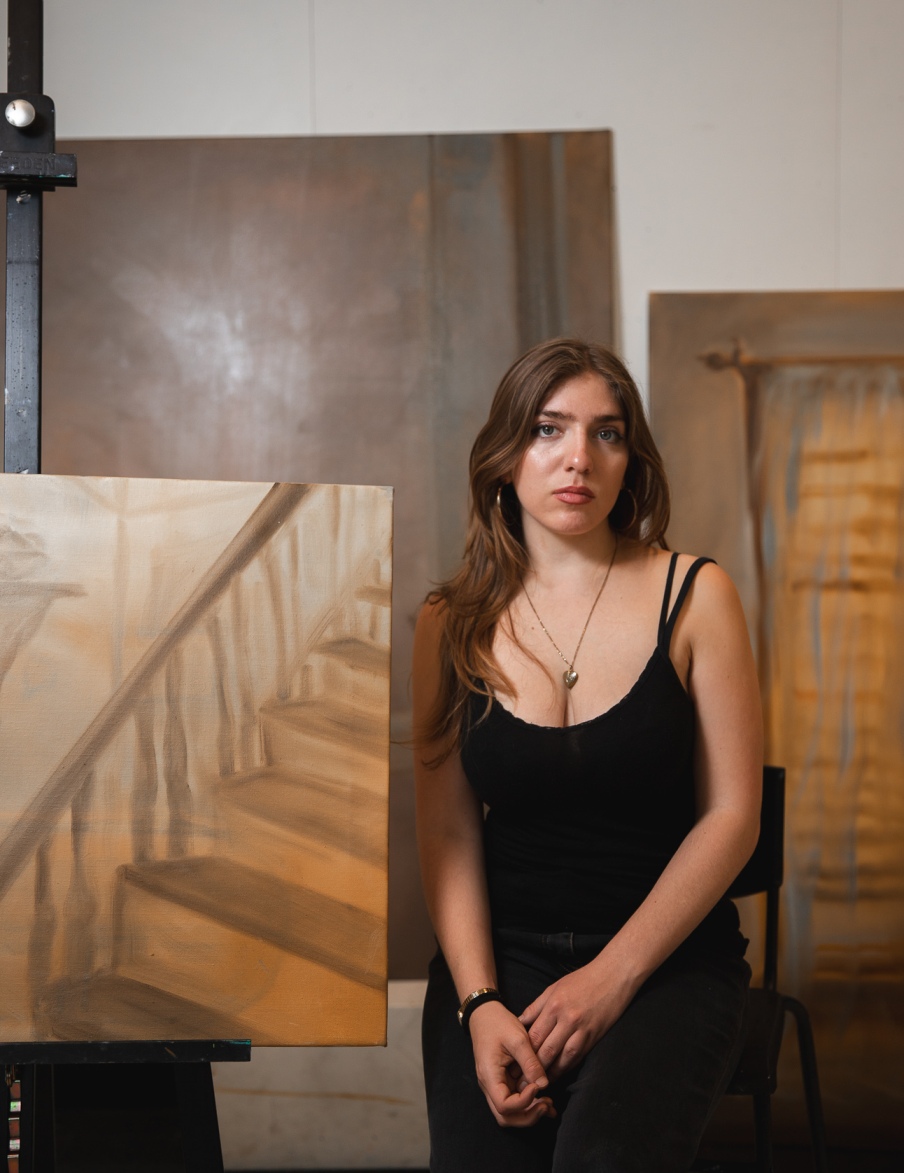
Ines Villarreal Senzatimore is from the Bay Area in California, US. She is majoring in English Literature with minors in Art and Design and Communications. Ines will be graduating in Spring 2026.
What brought you to study at JCU? I’ve always wanted to study abroad, especially in Italy, since it has such a rich art history. Originally, I intended to either go to Washington State or a college in New Yok City, but – very last minute – I found JCU.
I am currently majoring in English Literature because, back when I applied, Art and Design was only offered as a minor. My art and design classes were very interesting and captivating to me. I’ve been able to find such a good community at JCU, especially in the Art and Design department.
How did your major and minor come together in your range of interests? I think that literature is another form of art, just not visual. Often, art and literature can coincide in very interesting ways – themes can overlap. My background in English literature has helped me understand art better. It helps me interpret art but also write and speak about the work I create.
How did you find out art was your thing? I have always been interested in art. When I was younger, I liked to draw and paint a lot. My family has a long history of being involved in creating art, so I was encouraged from a very young age.
What is your overall impression of the art program so far? I like the fact that Art and Design classes are longer than the average class. In three hours, you’re able to really connect with the professors and spend a lot of time with your work. The professors are very encouraging; they really help you expand your technical skills and general knowledge. I’ve had professors who let me take routes I wanted to take because they paid attention and noticed my interests.
They’re also involved in using Rome as a space for students: I’ve had many class trips to galleries and to outdoor places to draw or paint. We’re always encouraged to go out and see other pieces of work. That is such a good opportunity since we’re in Rome.
Do you consider yourself mostly a painter? Yes. Painting is a lot more fluid and flexible. If I’m working on a piece and later I want to change something, it’s easier to “erase” and paint over it.
I also really liked the textiles and fiber classes. It is a bit like painting in a way, since you can use dyes and transfer images on the fabric.
Is there a specific class or professor that has had an impact on you? Professor Michele Tocca helped me a lot with my technical skills. His Introduction to Painting class really pushed me to get where I am now. He helped me find a style that works for me, and to paint subjects that I didn’t think I could ever paint.
I also liked Professor Gabriele Maria De Santis’ Experimental Drawing class. He encouraged me to be more playful with my work and go beyond the boundaries of what I thought I could do. I experimented with a lot of mediums, styles, and scales.
What do you think makes a good painter or a good painting? I used to overwork my paintings a lot, especially when I tried to focus too heavily on technical aspects, like shadows and highlights. I would just keep making the dark parts darker, and the light parts lighter. In the end, the painting would be very extreme. But this semester, I’ve been pushing myself to focus on leaving things a little bit unfinished, so viewers can see more of the process. I’m restricting myself from overdoing it.
Ines Villarreal Senzatimore
I believe that good painters are very open to changes and don’t compare themselves to other artists or even with their past works. I think if I saw what I was painting years ago, I would probably be shocked. But I think it’s good to be open to change and take different avenues.
Another good thing to do is not give too much emphasis on the meaning of a painting or other people’s interpretations. It’s good to not be influenced by the opinions of others while you’re still in the process of doing your work.
You seem to focus on painting interior spaces in an almost “subtractive” manner. What led you in this direction? At the beginning of the semester, I started doing a series of paintings for Professor Tocca’s Advanced Painting class. I didn’t know what route I wanted to take, so I began with a detailed painting. I was taking photos of my progress every day, and I noticed that, while the later photos were more detailed and closer to my vision, the beginning of the process looked more elusive, mysterious, and sort of captivating.
I liked the idea of interiority, of spaces like apartments that you interact with all the time, and how they are kind of unseen, even though you look at them all the time. I thought it would be interesting to spend the semester focusing on the small details that are usually unnoticeable or forgettable, like a door or a window. I like that interior spaces can reflect a deeper sense of emotional interiority.
With that in mind, I tried to replicate this idea in my painting style. I make the painting transparent, fuzzy, with a very muted color palette, with no vibrant colors and no people. I want the viewers to be able to put themselves in the painting and be fully immersed in it. I want to convey a sense of nostalgia, as if the painting could represent something from your past. I am trying to make things more elusive rather than descriptive. I trust that the audience can pick out spaces in my paintings and interpret them, instead of focusing on or expecting hyper-realistic elements.
Do you think your English Literature major came through when you thought of adapting this style in your paintings? Yes, I do. To read a book is a very private act. It’s not like a play or a movie – it’s not a communal experience. You’re focused on one text, one author, one person’s thoughts. Reading and studying literature means, most of the time, trying to understand how the text communicates a character’s interior thoughts and emotions, and how they handle certain things. I think that sort of emphasis on people’s emotions helped me transition those ideas into a visual medium.
What are your plans for the future? I am looking into MFAs for art and design. It would be very nice to continue doing this sort of work. All my art professors have been so encouraging, so it gives me hope about pursuing it at a higher level, in a more dedicated space and time to develop my work.