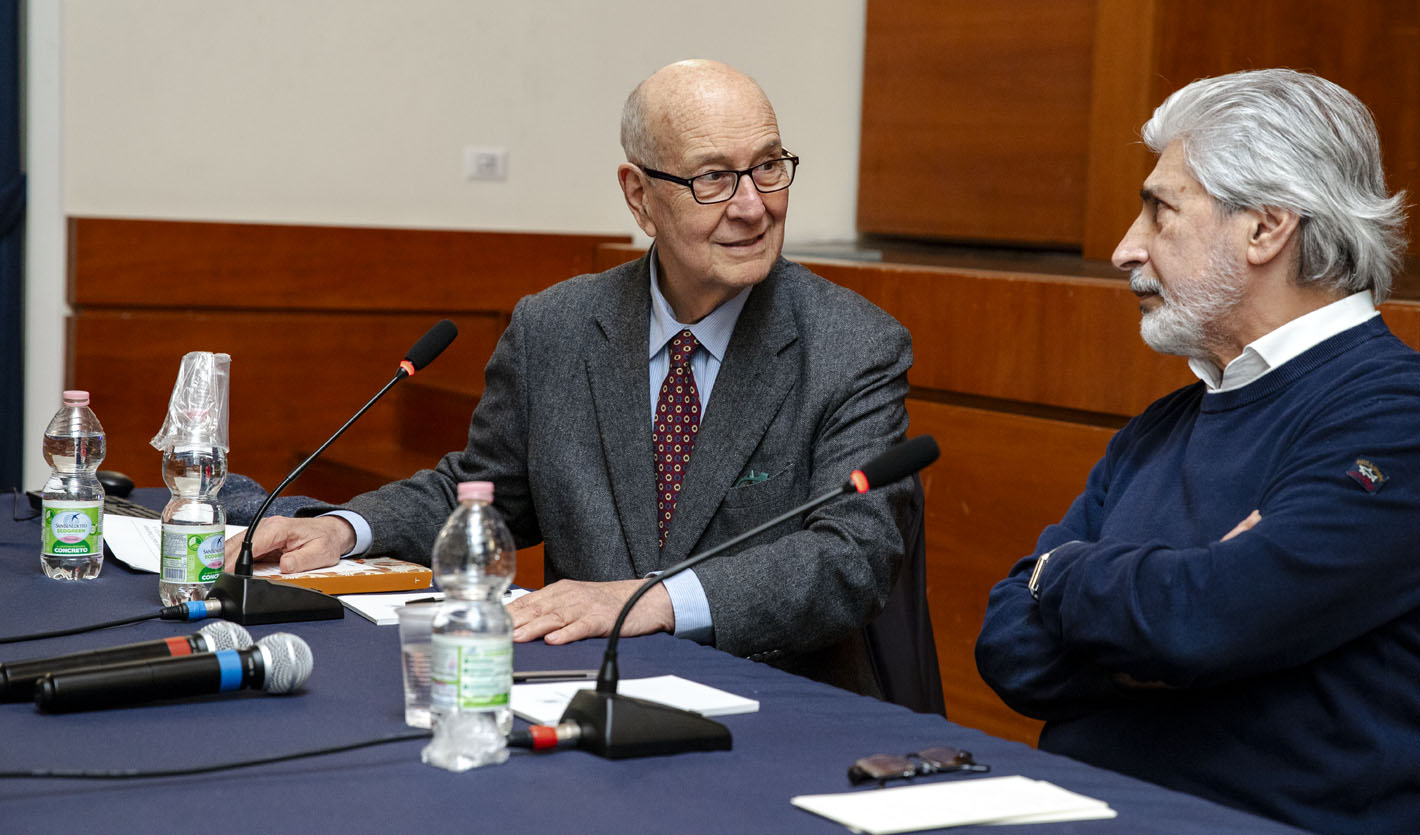
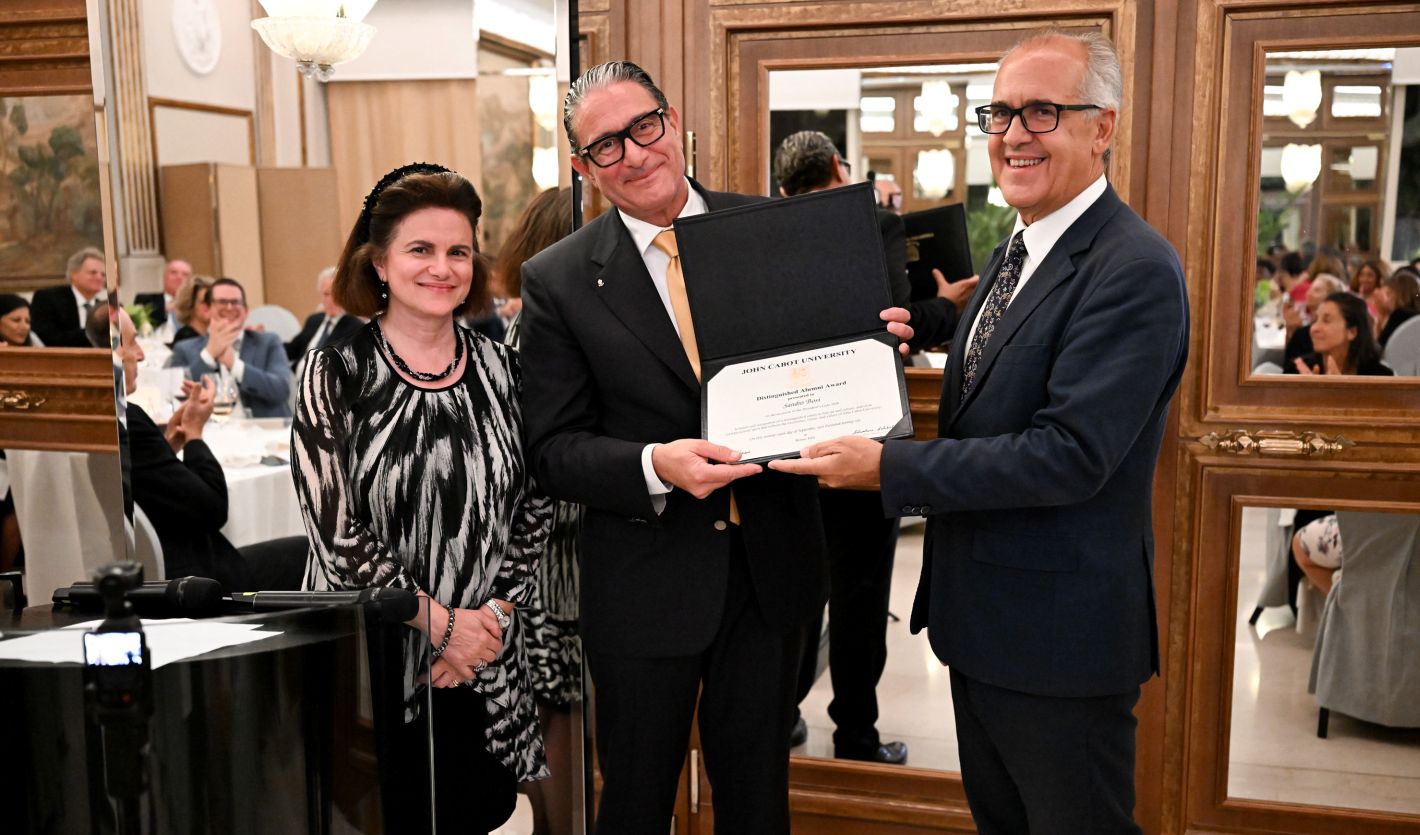
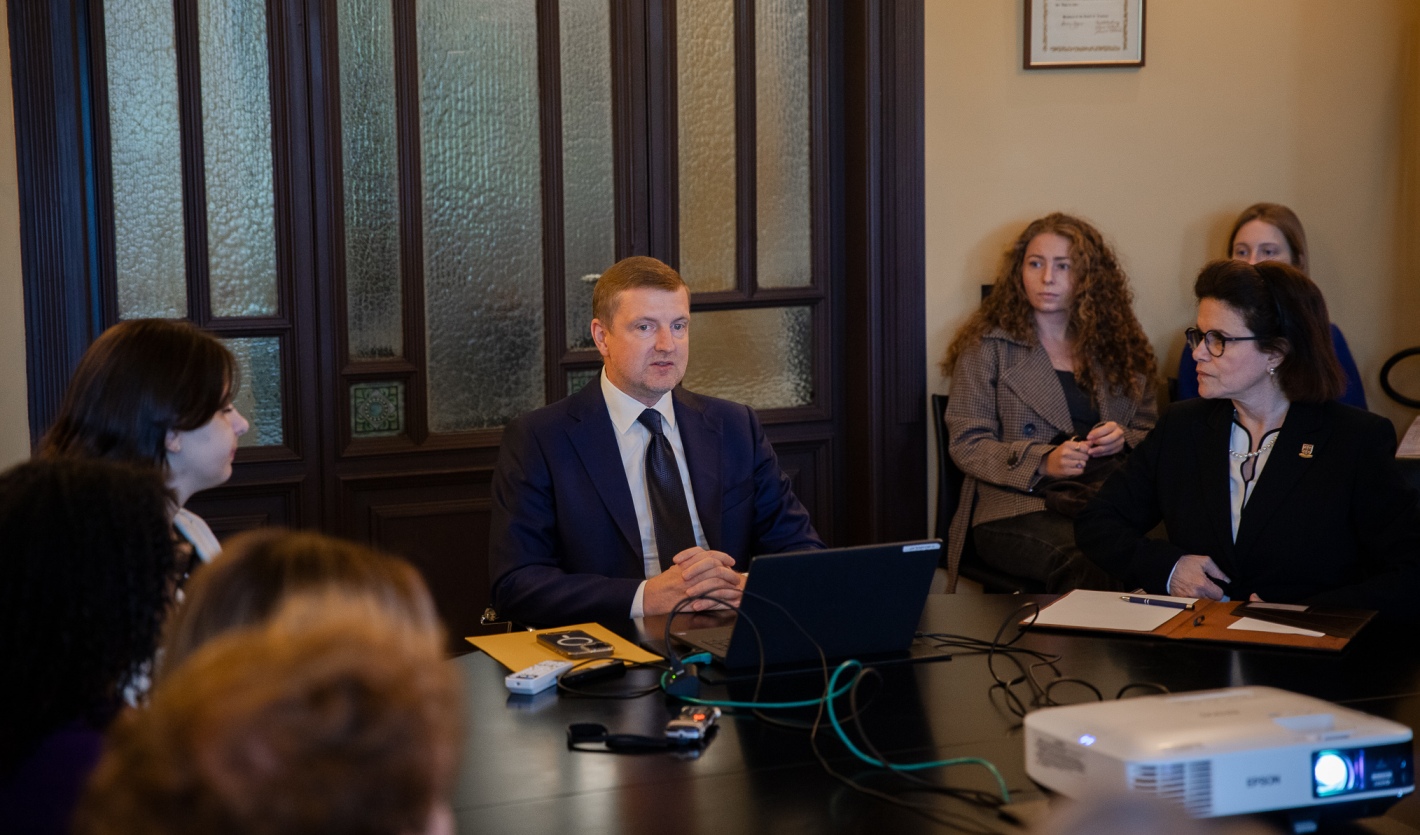
On February 10, 2026, the Frank J. Guarini School of Business and the President’s Office had the pleasure of hosting JCU alumnus and Trustee, Ali Reza Arabnia. Arabnia is an Iranian-born entrepreneur and Chairman & CEO of Gecofin S.p.A. in Milan active across the industrial, real estate, and social sectors. A visionary global leader, he is a strong proponent of community and ethics in business, drawing inspiration from Italian entrepreneurs throughout his career. Educated in England, Italy, and the US, Arabnia transformed Geico into a global automotive engineering leader. He has received numerous honors, including Italy’s Cavaliere del Lavoro distinction.
The event explored the characteristics of business owners in Italy, supported by extensive research from Arabnia's book Il Segreto Italiano: Tutta la bellezza che c'è ("The Italian Secret: All the Beauty There Is" - Treccani, 2023), written in collaboration with Professor Alessandro Catoni from LUISS University. Using rigorous managerial analysis, the book uncovers the unique “Italian secret” behind enduring business excellence, where profit, creativity, and social progress coexist in a humanistic vision of enterprise. The volume, edited by Vittorio Coda, includes a preface by Arabnia.
Long-Term Passion
Arabnia described Italian entrepreneurs as "romantic about business.” They fall in love with their projects and refuse to abandon them over a bad quarter or skeptical analysts. Where others might pivot at the first sign of trouble, Italians persist for years, driven by their emotional commitment rather than short-term metrics.
Arabnia illustrated this with his own experience. He admitted that he would love to tell his grandchildren he followed a strategic plan, but he told the audience, "It’s not true. I just reacted. I wanted to do this, so I went and did it. Passion without a predetermined roadmap, is what distinguishes Italian entrepreneurs from the rest. They are unafraid of long-term journeys, which is really something special," Arabnia argued.
Responsibility to Stakeholders
At the macro level, Italy's economy is built on small and medium-sized businesses, each led by owners who know their employees, and often their families, personally. This structure broadly distributes wealth and creates a form of social democracy, even if its unintentional.
When an entrepreneur succeeds, Arabnia explained, they reinvest locally in scholarships, support for neighboring businesses, and territorial commitments. This extends to moments of crisis as well. During earthquakes and other disasters, Italian companies help each other directly, operating without waiting for state intervention. It's a model built on stakeholder relationships, where value is measured not just in profits but in the strength of the surrounding community.
Endurance Through Adversity
Perhaps the most striking insight is what Arabia called "antibodies," which is the resilience Italian businesses develop from navigating inefficient bureaucracy. This is why when Italians venture abroad, everything seems simple by comparison. Italian companies average 70% of sales outside Italy, often built by entrepreneurs who started with little more than a suitcase and determination.
Arabnia connected this to his own journey as an immigrant. He came to Italy unable to speak the language and was a student worker at JCU, before eventually going on to build a career as a multinational business owner.
For young people entering the workforce, Arabnia's advice is to seek difficulty, not comfort. He reminded the audience to show up in person, navigate office politics, and that it’s okay to face rejection. These experiences build the antibodies that will guarantee success later. "Time is the most important asset in life; take advantage of it," he said.