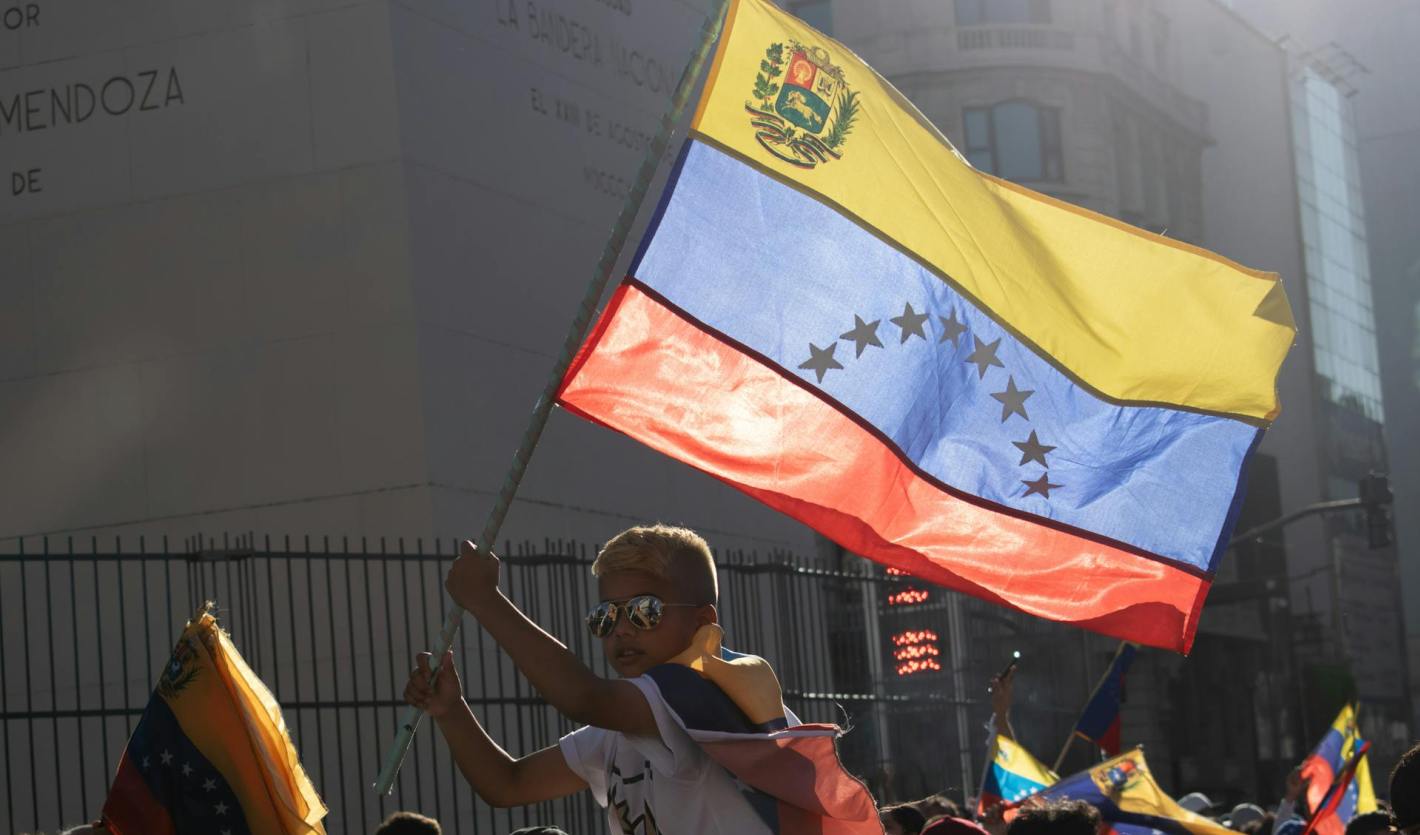
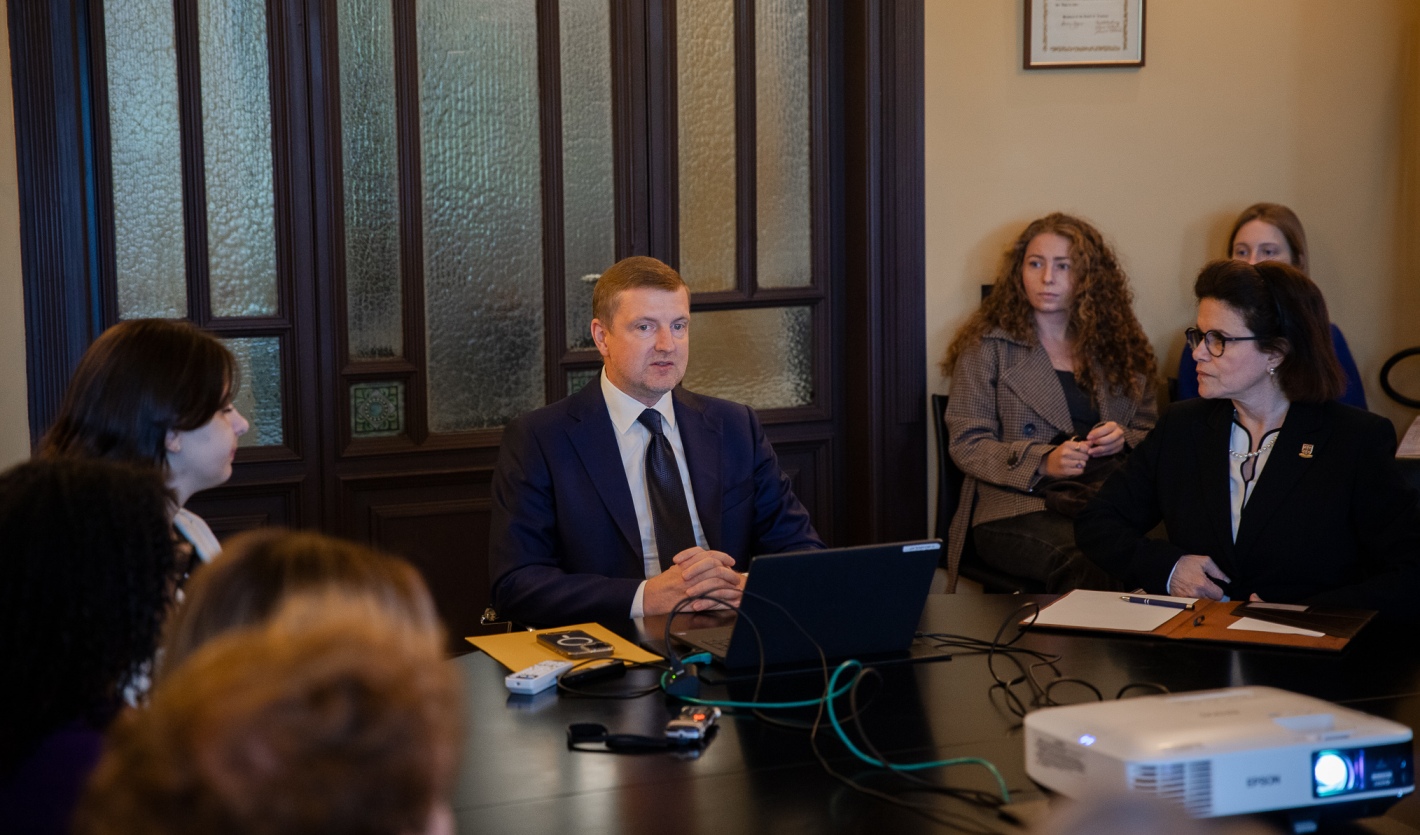
On Tuesday, January 20, 2026, the Guarini Institute for Public Affairs organized the event “Power Vacuum in Venezuela?” featuring Professor Paolo Wulzer (JCU, The University of Naples "L'Orientale"), Gregory Alegi (LUISS University), and Simone Tholens (JCU, European University Institute Florence). The panel examined the sudden disruption of executive authority in Venezuela after a period of escalating tensions between President Nicolás Maduro and the Trump administration. The event was moderated by Federigo Argentieri, Director of the Guarini Institute.
The discussion addressed whether recent developments in Venezuela constitute a genuine power vacuum or a more ambiguous reconfiguration of authority. Rather than reaching a definitive conclusion, participants emphasized the uncertainty created by leadership removal without the dismantling of the broader governing elite. This configuration leaves authority partially disrupted but not clearly replaced, raising questions about whether power has been evacuated, substituted, or externally managed.
At the legal level, the discussion focused on the progressive erosion of sovereignty as a binding principle. Historical doctrines in the Western Hemisphere were cited to illustrate how intervention has long been justified through the protection of order, economic interests, and strategic stability. Earlier cases of territorial separation and regime manipulation have shown how sovereignty has been reshaped through asymmetric arrangements and elite bargains rather than popular consent.
More recent precedents reinforced skepticism toward leadership-focused interventions. The removal of heads of state in Iraq (2003) and Libya (2011) was discussed as producing enduring instability, institutional collapse, and regional disorder. These cases were invoked not as direct analogies but as warnings: leadership decapitation does not resolve power vacuums and may deepen them when no credible political settlement follows. Venezuela was therefore framed as analytically indeterminate, with outcomes still contingent rather than predetermined.
The legal environment enabling such actions was also examined. The activation of collective defense mechanisms after major terrorist attacks was identified as a turning point, which normalized “out-of-area” operations when the UN Security Council was blocked. This development was described as contributing to the downgrading of international law from a constraining framework to a permissive one, enabling intervention without broad multilateral consensus.
The discussion further situated Venezuela within a broader transformation of international order. Traditional diplomacy, grounded in precedent and gradual negotiation, was contrasted with a newer mode of “blitz diplomacy,” characterized by speed, coercion, and transactional logic. Within this environment, several intervention models were identified. One model emphasizes comprehensive reconstruction through state-building, institutional reform, and hierarchical donor–recipient relationships. A second approach prioritizes resilience over transformation, focusing on strengthening sovereignty, identity, and capacity to withstand pressure rather than reshaping political systems. The last model centers on infrastructural recovery, defining stability as the restoration of pre-crisis functionality across territory and governance rather than political reform.
Alongside these approaches, the discussion identified a further pattern: external actors facilitating the emergence of a strong leader to fill perceived gaps in authority and enable recovery and investment. In such cases, legitimacy derives from functionality and external recognition rather than domestic consensus. Venezuela was discussed as potentially fitting this model, though without certainty as to whether consolidation or fragmentation would follow.
Strategically, the Venezuelan situation was linked to broader global competition, particularly rivalry with rising powers. Leadership removal was interpreted by some as an effort to prevent deeper alignment with geopolitical challengers. This reflects a broader trend in which international law is increasingly subordinated to strategic expediency. The Western Hemisphere was described as treated less as a legally equal region and more as a privileged sphere of influence.
Overall, the discussion highlighted the coexistence of competing logics — legal, strategic, historical, and transactional — pondering whether current actions will produce consolidation, prolonged instability, or a new form of externally mediated order.