

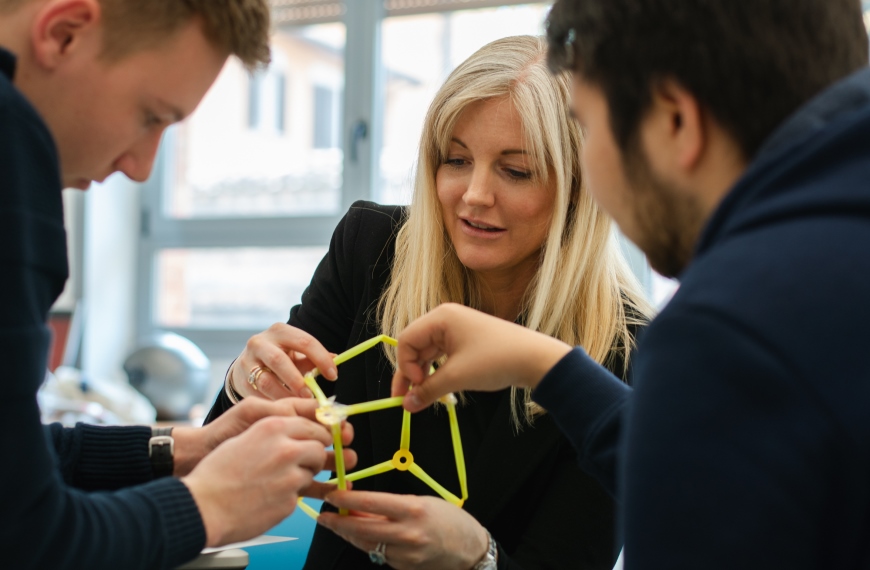
The Department of Mathematics, Natural, and Applied Sciences helps students develop the analytical, computational, and technological skills needed to understand and shape the world around them. Through an interdisciplinary, liberal arts approach that combines theory, real-world application, and critical thinking, students gain the tools to navigate a rapidly evolving global landscape.
The department offers a Bachelor of Science in Computer and Information Science, along with minors in Mathematics and Computer Science. Our courses also support John Cabot University’s core curriculum and programs in Business Administration, International Business, Economics and Finance, as well as Art and Design. Students further benefit from the department’s Math Tutoring Lab, which provides personalized support from faculty and senior students for quantitative coursework across disciplines.
Studying in Rome adds a unique international dimension to the experience. Students learn in a diverse classroom environment while living in a city where history, culture, international institutions, and emerging innovation networks intersect. Exposure to different perspectives and professional environments helps students develop the cross-cultural mindset increasingly essential in today’s technology-driven world.
Prof. Sara Munday
[email protected]
Chair, Department of Mathematics, Natural, and Applied Sciences
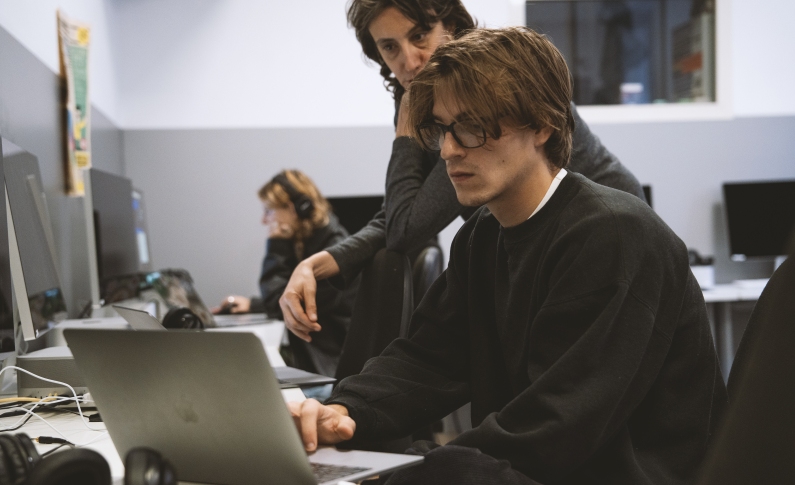 JCU’s Bachelor of Science in Computer and Information Science combines the technical foundations of computer science with the strategic, ethical, and interdisciplinary perspective of information science, all within the framework of a liberal arts education.
Students develop strong computational and problem-solving skills while also exploring how technology intersects with business, communication, law, ethics, and society. This rare combination prepares graduates not only to build technology, but also to understand which problems are worth solving and how innovation shapes the world around us.
The program’s flexibility allows students to personalize their studies through electives across disciplines, from advanced mathematics and programming to management, economics, digital media arts, and design. Small classes, project-based learning, and opportunities for internships create a highly interactive academic experience that connects theory to real-world applications and emerging research questions.
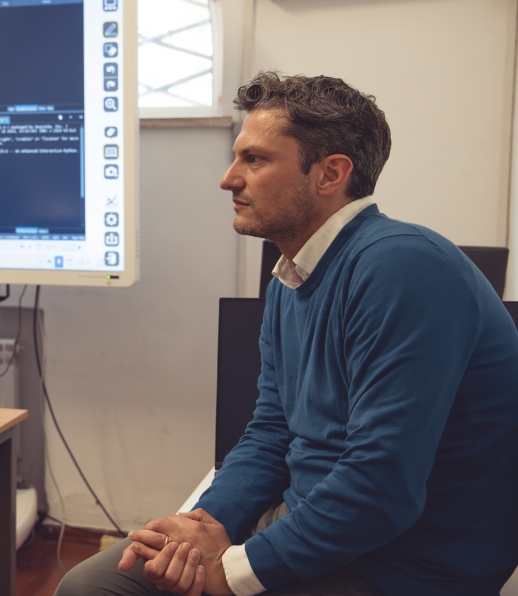
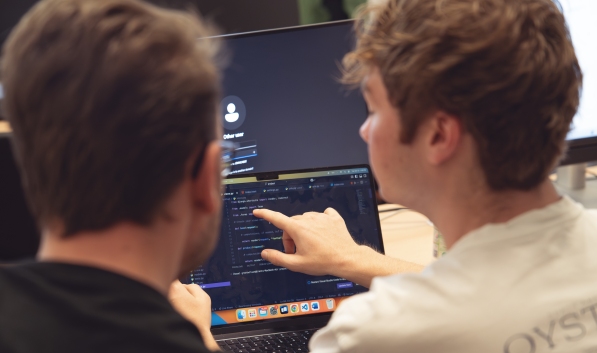
The Minor in Computer Science provides students with the technical and analytical skills needed to approach problems in their major field through the lens of computing and technology. The program develops computational thinking, problem-solving abilities, and programming skills, while also introducing students to key concepts in software development, data analysis, and modern computational systems.
It is designed to complement a wide range of majors, particularly in Economics, Finance, Business, International Affairs, and the Social Sciences, by equipping students with tools that are increasingly essential in data-driven and technology-oriented environments. Through the study of computing methods and applications, students gain both practical skills and a new way of thinking about complex real-world problems.
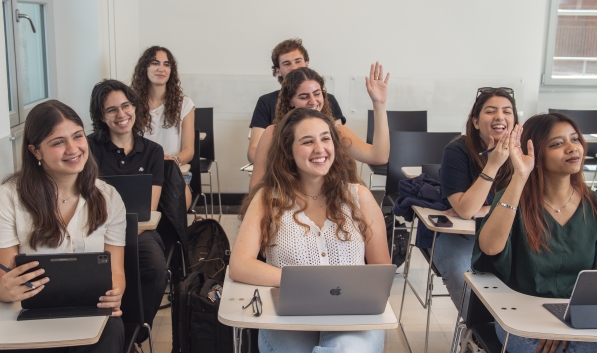
The Minor in Mathematics develops strong analytical, logical, and quantitative skills that are highly valued across a wide range of fields, equipping students with tools that are increasingly important in data-driven academic and professional environments.
It prepares students for careers and graduate study in data-intensive and analytical fields such as Economics, Finance, Business Analytics, Logistics, and related disciplines.
Through a carefully structured set of courses, students build a solid foundation in calculus, linear algebra, and other core areas of mathematics. The program emphasizes problem-solving, abstract reasoning, and the ability to translate real-world questions into rigorous mathematical form.
Our faculty hold doctoral degrees in Mathematics, Physics, Environmental Science, Information Systems, Computer Engineering, and Computer Science from prestigious American and European universities. They are active researchers who regularly publish their research in established peer-reviewed international journals and conference proceedings.
Bringing their research experience into the classroom in a meaningful way, our professors expose students to current scientific debates, the history of mathematics, and the role these fields have played and continue to play in the evolution of our world. Our professors also involve students in their research activities as part of the research assistantship program to best prepare them for prospective graduate studies.