
At JCU, your sustainability journey begins from day one and continues beyond graduation. You’ll engage with courses, hands-on projects, and career-focused opportunities that empower you to make an impact.
Learning goes beyond the classroom with company visits, job shadowing, internships, and student delegations to global events like COP – giving you real-world experience and connections.
The Triggering Change challenge is a two-minute pitch that uses creativity to inspire action on sustainability.
John Cabot University provides many ways to encourage students to develop their knowledge of and sensitivity to environmental sustainability. One way is through academic courses. These are meant to fully integrate with the wealth of other activities and projects available at JCU: students clubs, community work, faculty-led trips, lectures and workshops, alumni networking and mentoring, the Triggering Change pitch challenge, as well as the Certificate in Sustainability.
True to its liberal arts tradition, JCU takes a multi-disciplinary approach to sustainability, helping to develop a holistic vision that provides a broad approach to understanding and making sense of this complex topic. Courses are being added, and the curriculum is evolving to accommodate greater flexibility and focus.
This collection includes scholarly publications, working papers, and research outputs with a focus on sustainability.
Below is a selection of courses that make meaningful contributions to social and environmental sustainability efforts.
ARCH/NS 310 Environmental Archaeology and Paleoclimatology
BUS 220 Business Communication
BUS 320 Public Relations
BUS/PL 325 NGO Consulting Lab
BUS 498 International Business Seminar
CMS 323 Media and the Environment
CMS 345 Ecocinema: Environmentalism and Film
CMS 375 AI and Critical Art Practices: Ethics, Aesthetics, Labor
CS/MGT 310 Technologies and Strategies for the Sustainable Enterprise
DJRN 380 Writing for Advocacy: Climate Crisis
EC 380 Environmental Economics
ETH/BUS 301 Business Ethics
EXP 1025 Climate Journalism: Combating Disinformation and Driving Change
EXP 1066 Storytelling for Social Change
MGT 345 Social Entrepreneurship
MGT/BUS 375 Entrepreneurship in Creative Industries
MKT 320 Integrated Marketing Communications
NS 202 Global Warming
NS 220 Food and Agriculture
NS 230 Energy and Environment
NS 290 Science and Urban Ecology
PH 323 The Ethics of Artificial Intelligence
PH 325 Ethics of Emerging Technologies
PL 366 International Environmental Politics
PL/GDR 375 The Politics of Gender
PL/LAW 230 Human Rights
PL/LAW 325 Human Trafficking and Contemporary Slavery
PL/LAW 326 Globalization and Crime
PL/LAW 350 Human Rights and Business
PL/LAW 355 International Children's Rights
SOSC/GDR 310 Gender, Culture and Urban Spaces
SOSC/ITS 220 Italian Food Culture
SOSC/LAW 322 Green Criminology
In his Social Entrepreneurship course, Professor Riccardo Maiolini teaches students to think systematically about social and environmental values and develop a socially conscious business mindset.
Professor Jakobsone Bellomi’s NGO Consulting Lab course adopts a holistic approach in its quest to uncover how to mainstream human rights, gender equity, diversity and environmental sustainability in the work of NGOs.
Professor Gazziano seeks to convey to students the importance of using technology to create value and reduce environmental impact. His Technologies and Strategies for the Sustainable Enterprise course introduces students to technical approaches of information and communication technologies (ICTs) to understand how to measure and reduce greenhouse gas emissions (GHG).
Through his vocation for ecomedia literacy, Professor Antonio Lopez motivates students to embark on the quest for environmental awareness. Each of his courses presents unique challenges and innovative solutions to the ongoing environmental crisis.
In Professor Chiara Giaccari's Human Rights and Business class, students are challenged to act as advisors, encouraging companies to integrate human rights into every aspect of their operations.
By utilizing international law, international relations, sociology, and history as tools, Professor Scarpa has built a transdisciplinary course, based on discussing and examining specific forms of exploitation in the world, which permeate modern supply chains in the global economy.
Professor Isabella Clough Marinaro seeks to motivate students enrolled in her Green Criminology class to see that advocating for the environment is ultimately about fostering community, peace and social justice.
Professor Rodrigo Salcedo Du Bois teaches Environmental Economics with the belief that no action is small enough when it comes to building a better world.
In his classes, JCU Professor Jens Koehler analyzes how humans have been impacted the environment and the climate since prehistoric times.
The International Business Capstone final project emphasizes the importance of environmental sustainability and embedding ESG in business practices. Students presented their findings to industry experts from ENEL, the Italian energy company, and EY, a multinational professional services company, as well as the JCU community.
 The Sustainability Hub connects John Cabot’s community with a global network of alumni, scholars, and professionals committed to sustainability. Driven by the passion and expertise of our alumni, the Hub strengthens collaboration across industries and disciplines.
By joining the JCU Sustainability Hub, you can contribute through events, mentorship, funding opportunities, and academic initiatives that advance the integration of the United Nations SDGs into the University experience.
As we approach the 2030 SDG deadline, collective action has never been more important.
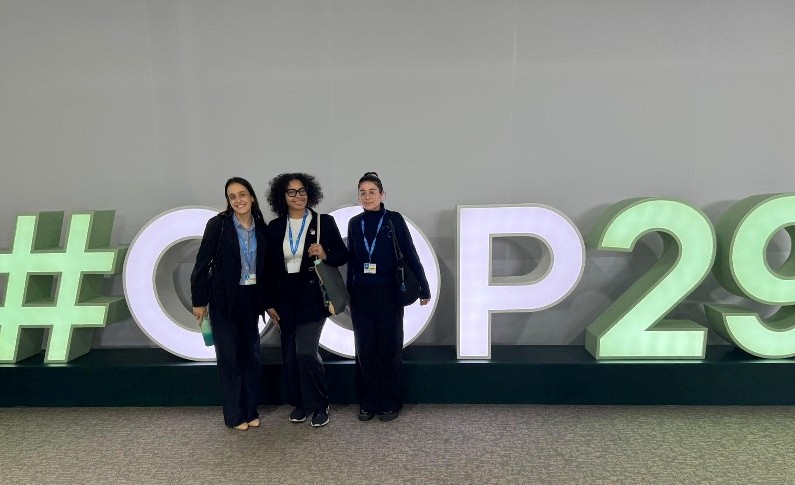 The Conference of the Parties (COP) is the annual United Nations climate summit, bringing together world leaders, policymakers, and experts to assess progress on the Paris Agreement and advance global climate action.
As part of its commitment to sustainability and experiential learning, John Cabot University proudly sends student delegations to COP, giving students firsthand access to international negotiations and global conversations shaping the future of our planet.
The John Cabot community is active in promoting and organizing myriad events and activities that rotate around sustainability, both within and outside of the University. Many of these happenings are integrated within the curriculum; others are outside of the academic sphere. In both cases, they reinforce and fuel the dynamic approach that our students, alumni and faculty have towards sustainability.
JCU’s Career Services Center regularly organizes company visits to sustainability-focused organizations, giving students a first-hand look at how businesses and international institutions integrate social and environmental responsibility into their work. These include Patagonia, Zambon, FAO (Food and Agriculture Organization), and UNDP (United Nations Development Programme).
JCU Students Visit FAO Headquarters in Rome
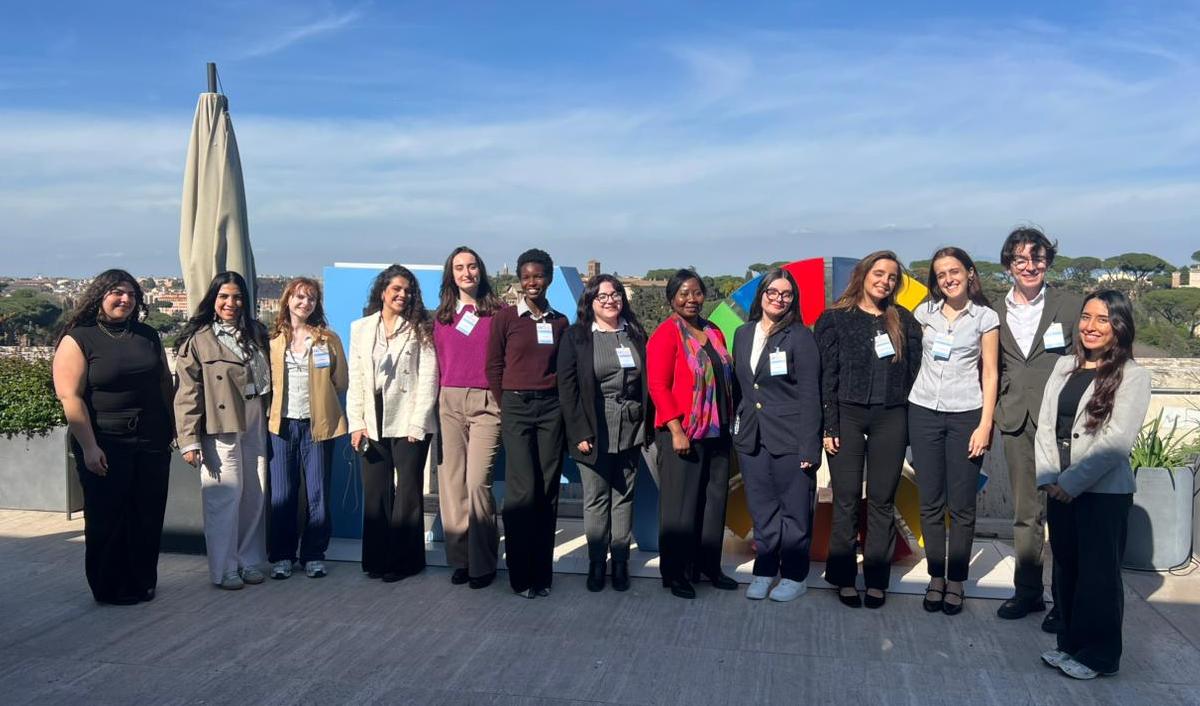
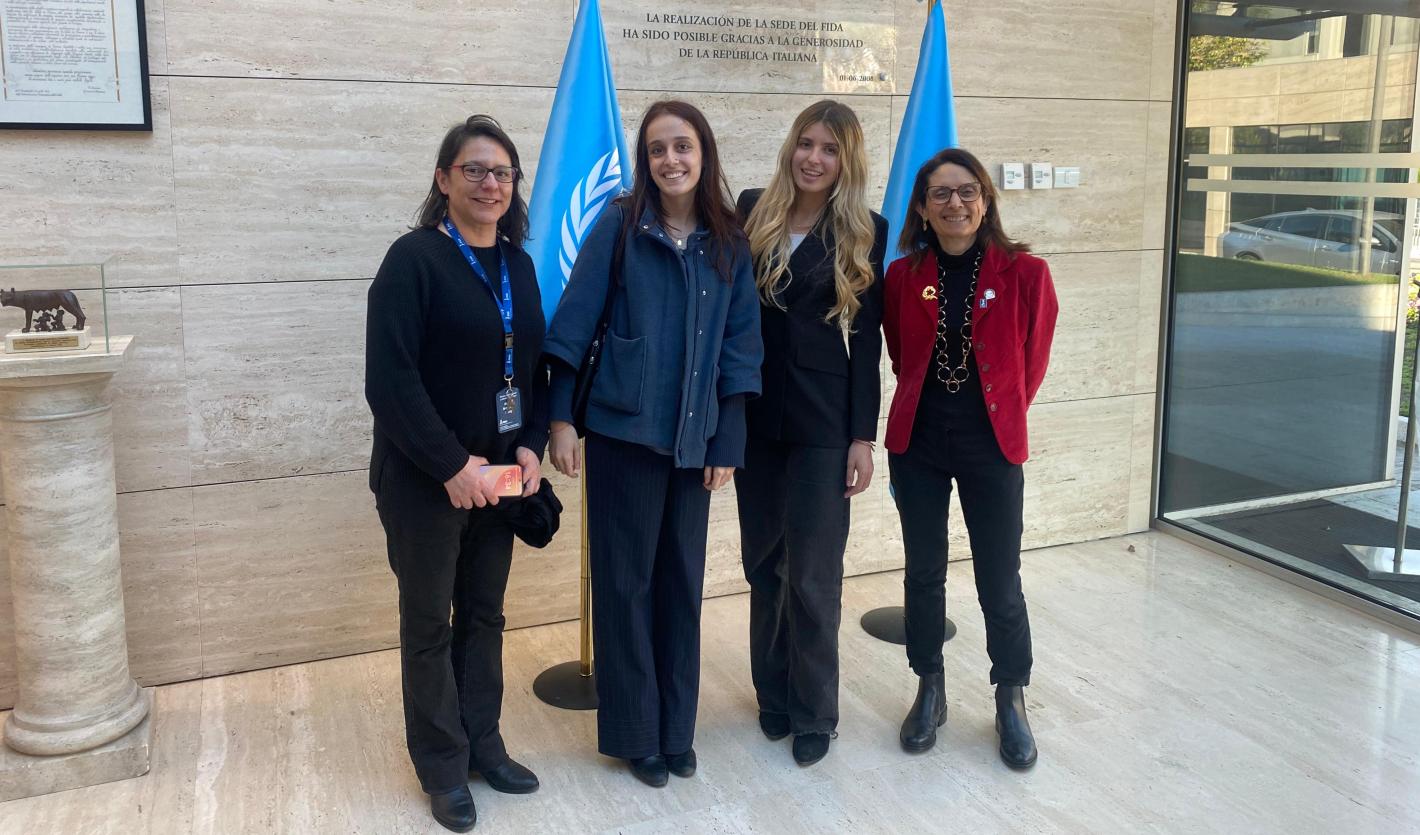
In Spring 2026, students can learn procedures, leadership skills, and organizational dynamics by closely observing senior women leaders within sustainability-driven institutions as IFAD, FAO and Ecolab. These immersive shadowing experiences are part of the Women in Leadership Program, a high-impact initiative dedicated to developing the next generation of leaders.
Discover all Career Services Events
Forty JCU students attended the flagship event of the World Food Forum at the UN Food and Agriculture (FAO) headquarters in Rome in October 2024. This provided a unique opportunity to learn about sustainable food practices from experts, policymakers, and youth leaders from around the world.

JCU students have access to several open educational resources that can boost their green knowledge and skills, so that you can make meaningful contributions to sustainability efforts and address the world’s most pressing environmental and societal challenges.