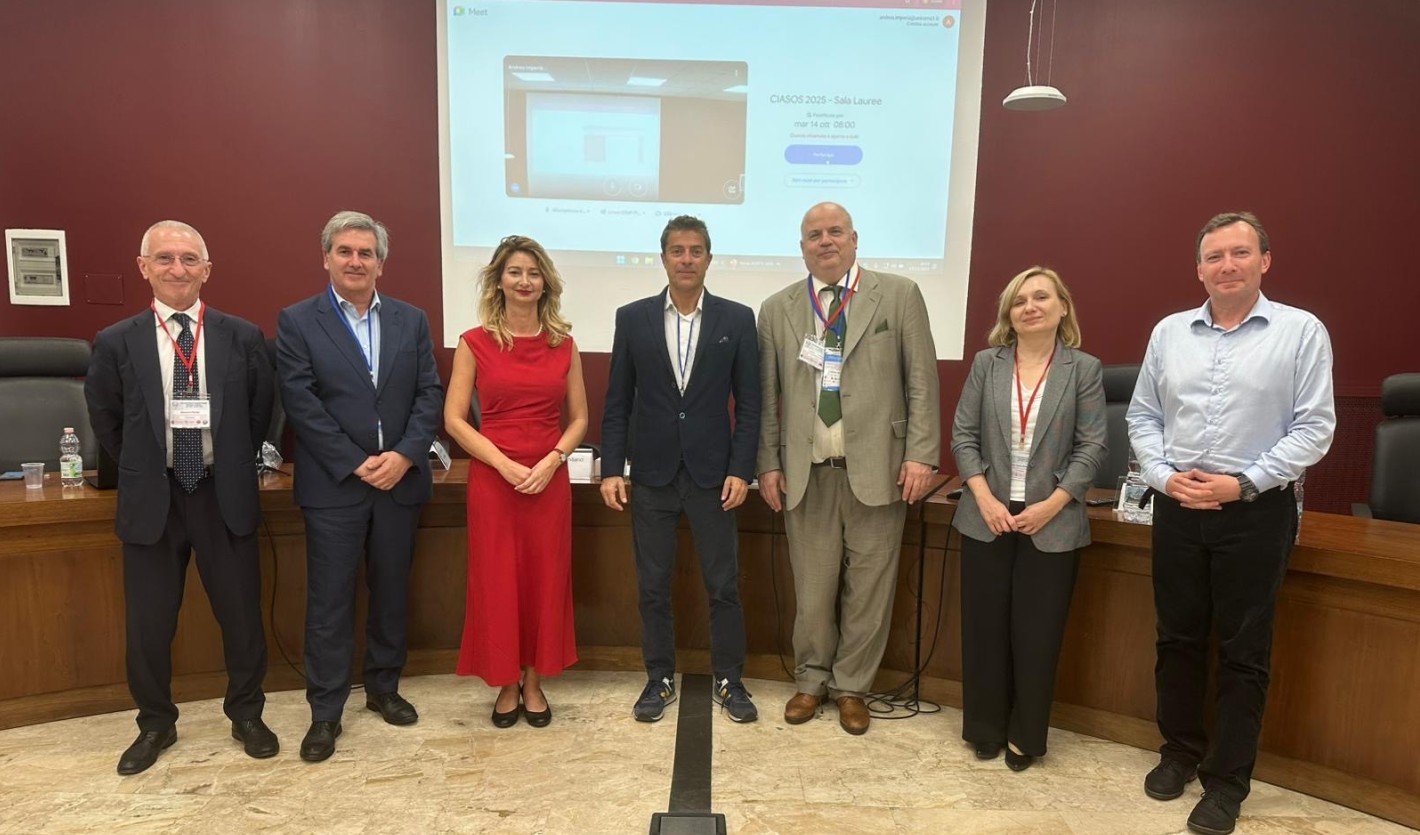
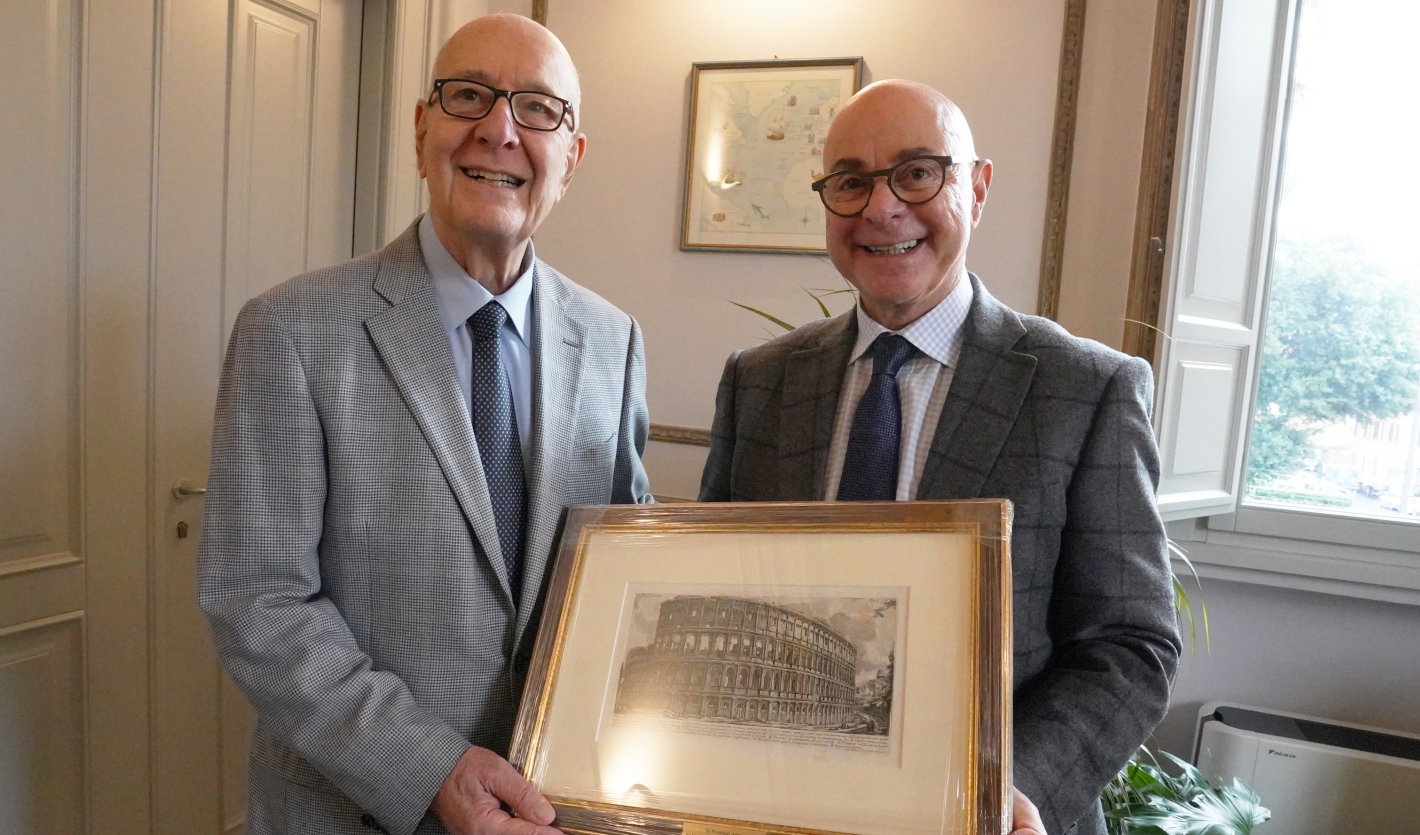
On October 15, Professor Sergio Scicchitano, Chair of the Department of Economics, had the honor of delivering a keynote address at the IX International Applied Social Sciences Congress (C-IASOS 2025). The topic of this year’s congress, held from October 13 to 15, 2025, at Sapienza University of Rome, was “Shaping the Future in an Era of New Challenges: Social, Economic, and Environmental Stability and Sustainability.”
John Cabot University, through the Frank J. Guarini School of Business, was one of the scientific partners of the conference, which was held in cooperation with the following institutions: Sapienza University of Rome (Italy); the University of Malta; Haxhi Zeka University (Kosovo); the University of Tetova (North Macedonia); the Academy of Economic Studies of Moldova (ASEM, Moldova); the Faculty of Tourism and Hospitality Management at the University of Rijeka (Croatia); the West University of Timișoara, Faculty of Economics and Business Administration (Romania); and Graphic Era (Deemed to be University) (India).
The conference, whose motto is “Applicable Knowledge for a Sustainable Future,” covers subjects including business, economics, finance, tourism, and all other social sciences. The main purpose of the event was to share scientific studies, practices, and experiences in the fields of social and human sciences, educational sciences, sports sciences, fine arts, natural sciences, and engineering, and to develop new perspectives.
Prof. Scicchitano presented the paper “Sometimes you cannot make it on your own: How Household Background and Personality Traits Influence Success in Italy," which was a joint project with Luca Bonacini (University of Bologna, GLO) and Giovanni Gallo (University of Modena and Reggio Emilia, GLO). The paper focuses on intergenerational inequality.
In the paper, the authors explore the channels through which a person's household background influences their educational and social opportunities in Italy. The analysis is based on a comprehensive dataset containing information on individuals and their biological parents, as well as data on individuals' non-cognitive skills. The paper is the first to attempt to evaluate the extent to which personality traits affect educational and occupational opportunities in Italy, and how they interact with household background. The results show that parental education is a more significant factor than parental occupational skill in determining individuals' educational and social opportunities. Including Big Five variables in the model helps to control for omitted variables and reduces unobserved heterogeneity in intergenerational social mobility among individuals with the same level of education and skills. The results depict a dual and unequal labor market. One of the findings is that a person whose parents have a high level of education is 36% more likely to obtain a university degree than someone whose parents have neither a high level of education nor a high skill level.