On November 16, 2026, John Cabot University hosted the fifth edition of the Transatlantic Policy Dialogues, an ongoing policy workshop that aims to evaluate the evolving geopolitical challenges and opportunities in Europe and the United States. This year, the central theme was “Multilateralism and Transatlantic Cooperation in Transition.”
This edition considered how democratic partners can sustain multilateral cooperation amid geopolitical rivalry, pressure on the rules-based order, and uncertainty over American leadership. Diplomats and scholars examined the implications for defense, economic resilience, institutional reform, and the social foundations of security.
Opening the event, President Antonia Maioni revisited a question first posed during the 2024 edition of the Dialogues: how can allies respond to uncertainty in US policy when their international engagement has long relied on American leadership? Maioni situated the challenge within structural changes: US political polarization, China’s rise, the growing influence of the Global South, and Russia’s renewed imperial ambitions. These shifts affect multilateral cooperation on global health, economic stability, regional crises, peace, and security.
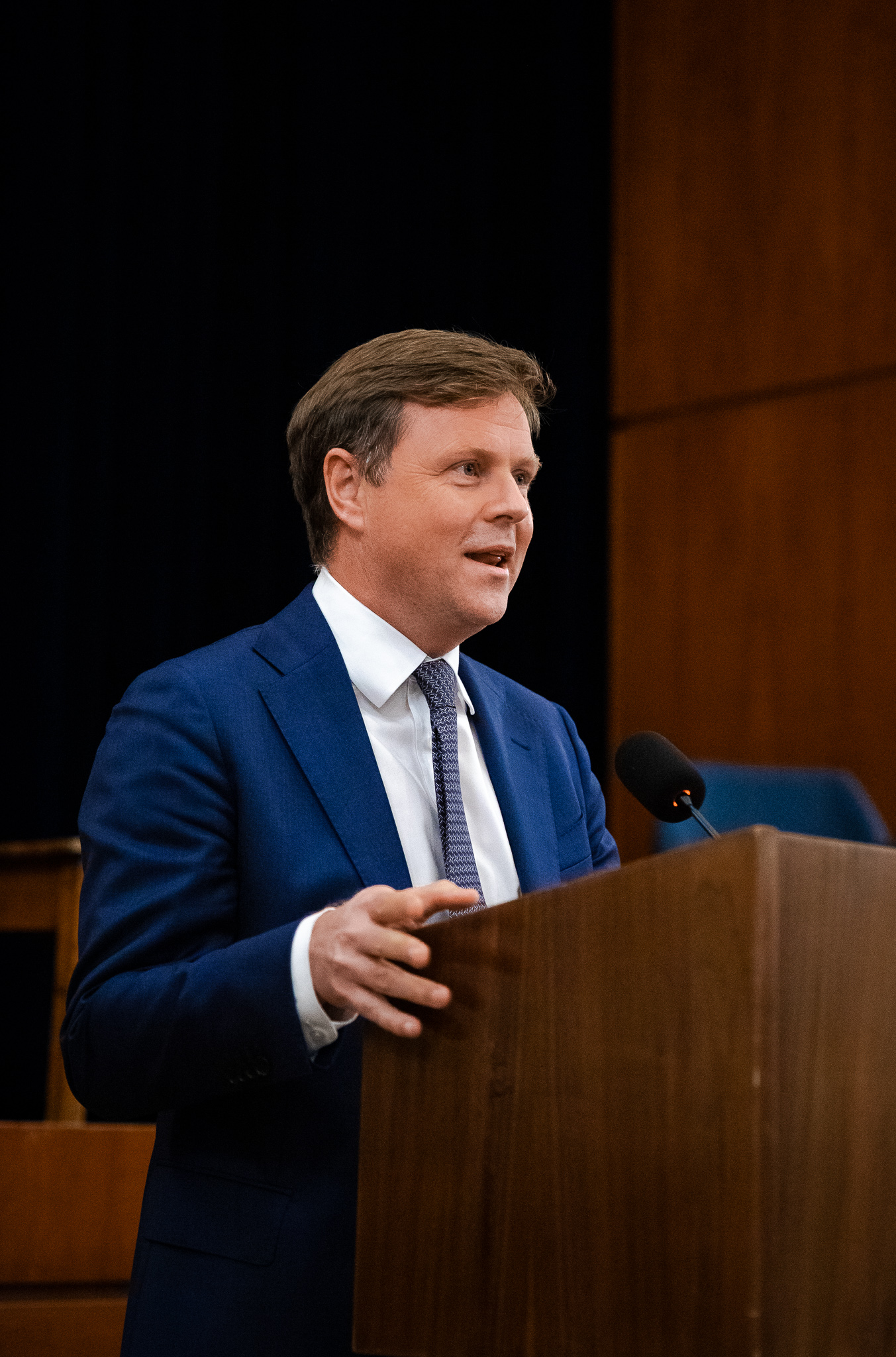
Ambassador Stephen Hickey
Ambassador Stephen Hickey on the Future of the Multilateral System
British Ambassador to Italy and San Marino Stephen Hickey cautioned against treating current tensions as entirely new or declaring the multilateral system finished. The US pivot towards the Asia-Pacific, demands for greater European defense spending, and disputes over international institutions predate the current administration, though recent developments have intensified them. The post-war order remains broad and deeply embedded, encompassing the United Nations, the World Trade Organization, international humanitarian law, and specialized agencies. Its present strain makes preservation and reform more urgent.
Hickey proposed five priorities: preserve multilateral institutions; deepen coordination among democracies such as the United Kingdom, Italy, and Canada; strengthen NATO’s European pillar; improve resilience in energy, critical minerals, supply chains, and defense; and reinvigorate European economies. Higher defense spending, he argued, must be matched by industrial cooperation and fewer fragmented national projects. Europe must also turn research strengths in artificial intelligence and quantum computing into investment, enterprise, and growth.
In discussion, Hickey acknowledged differing threat perceptions across Europe and called for empathy and a comprehensive approach to security. He favored strengthening NATO’s European pillar over creating a separate European army. On UN reform, he considered the abolition of the Security Council veto unrealistic but supported updating its membership. He also defended flexible diplomatic formats when they produce results while complementing, rather than displacing, multilateral institutions.
For Hickey, preserving multilateralism and adapting it to new realities must go hand in hand with democratic coordination, credible defense capabilities, and economic renewal.
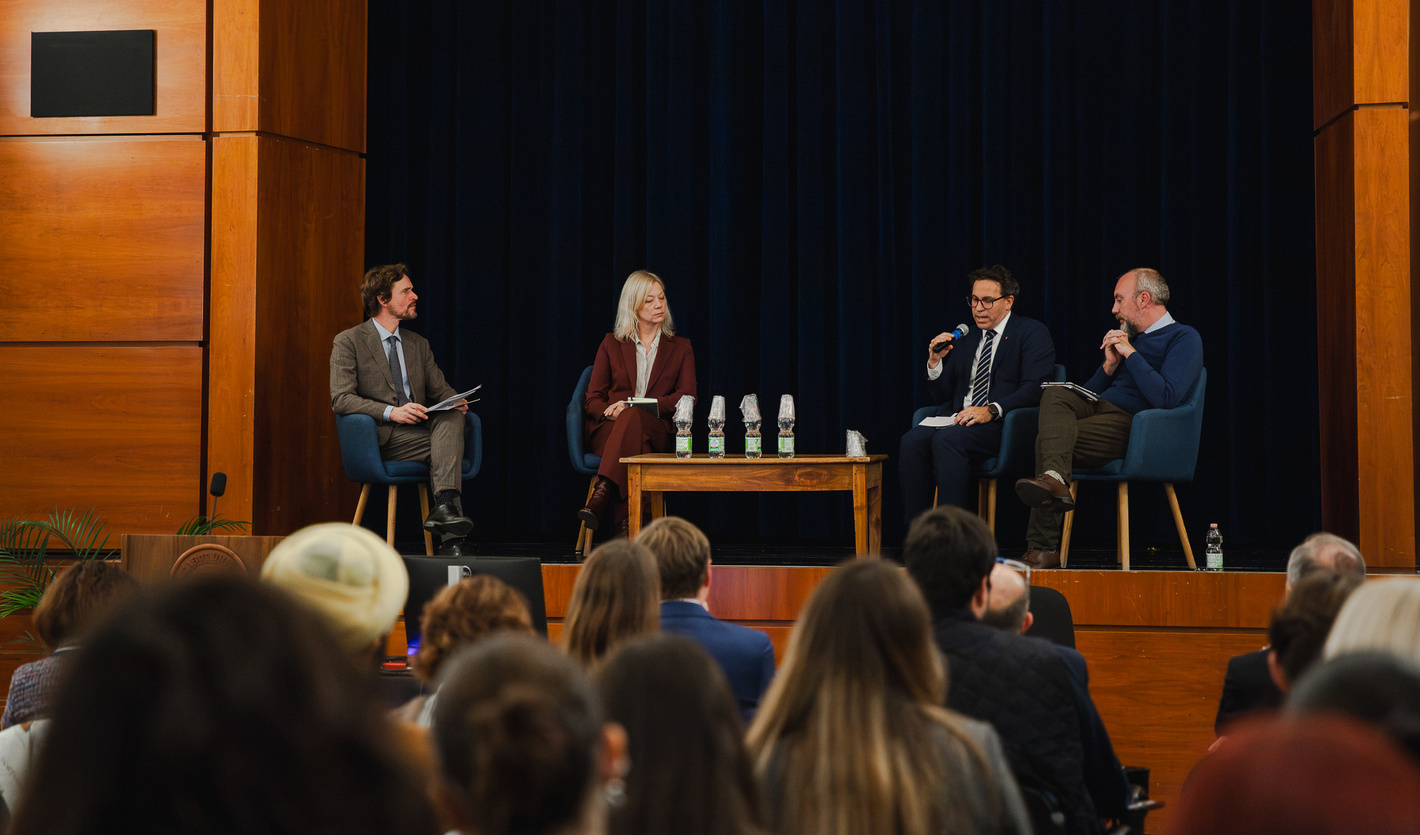
Roundtable Discussion
Ambassador Jeremy Adler, Deputy Head of Mission at the Embassy of Canada to Italy, described middle-power cooperation as a longstanding feature of Canadian diplomacy. Canada is diversifying partnerships while strengthening domestic resilience through productivity, infrastructure, energy security, critical minerals, and defense-industrial capacity. He presented the Canada-EU partnership in trade, digital technologies, energy, research, security, and mobility as complementary to existing alliances, not directed against the United States. Coordinated middle powers, he argued, can turn shared interests into practical initiatives.
Roderick Parkes of the NATO Defense College offered a cautionary view. Although NATO has taken on a stronger European dimension, he questioned whether Europe has a clear strategic vision for its own defense. Autonomy cannot mean simply reproducing American capabilities without the doctrine, intelligence, geography, and support systems that make them effective. Parkes warned that smaller coalitions can weaken common institutions when states bypass shared decision-making.
JCU Professor Simone Tholens examined the social implications of the turn towards defense. She argued that international engagement has shifted from humanitarian intervention and peacebuilding towards material security assistance: weapons, equipment, training, and military aid. In Europe, resilience and total defense bring the possibility of conflict into domestic life, raising questions about citizenship and public consent. Parkes warned against financing defense through cuts to welfare, diplomacy, development, and humanitarian assistance. Tholens added that younger generations need a credible future vision, not simply an agenda of national interests and status-quo preservation.
In his closing remarks, Ambassador Armando Varricchio, Senior Transatlantic Fellow at John Cabot University, argued that transatlantic ties predate NATO and rest on historical connections and shared political identity. Security, he said, must include democratic resilience, environmental protection, public health, and shared values. Europe’s changing global position does not make it irrelevant or mean it should act alone. Varricchio distinguished alliances based on shared commitments from temporary convergences of interest, describing NATO as more than a collective-defense mechanism. He urged Europe to renew its partnerships and pass responsibility to younger generations.
The event underscored that the future of transatlantic cooperation depends not on defense capability alone, but on the ability to combine institutional continuity, flexible partnerships, economic strength, social cohesion, and a shared political purpose.