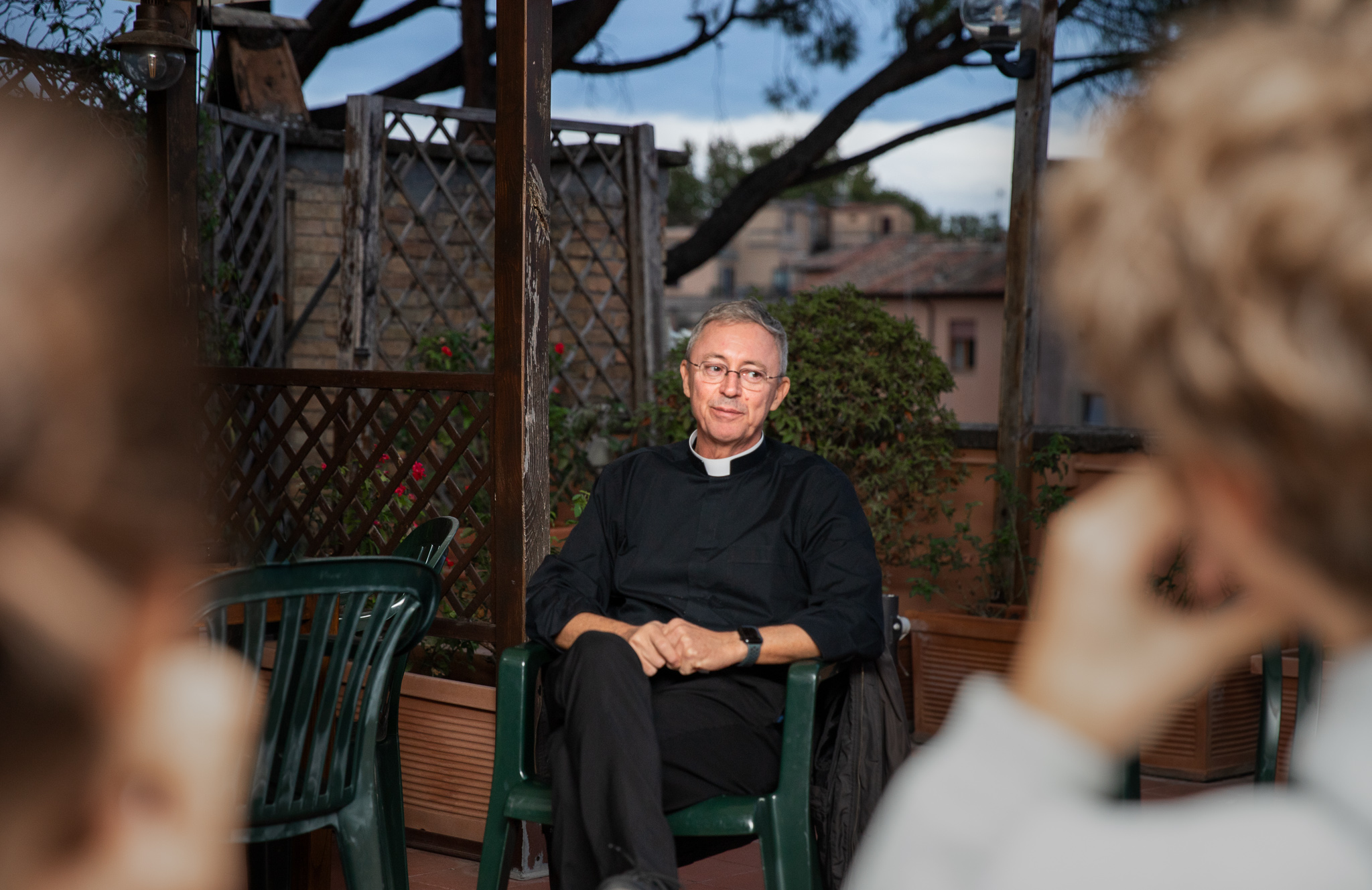
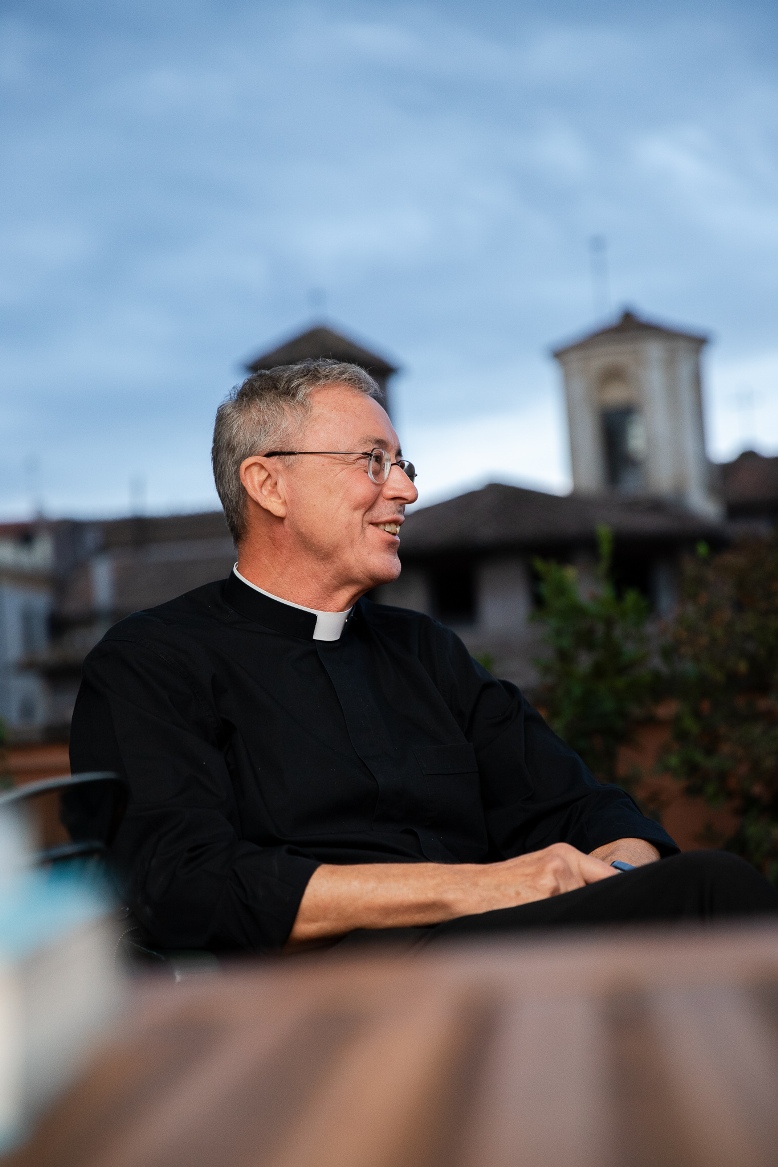
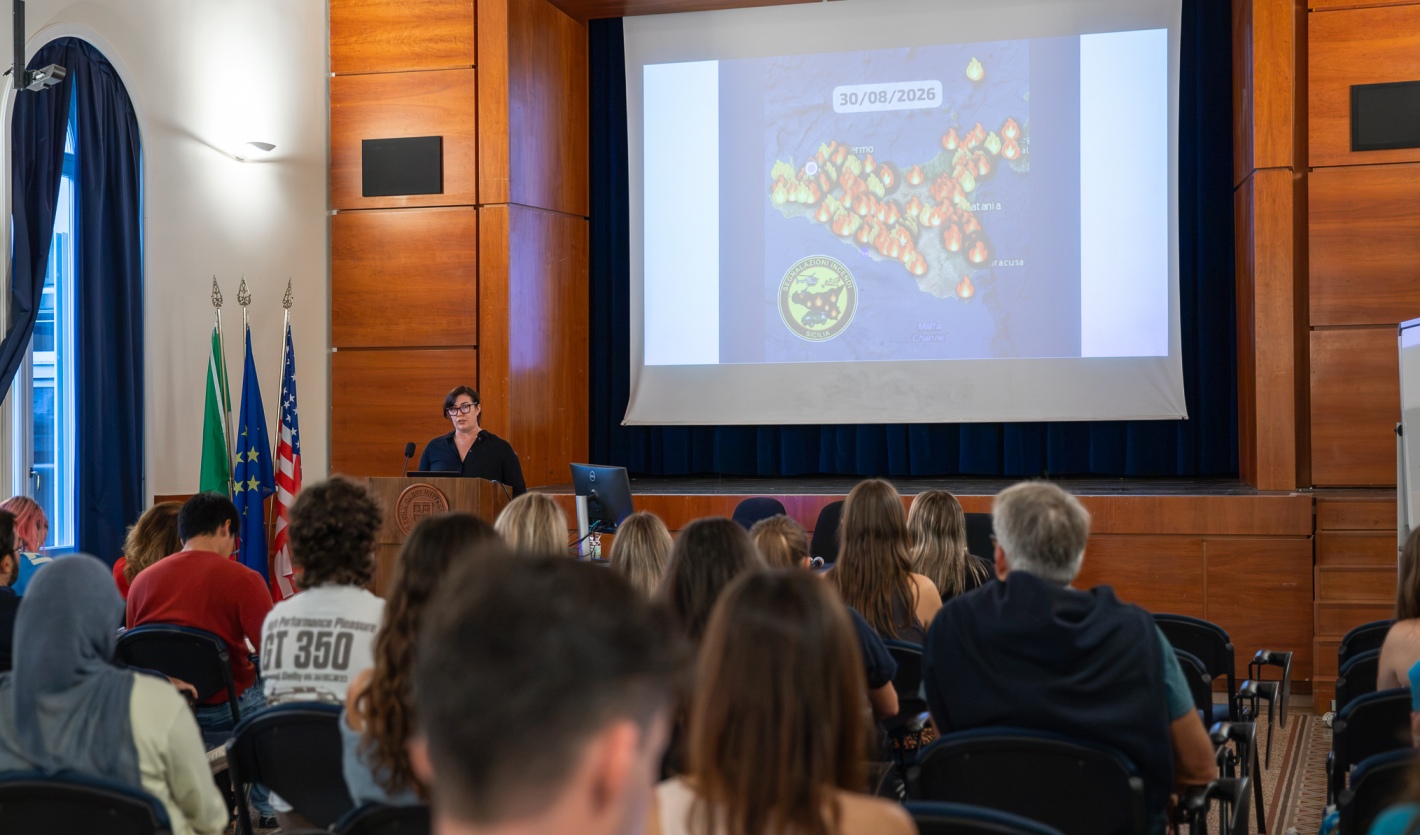
On Tuesday, October 6th, the Office of Community Service, Religious Life and Multiculturalism organized a meeting with JCU Chaplain, Father Riccardo Lufrani, giving students the chance to ask him challenging questions about the role of the church today, faith, and religion.
Before taking “the hot seat,” Father Riccardo introduced himself and explained how he received his calling.
A Journey in Search of Meaning
Father Riccardo drifted away from the Catholic Church at the age of 13 and spent much of his youth searching for truth and happiness through his passions. As a young man, he dreamed of studying archaeology, philology, and architecture, but he followed his parents’ advice and chose economics instead. After college, he worked in a harpsichord atelier in Paris for one year, then spent one year in Israel, first as a volunteer in a kibbutz and later working with horses. During that period, he took a 28-day trip to Egypt that left a deep impression on him. He eventually decided to move there. He stayed in Egypt for six years. During an Easter Mass in Luxor, he finally found his calling. He drew closer to the Catholic Church and found that, as he put the Gospel into practice, his life grew steadily fuller with the meaning and purpose he had been seeking for so long.
The Church, Faith and Society
Father Riccardo Lufrani
The conversation then turned to a broader issue: questions of status and class within the Church. Father Riccardo reflected on how the Church's social role has changed over time: “In the past, the ecclesiastical path was often a way of securing a career. Today that is no longer the case: the Church has lost its former role as a regulating force in society, consequently, those who enter the Orders of the priesthood do it as an answer to a real call, not for personal advantages.” He added: “For the most part, those who go to church today do so because they believe, although in lower-and middle-income countries it can still be a way out of hardship.”
Students asked about the difference between religion and faith, and about the troubling contradiction of people who profess great devotion while acting in ways that are far from Christian teachings.
The discussion then turned to a more challenging question. Students asked how one should view those who invoke religion to justify beliefs or actions that contradict its own teachings, for example, politicians who appeal to faith to defend wars or support measures that restrict the rights of the most vulnerable. Father Riccardo stressed that Jesus is uncompromising towards those who use God to further their own interests, whether in pursuit of power, privilege, control, or profit. “ We should follow his example,” he added.
The students also asked how it is possible to love those who are unkind or who do harm. Father Riccardo answered: “Humanly, this is not possible, but if we ask for the grace of Christ, we will be able to love them and, by bringing peace to our hearts, blessings to others, and change to the world, even to the hearts of our enemies. Love is always the answer,” concluded Father Riccardo.
Finally, students asked how one can begin a spiritual path. The answer was simple and encouraging: "It is enough to become aware that you are searching, and the important thing is to start looking, since God is always at work to guide us to the fullness of life,” said Father Riccardo.
Alongside these questions about the deeper aspects of religious life, there was room for lighter ones, too. Participants wanted to know where the limits lie regarding the confidentiality of confession, and whether getting a tattoo is a sin.
A Student’s Perspective
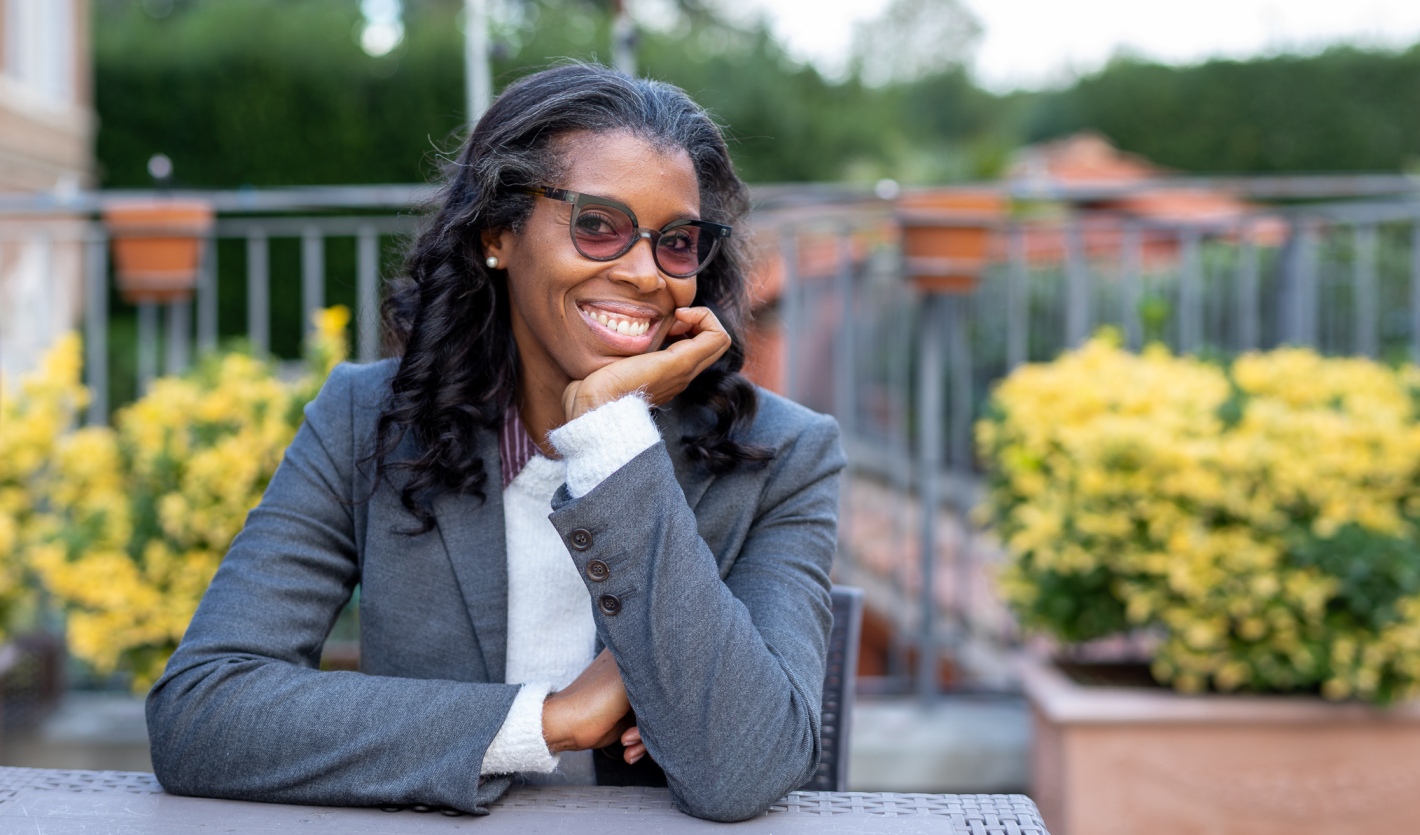
Student Emilia López Duarte de Lara shared her perspective about the event: "I found the Hot Seat event to be a genuinely enriching experience. It offered a different way to learn about the Catholic faith, creating a relaxed and welcoming space where students and professors, regardless of their religious beliefs, could ask questions openly and share their thoughts without feeling uncomfortable or judged.” Emilia added: “I believe that opportunities like this are important because learning does not happen only inside the classroom. Sometimes, the most valuable lessons come from open conversations that allow us to explore new ideas, reflect on our own beliefs, and better understand those of others”.