JCU Professor Sergio Scicchitano recently published the article “What workers and robots do: An activity-based analysis of the impact of robotization on changes in local employment” in Research Policy, a leading peer-reviewed academic journal, covering innovation, technology and economic policy.
The article is the result of a collaboration with Mauro Caselli, Andrea Fracasso, and Silvio Traverso from the University of Trento and Enrico Tundis from Istituto di Statistica della Provincia di Trento. The research examines the impact of changes in local robot exposure on Italian employment between 2011 and 2018. The authors provide granular evidence by examining the overlap between the activities performed by different robot applications and those defining different occupations.
This framework reveals the heterogeneous effects of robotization ranging from positive to negative across different groups of occupations.
Examining how robots affect different occupations
Professor Scicchitano notes that the effects of automation technologies on the economy have been debated for centuries, but the topic has gained more attention with the recent growth of artificial intelligence (AI). The study contributes new evidence on the employment impact of robot adoption.
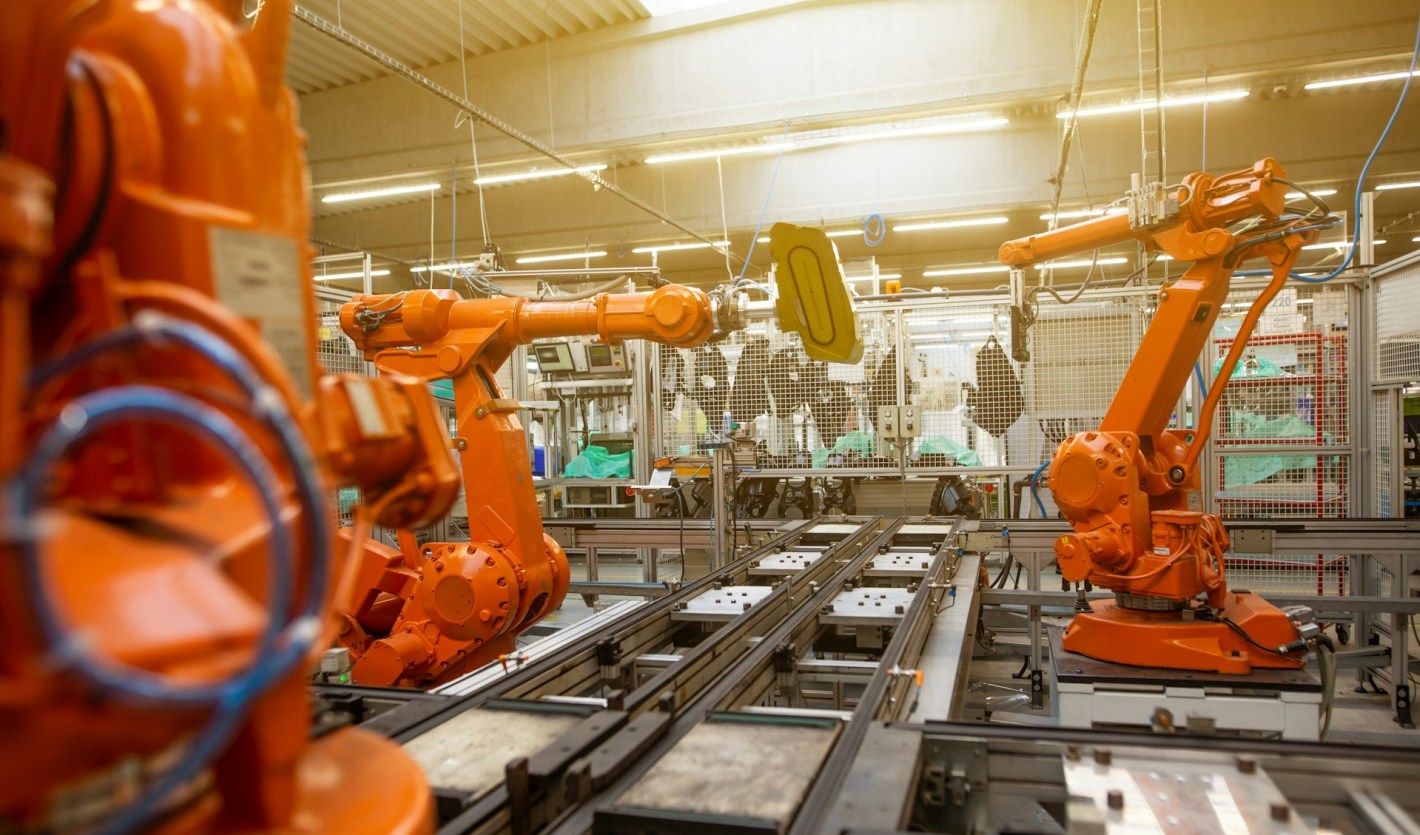
Robot adoption is defined as the imputed growth rate of the number of robots in a local labor market, and is determined by the overlap between the activities performed by different types of robots and the activities that define different occupations. Because robots perform different and relatively narrow sets of activities, examining what robots actually do is essential to understanding their interaction with different categories of workers.
The empirical results suggest that the impact of robot adoption on the Italian labor market has been limited in the most recent period. More interestingly, the absence of significant effects at the aggregate level conceals more complex employment dynamics among specific groups of workers.
The research’s novel approach to examining occupations enables the authors to identify clear signs of positive effects for robot operators — that is, workers employed in occupations related to the installation and use of robots — as well as for occupations involving automation and machinery. Routine cognitive occupations also increase alongside robot adoption. Conversely, occupations involving activities that require intensive torso movement are significantly reduced by robot adoption.
This suggests that the lack of significant effects of local robot exposure on local employment dynamics is probably due to the heterogeneous impact of robot adoption on different jobs, as well as inappropriate pooling of professions that are not clearly connected to robot-related activities.
These findings suggest that the limited aggregate effect of robot exposure may reflect the heterogeneous impact of robot adoption across occupations, as well as the pooling of occupations with different relationships to robot-related activities. The findings are consistent with recent microeconomic evidence showing that firms that install robots also increase employment to maintain the robots and perform activities alongside them. The authors therefore suggest that future research should focus on highly disaggregated, robot-related groups of workers and occupations, helping to bridge microeconomic and macroeconomic evidence.
Implications for workers and skills
The uneven effect of robotization on different occupations within and across sectors has relevant social and policy implications. While attention has most often focused on the overall net effects of automation and other technological advances on employment dynamics, the study suggests that the adoption of robots to perform certain activities may negatively affect specific types of workers who are unable to take advantage of the increased job opportunities in other sectors.
Thus, even when robotization has no negative overall impact on local employment, it can have significant redistributive effects through changes in individual occupations. This highlights the importance of supporting education and training policies that focus on the skills associated with activities that become more in demand with the adoption of robots. In order to prevent the heterogeneous impact of robots on occupations from leading to labor market segmentation and prolonged periods of unemployment for those in jobs negatively affected by robotization, retraining and upskilling can help facilitate workers' transition towards occupations whose main activities are in higher demand.
In his article Professor Scicchitano concludes that more advanced robotic solutions, often integrated with AI, are being introduced rapidly. If robots gain enhanced dexterity and flexibility, and AI efficiently undertakes monitoring and precision tasks, the scope of activities at risk of displacement may broaden, making within-occupation shifts more difficult. However, the extent of these effects will depend not only on technology but also on how work is organized and on broader social factors. Therefore, further research is needed to understand the impact of more advanced forms of robotization on employment dynamics at both the aggregate and granular levels.
Professor Sergio Scicchitano is the Chair of the Department of Economics. He won the 2022 Kuznets Prize. He is a section editor of the 2022 Handbook of Labor, Human Resources and Population Economics (Springer) and an associate editor of the Eurasian Economic Review (EAER) (Springer). He has published several scientific papers, both theoretical and empirical, in leading international peer-reviewed journals.