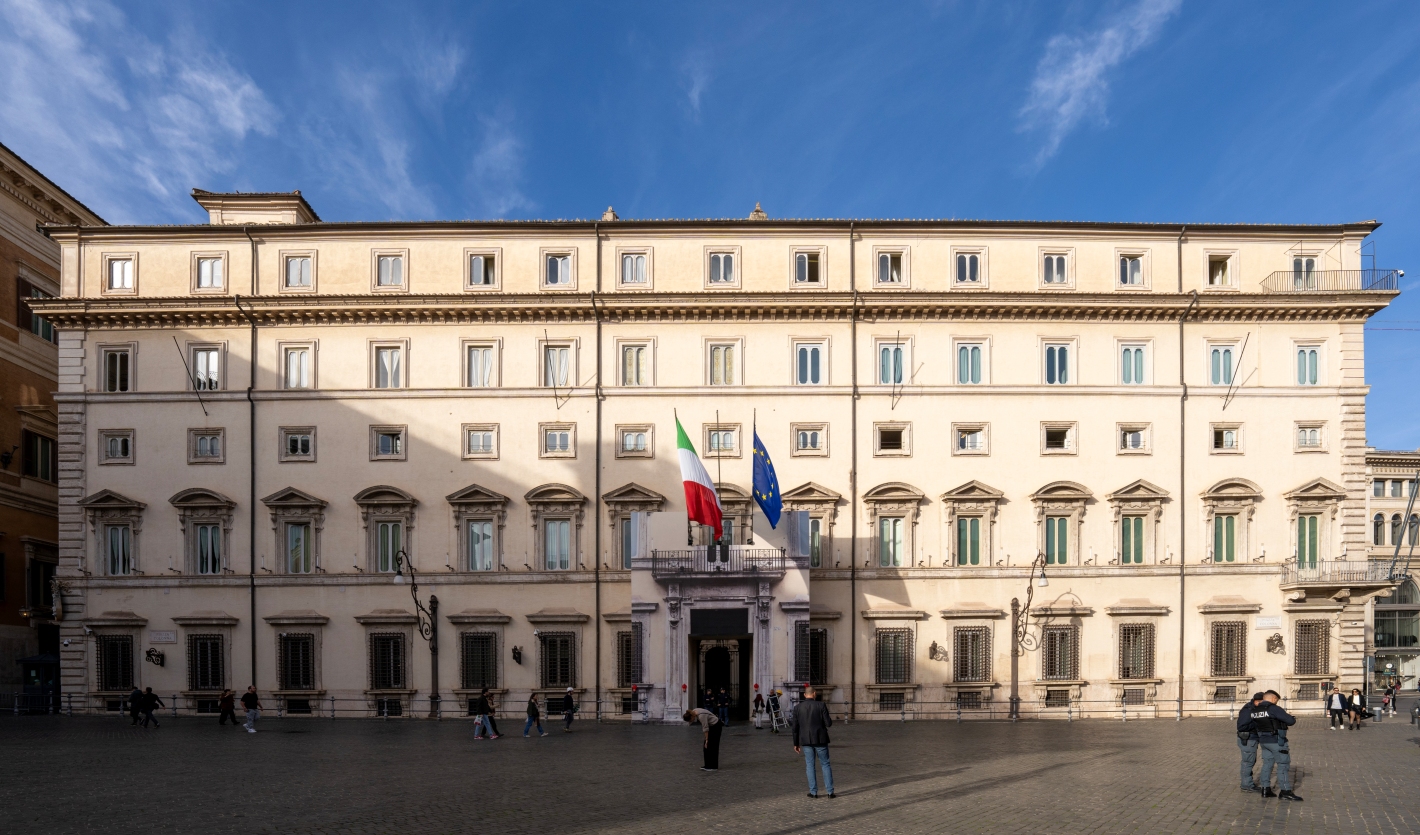
Palazzo Chigi in Rome, home to the Presidency of the Council of Ministers
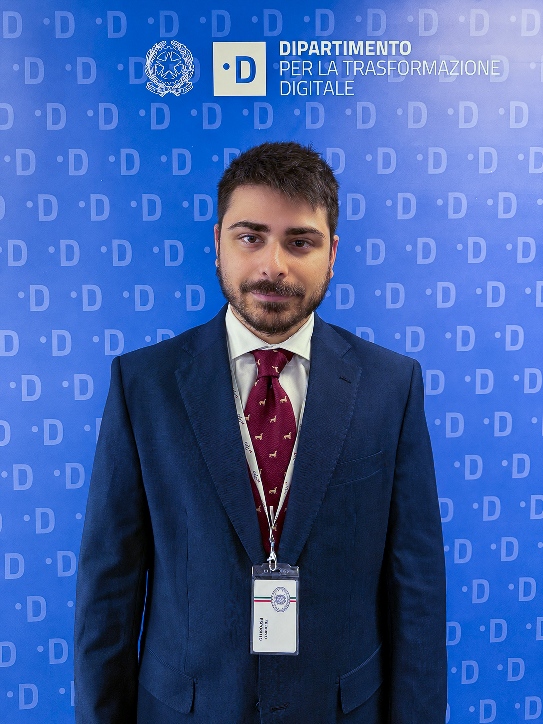
Federico Esposito, an MA in International Affairs student at JCU, is completing his internship at the Presidency of the Council of Ministers, in Rome. Working within the Department for Digital Transformation, Federico is gaining first-hand experience of how public policy, funding, and digital innovation come together to shape public services across Italy.
Can you tell us about your internship and the work you are involved in? During my internship, I had the opportunity to see how public funds are managed and translated into projects that affect everyday life. The Department works on the PNRR, Italy’s National Recovery and Resilience Plan, financed through the NextGenerationEU framework. Its goal is to support the country’s modernization and digital transformation in cooperation with ministries, local administrations, other public institutions, and different implementing actors across Italy.
Federico Esposito
What impressed me most was the scale of this work. Projects can range from improving digital services in a small municipality to developing nationwide platforms used by millions of citizens. Behind them is a multidisciplinary team of administrators, managers, policy advisors, legal experts, data analysts, and technical professionals, all working toward the same goal.
How does this experience tie in with your MA in International Affairs at JCU? This professional opportunity complemented my MA in International Affairs at JCU in a very particular way. As an Italian student studying at an American university in Rome, I have always felt that these two perspectives coexist in my academic profile. At JCU, I became accustomed to a dynamic and innovation-oriented approach to research and academic work in a vibrant multicultural setting.
At the Presidency of the Council of Ministers, I encountered an institutional environment where innovation has to coexist with established procedures, accountability, continuity, and the need to balance different interests. This helped me understand that innovation and institutional stability are not opposites: effective public policy often depends precisely on combining both.
What skills have you developed through your internship? The specific skills I developed reflect the multidisciplinary nature of my work, ranging from researching and monitoring project documentation to data analysis and data management within public administration. In particular, I worked with various national PNRR monitoring systems, and I became familiar with project data and supporting documentation linked to precise targets and objectives. This allowed me to understand better how public funding moves from broad European and national goals to individual projects and measurable results.
I also improved a wide range of soft skills, including adaptability, professional communication, and teamwork, by working alongside colleagues with much more experience than me and learning how different professional backgrounds cooperate within the same institution.
Can you describe a special learning moment during your internship that taught you something meaningful? One of the most interesting realizations was discovering how such a high-level institution ultimately affects very ordinary aspects of citizens’ everyday lives. For example, I learned more about the institutional work behind digital services, such as App IO, which may appear to citizens simply as an app to access services and discounts, but actually involves a much broader process that involves several professional roles and expertise.
At the same time, one of my tutors introduced me to trade-union representation within the same institution. Accompanying him, listening to employees and their concerns, and then returning to work on data analysis and administrative procedures showed me two sides of the same institution: its technical structures and – equally importantly – the people behind them.
Has this internship prepared you for your future career? This internship gave me insights that are rarely achievable through university courses alone. I had the opportunity to apply research and data analysis skills developed during my MA at JCU to real administrative processes. At the same time, I learned how to work in an office, communicate with colleagues, and adapt to unforeseen situations that go beyond the classroom.
Working in a department that interacts with a wide range of institutions and professional roles across Italy showed me how important problem-solving and adaptability are in a complex professional environment. It also helped me understand more clearly how technical skills and institutional procedures intersect with human relations, workers’ rights, and everyday workplace dynamics. Institutions are shaped not only by top-down structures and political decisions, but also by cooperation, knowledge sharing, trust, and the relationships built among colleagues. Perhaps this was the most valuable professional takeaway: behind “impersonal” bureaucracy, there are people and human relationships that ultimately make institutions work