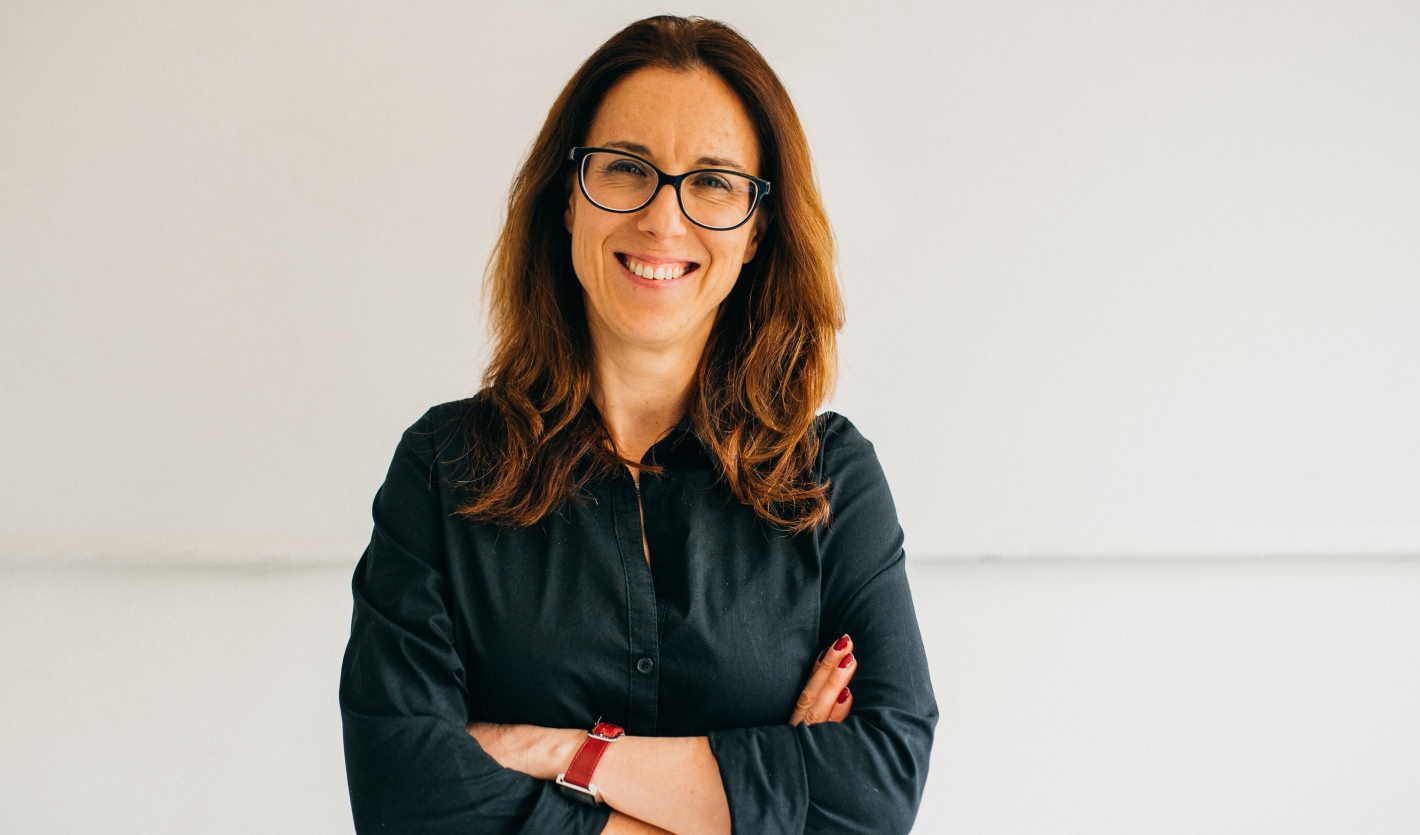
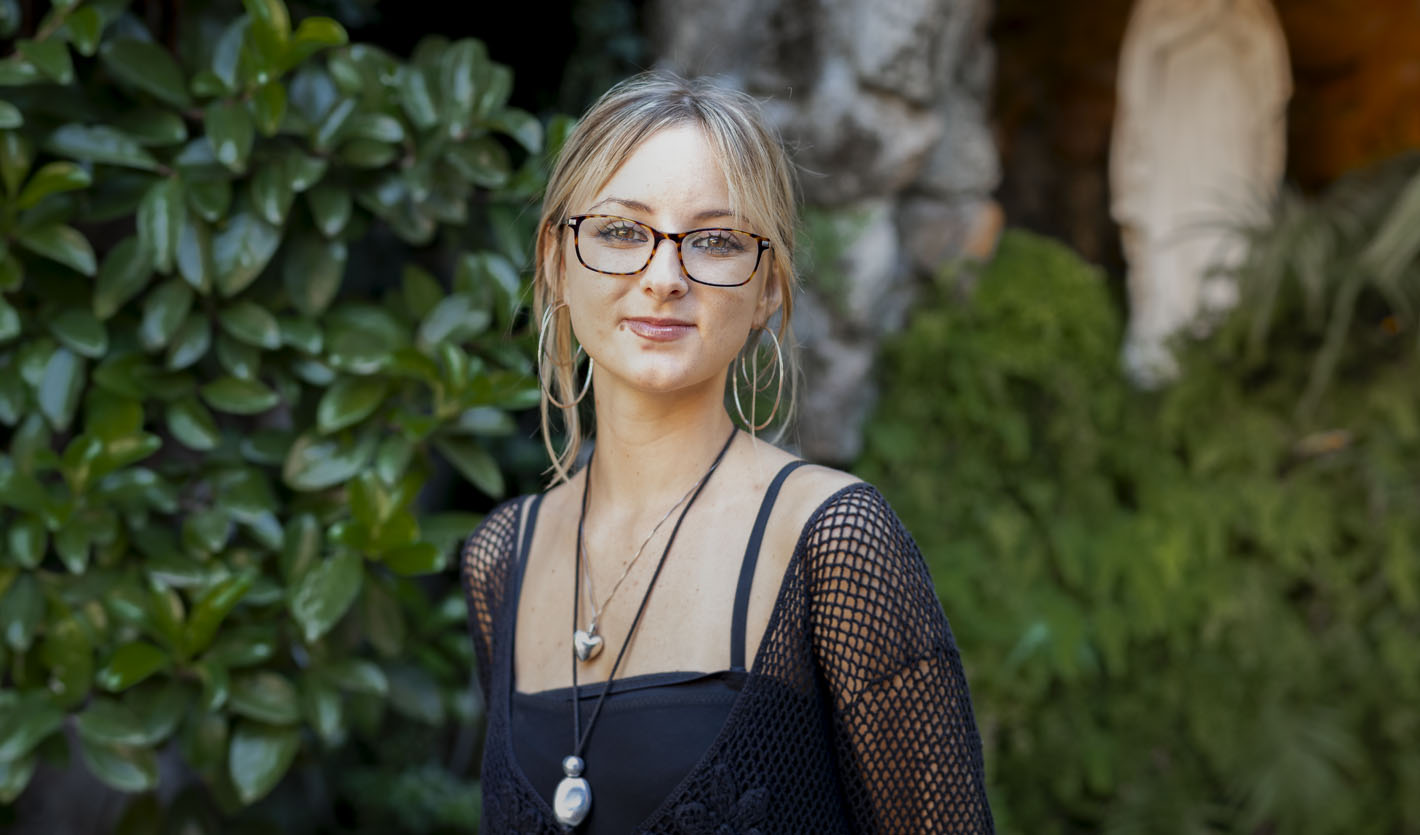
Professor Isabella Clough Marinaro teaches courses in sociology (e.g., Migration and Contemporary Society; Rome Modern City) and with a special focus on crime studies (Introduction to Criminology; Globalization and Crime; Green Criminology; Policing and Society; Prisons and Carcerality). For many years, she worked on the political and social conditions of Roma communities in Italy and the policy processes affecting them. Her most recent research has focused on changing forms of crime and multidimensional informalities in contemporary Italy. The Web Communications Office recently interviewed Professor Clough Marinaro on her new book, Living Rome: Space, Identity, and the Politics of Belonging (Lever Press, 2026).
Congratulations on the publication of Living Rome: Space, Identity, and the Politics of Belonging, the book you co-edited with Will Haynes, which came out of a conference held at JCU. How did the idea for the conference and the book come about? Thank you! I’m thrilled that this book has come out because it showcases the work of many young and innovative scholars who are studying this extraordinary city, whose everyday social realities are still, surprisingly, under-researched. It’s also exciting because there are various faces of JCU among the book’s contributors: two alumni who were doing Master’s research at the time of the conference – Edoardo Guerzoni and Federica Nappa, three current JCU professors — Anna Gorchakovskaya, Eleonora Diamanti, and me — as well as two former JCU professors, Francesca Conti and Helton Levy.
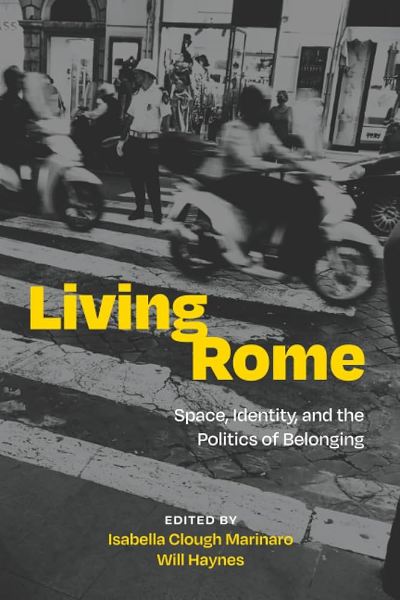
Cover of "Living Rome: Space, Identity, and the Politics of Belonging"
The project has a long history behind it. In 2014, I co-edited a book titled Global Rome: Changing Faces of the Eternal City, which was the first to bring together researchers of the contemporary city in English. Because of its ancient history and monumental beauty, scholars tend to forget that Rome — like every city — is constantly changing, growing, and facing new challenges. It is a living, breathing reality and an amazing laboratory of social contradictions and innovations.
Global Rome quickly became a go-to resource for people trying to understand the city, but as urban life continued to evolve, by 2023, it was clear that all sorts of new dynamics and studies were coming out that needed to be discussed. So, we held a three-day conference at JCU to take stock of the new work being done.
Living Rome: Space, Identity, and the Politics of Belonging came out of that conference, and it focuses on one core theme: showing how the city is constantly made and remade by its everyday residents, many of whom are ignored – treated as invisible — because they are young, poor, migrants or refugees, have disabilities, or because they contest dominant narratives of the city. It was about making visible what is actually in front of us every day, but that most of us do not notice.
What are some of the most interesting or controversial things that have come out of this book? I think every chapter of the book is fascinating in its own right. I wouldn’t say it’s controversial, but I do think it is important to show the sides of the city that visitors are usually unaware of. There are huge areas where people are in economic distress and deprived of access to the most basic services, as well as situations where homelessness and repeated evictions by the authorities make daily survival difficult.
The book also highlights issues in urban planning and policies that do not take into consideration the needs of women, people with disabilities, and many others. But the book also shows how civil society groups step in to try to fill those gaps, providing food to those who cannot afford it, supporting young people in creating skateparks on their own terms, and engaging in feminist counter-mapping of masculinized and colonial spaces, etc.
The book’s overview says, “Bringing together urban sociologists, anthropologists, geographers, demographers, criminologists, decolonizing and feminist scholars, this study contributes to a growing body of research on the city and its social movements, aiming to inform policy and contribute to a more just and sustainable Rome.” Tell us more about this.
JCU is all about interdisciplinarity, and we wanted the conference and the book to reflect that. The social sciences also tend to overlap significantly. It’s impossible to look at a city without considering its physical space, its people, its power dynamics and economies, and its criminal phenomena. So, the chapters explore the different experiences and perspectives of a wide range of people who make their lives in this incredibly diverse place. By also looking at those who fight to make it more just and sustainable, we hope to inspire people who may feel disillusioned and pessimistic in our difficult times, showing that there are plenty of ways in which the actions of individuals can make a difference.
Who should read this book and why? The book is purposefully very accessible. We wanted it to be interesting to anybody who wants to understand Rome’s complexities beyond the postcards and cliches. In particular, we wanted it to appeal to students at all stages of their studies. We hoped that it could be used as reading material for undergraduate courses and, in fact, it has already been adopted in some of our classes.
At the same time, it is a very serious academic book, which builds on and develops important theories and innovative methodologies in the social sciences. The two things are not incompatible at all! I think it is fascinating for students to see how cities that we think we know can actually reveal many surprises, if you know how to look for them and interpret them.
How have you seen Rome change throughout the years? Wow, that’s a huge question! I spent a lot of my childhood in Rome, and it was a completely different place: it was far less diverse, it really wasn’t a mass tourism hub, in fact, it often felt like a small town. It was also much more polluted, with cars everywhere — even in St. Peter’s Square — but it was full of artisans’ workshops and family-owned stores that have not managed to compete against today’s globalized chains.
The city has also changed a lot since I started doing my PhD research here in the mid-1990s. At the time, I was studying racism and exclusionary political processes, and the situation was shocking, especially for someone who was used to the UK and Germany at the time. Of course, there is still a lot of discrimination and racism in Italy today, but their forms have changed and, in many ways, have become more subtle. At the same time, many Italians also actively fight back against it or find ways to undermine unjust systems in their daily lives, and these dynamics are partly what the Living Rome book unpacks.