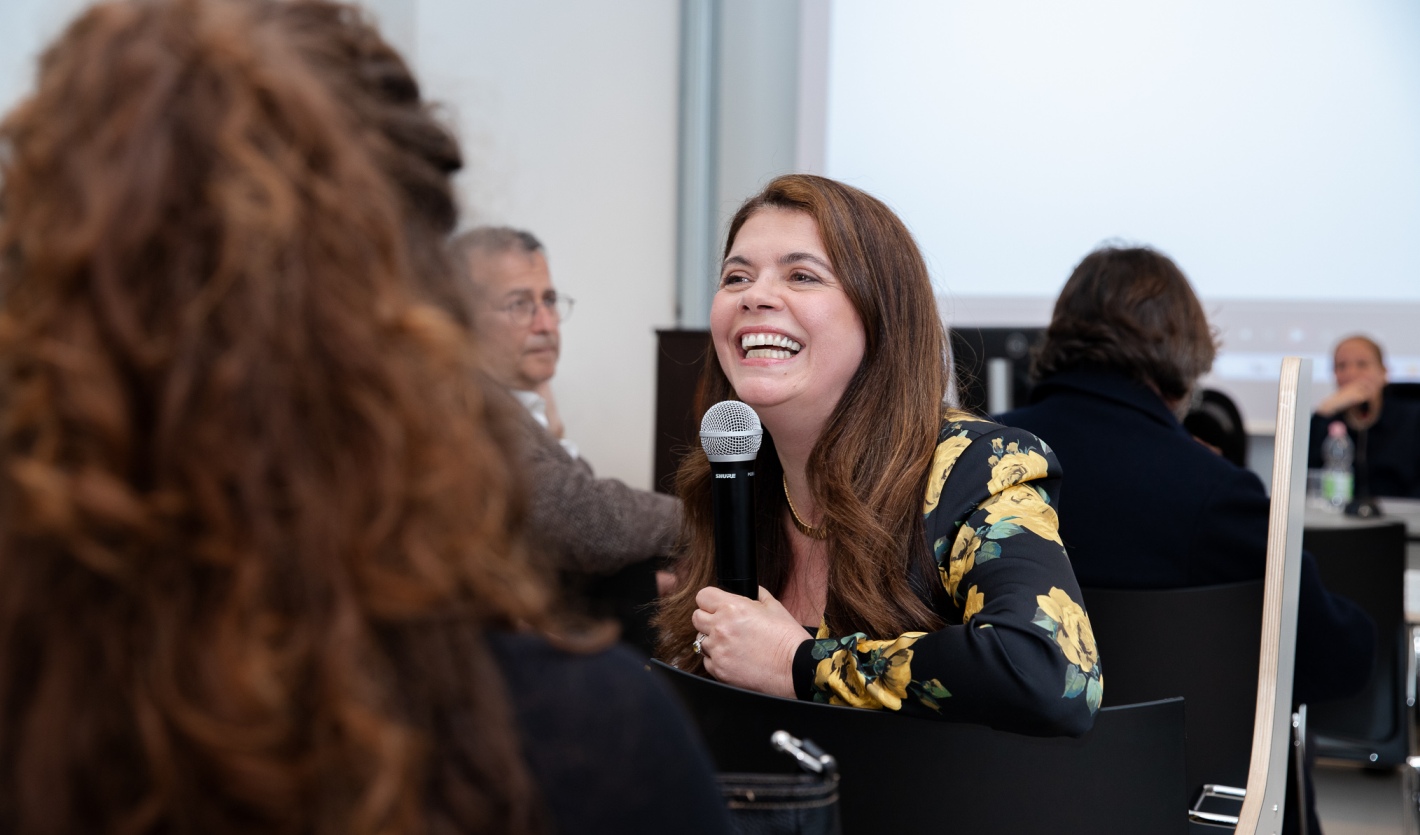
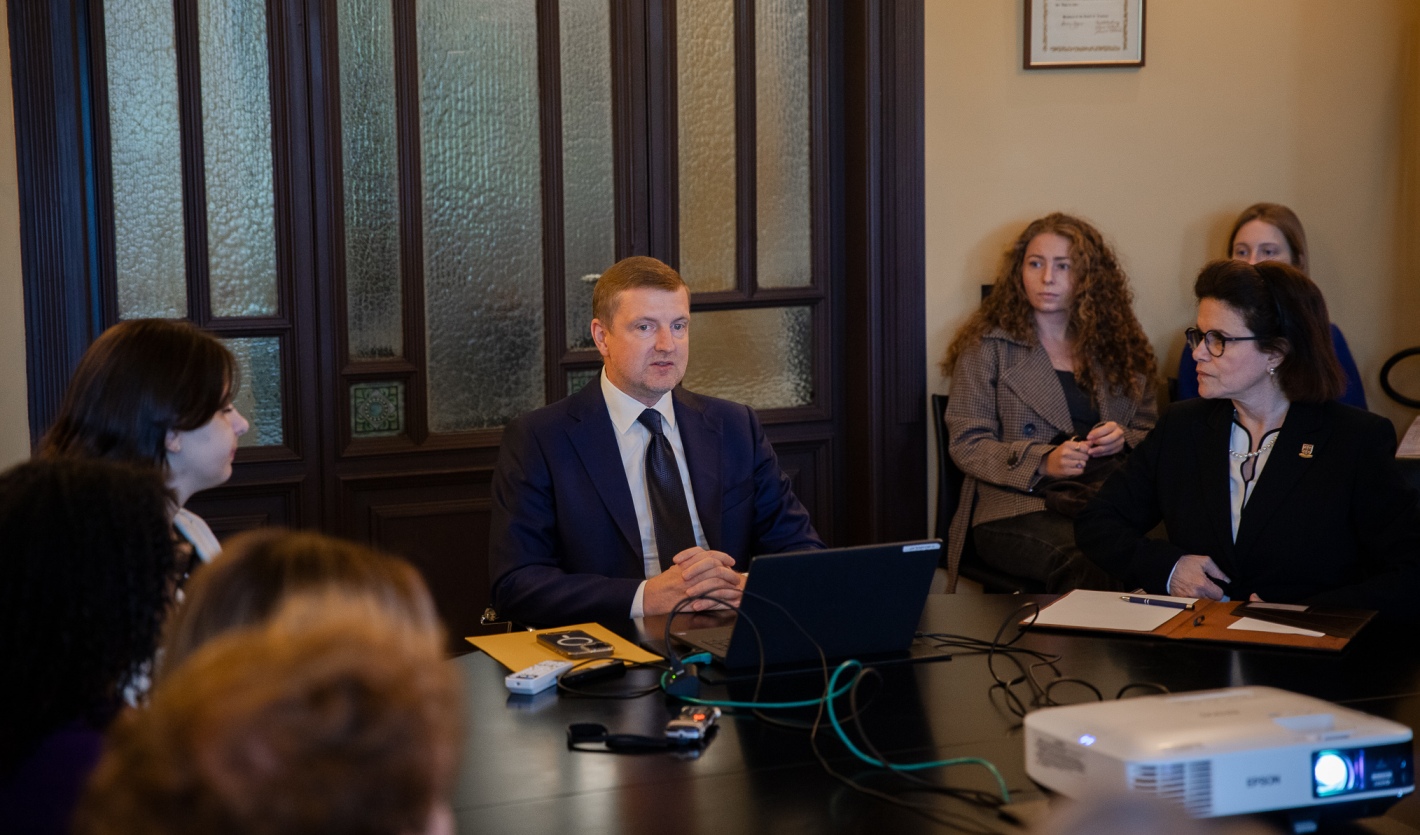
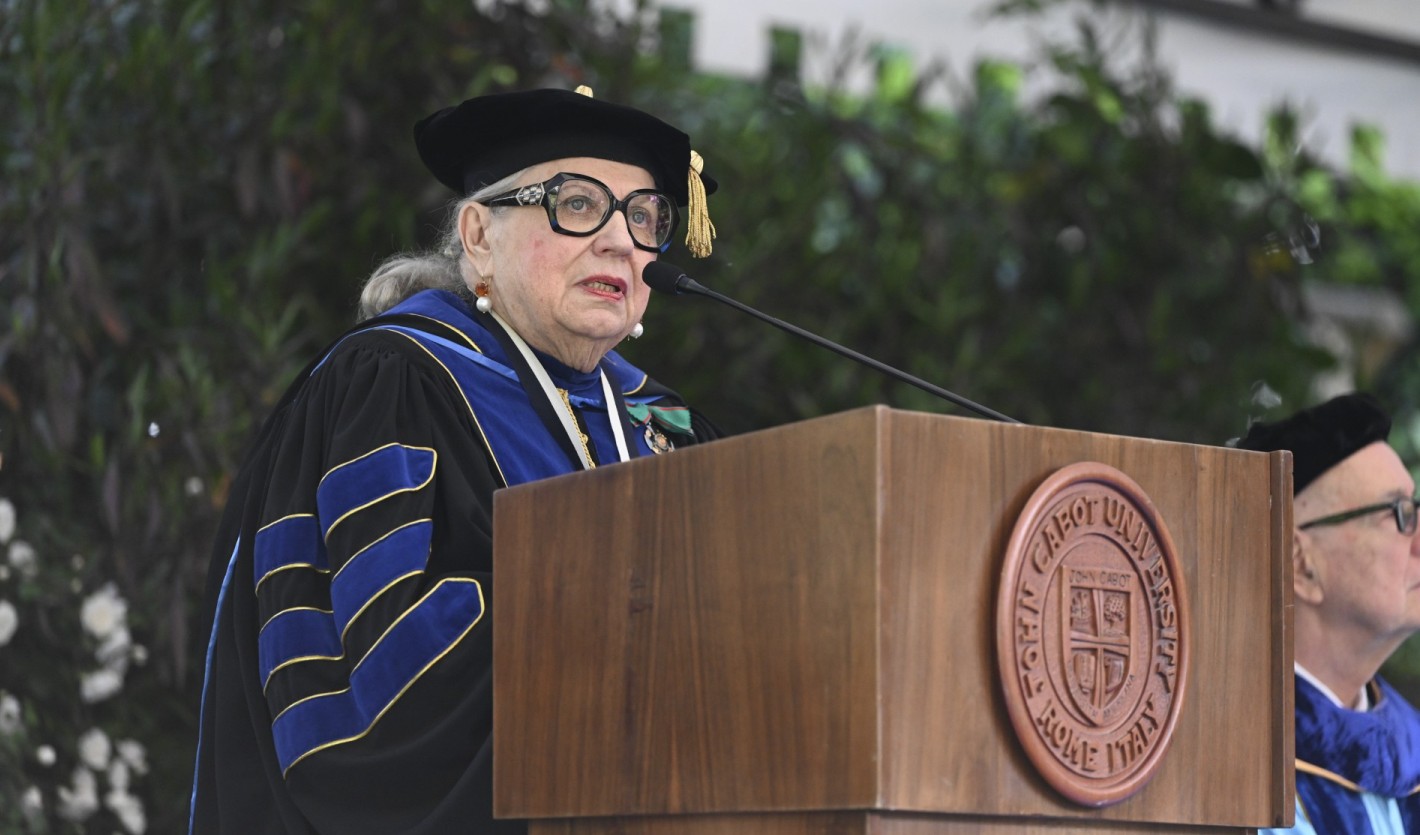
On March 3, 2026, John Cabot University hosted Ornella Fado, acclaimed television host, producer, and creator of the culinary television show Brindiamo!, for an inspiring lecture on her career in the US. The event was organized by JCU's Center for Career Services. Fado shared her personal journey of entrepreneurship, resilience, and success, offering insights into building a creative career across cultures.
Brindiamo! is a television series dedicated to Italian traditions, cuisine, and lifestyle. Each episode features traditional recipes while offering viewers a deeper look into Italian culture through interviews with chefs, restaurateurs, and special guests.
Ornella Fado began her career as a trained dancer, working in numerous RAI television programs and theater productions in Italy. She also worked as a model and appeared in film and commercial advertisements. Since 1992, she has been based in New York City.
What inspired you to leave Italy and pursue a career in media in the United States over 30 years ago? What inspired me to leave Italy wasn’t a strategic career plan, but rather love, courage, and the feeling that life was opening a new door. I was already building my career in Italy. But life has a very interesting way of rewriting your plans. What I believed was simply another chapter (a new musical I was working in, A Chorus Line) became a turning point. During that experience, I met the man who would become my husband and the father of my daughter, and my life began to shift in ways I never could have imagined.
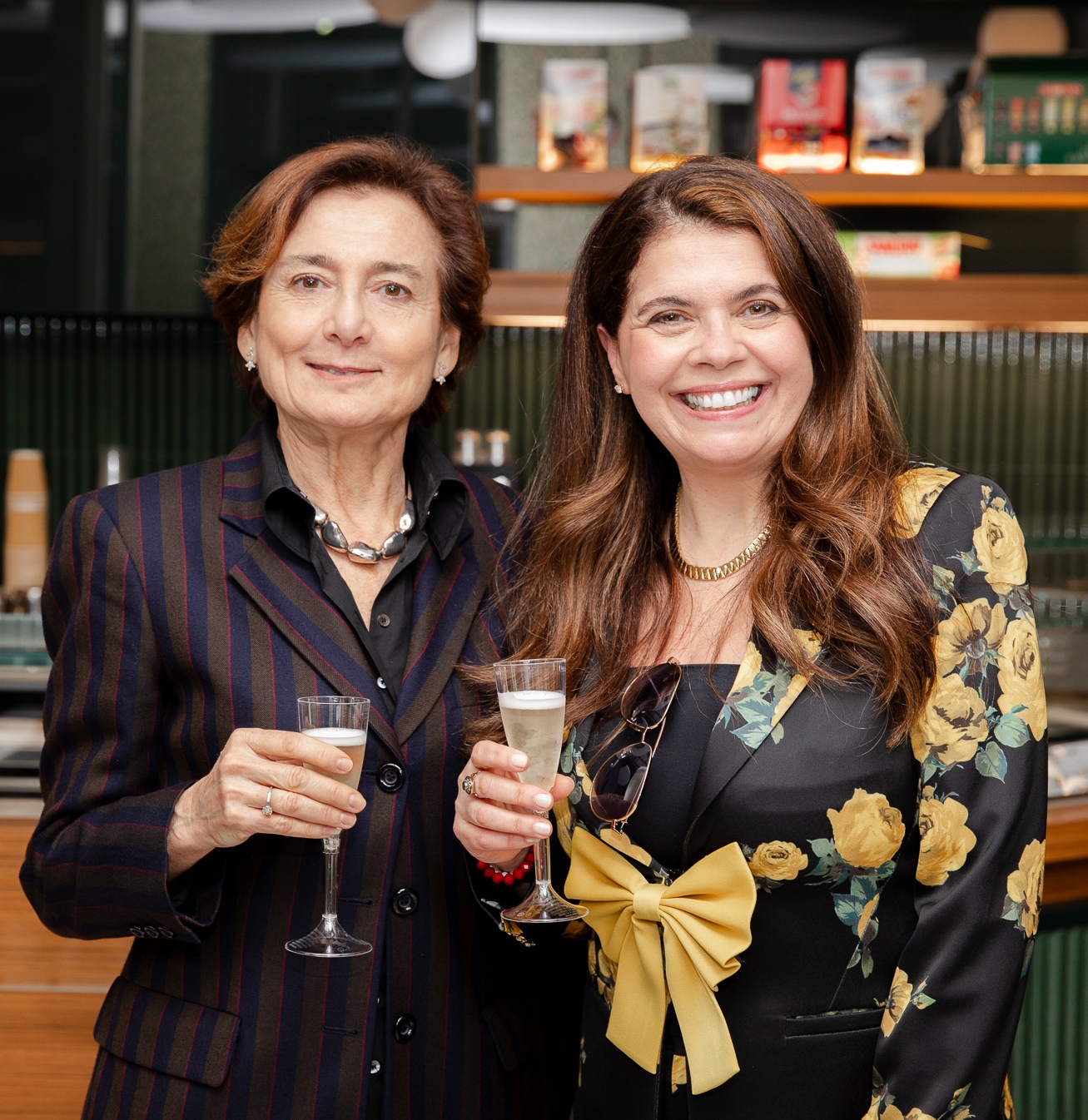
JCU Career Services Director Michele Favorite (left) and Ornella Fado
Sometimes, the most powerful journeys are the ones you never intended to take, yet they become the ones that define you.
Looking back, what were some of the biggest challenges you faced as an Italian entrepreneur in a foreign media landscape? In New York, I had to rebuild everything from scratch. No one knew about my background or my work on Italian television. I had to earn trust all over again and reinvent myself in a completely new environment.
I also had to navigate a foreign business culture. The US media system is fast, highly competitive, and extremely results-driven. As an Italian, I initially brought passion and vision, but I had to learn a completely different language, mindset, and way of doing business. It was a steep learning curve. Additionally, there were no institutional backers in the beginning. Brindiamo! was self-funded and produced with creativity more than budget. Building a show independently — and sustaining it for 20 years — required resilience, reinvention, and constant relationship-building.
But one of the most difficult challenges was identity. I wasn’t fully part of American media, and I was no longer operating inside the Italian system. I existed in between. Over time, I realized that this “in-between” space was actually my strength. It gave me perspective and a unique voice.
20 years ago, independent female producers — especially immigrant women — were not the norm. I had to learn how to lead with confidence, negotiate firmly, and stand my ground while maintaining elegance and professionalism. What helped me overcome these challenges was vision. I wasn’t trying to replicate Italian television in America; I was building a bridge. And bridges require patience, precision, and persistence. The foreign landscape that once felt intimidating eventually became the space where I could redefine myself — not just as an Italian in America, but as a cultural connector between two worlds.
Could you share a story or episode from Brindiamo! that embodies the essence of Italian lifestyle and culinary excellence? What makes Brindiamo! truly special is that no two episodes are ever the same. Every restaurant has its own soul, rhythm, mood, and atmosphere. Every chef brings a story that is personal and completely unique. But there is one episode that holds a very special place in my heart. It was 2007 — the first time I filmed Brindiamo! in Italy. The restaurant was Don Alfonso 1890, near Naples.
The restaurant had just been renovated. When my team and I walked in, we found ourselves in this breathtaking majolica-tiled kitchen, filled with natural light. In New York, we were filming in very tiny, extremely noisy kitchens. Restaurants were not prepared to host a TV crew. There was no space, no quiet time, no “production setup.” The beauty of Brindiamo! was its authenticity. We were inside real working kitchens, with real chefs, in real time.
When I started filming Brindiamo!, food shows were produced in studios, controlled environments and designed sets. I was a pioneer walking into working kitchens with a camera crew. That raw, immersive authenticity is what I loved most about Brindiamo!.
But what we experienced at Don Alfonso was on another level. It felt like stepping into a temple of Italian culinary excellence. That episode embodied the Italian lifestyle in its highest expression — not just food, but aesthetics, culture, pride, and vision. And it meant even more to me. That moment was a bridge between the Ornella who left Italy and the woman who returned with her own television show. In that luminous kitchen, Brindiamo! truly became international.
What key qualities do you think are essential for sustaining a creative career across different cultures? It is not just about talent; it is about character. You must be flexible enough to understand a new culture and a new audience, but grounded enough to know who you are. If you abandon your essence, you disappear. The balance is everything. It’s not enough to speak the language. You must read the room. Humor, negotiation styles, timing — everything has a different meaning in different cultures.
Curiosity opens doors. Judgment closes them. Living abroad taught me to ask questions before forming opinions. That mindset not only builds bridges, it also keeps your creativity alive. But creative careers do not sustain themselves on passion alone. They require discipline, structure, reinvention, and business awareness. Especially as an entrepreneur, you must protect your vision strategically, and be willing to work hard.
Working across cultures is a privilege. The more you celebrate collaboration rather than competition, the longer your career will endure. For me, the secret has been this: do not try to choose between cultures. Learn to build a bridge.
How has the international media landscape changed since you started, and how do you adapt your work to stay relevant? When I started more than 20 years ago, media was linear, gate-kept, and geographically limited. If you weren’t on a major network, you simply didn’t exist. Distribution depended on broadcasters, and production required significant infrastructure and capital. There was less noise, but also fewer opportunities to enter the system independently.
Today, the landscape is global, digital, fragmented, and immediate. We moved from scheduled programming to on-demand streaming, from local audiences to global audiences, from traditional broadcasting to multi-platform ecosystems, and from one-way communication to interactive communities.
When I launched Brindiamo!, social media and streaming platforms didn’t exist. Now the brand lives simultaneously on television, FAST channels, streaming platforms, short-form reels, and digital archives. The biggest shift? Control and speed. Creators have more power, but also more competition.
This is how I adapt. I never allow the brand to depend on one outlet. Brindiamo! evolves with distribution technology. The heart of Brindiamo!, which is celebrating Italian lifestyle, culture, and excellence, never changes, but its format adapts. A long-form episode becomes digital clips, and a culinary experience becomes a reel. The core remains; the delivery evolves. In the past, we “aired” a show. Today, we build a community. Audience engagement is no longer passive — it’s relational.
Italian culture is ancient. The storytelling must feel modern. That balance keeps the content elegant yet relevant. What hasn’t changed is that authenticity still wins. Technology evolves, platforms shift, algorithms change, but storytelling that is rooted in identity, quality, and human connection remains powerful.
The international media landscape is more complex but also more democratic. And for someone like me, who started with vision and very little infrastructure, that evolution has only expanded the possibilities. If you remain rooted but willing to reinvent, relevance becomes a natural extension of growth.