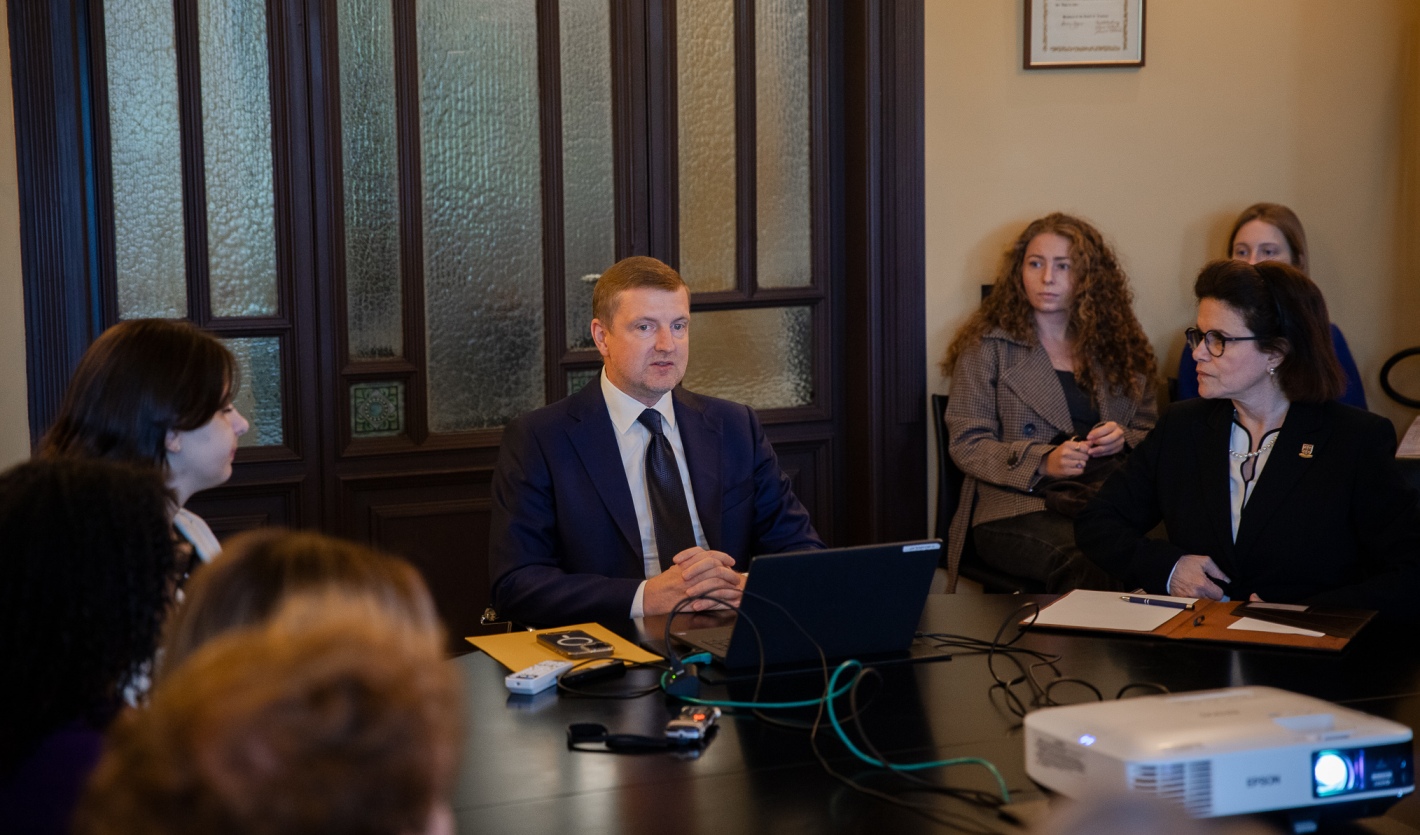
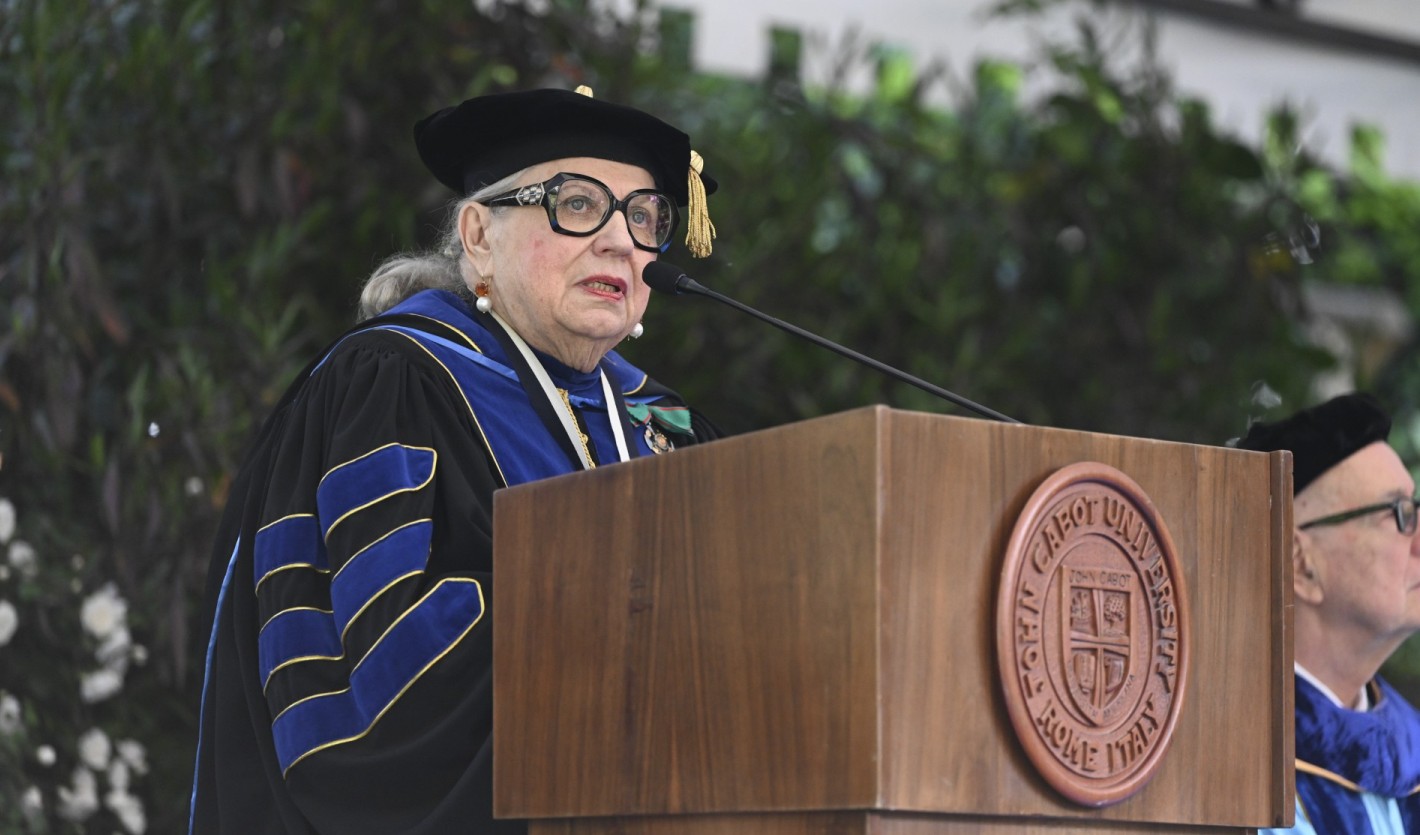
Born in Rome, Amadeus Giordan Halilovic is a Business Administration major of Romani origin. He is an activist who works to dispel negative stereotypes about the Roma community. In October 2025, he took part in the Roma and Sinti Jubilee as the event’s presenter. The occasion gave him the opportunity to speak about his origins and meet Pope Leo XIV in person. The Web Communications office met with Amadeus to discuss this unique experience, as well as the impact and potential of the Roma people today.
Tell us about your background and your Roma origins.
I was born and raised in Rome, and as a child, I lived in the Roma camp of La Barbuta, in Ciampino, on the outskirts of Rome. My father belongs to the Roma community; he’s from a family of coppersmiths who have passed down their craft for generations. My mother is Italian, and my maternal grandparents are both university professors, so this background has given me a distinctive perspective, an opportunity few people have: to see the world through different lenses and try to take the best from each community.
Growing up in the Roma community gave me a very unique point of view, an opportunity to see the world in a completely different way: I learned the value of family, sharing, and a sense of belonging. The strongest memory I carry with me is of a united family that came together in the same way in moments of celebration and in times of grief. No one was ever left alone.
It was also a community of people with different religions, like Christians, Muslims, Orthodox, Evangelicals, as well as people who didn’t believe at all. Despite having different faiths, these people pray, celebrate together, and support each other in difficult moments. I believe that human richness lies exactly in knowing how to live together in diversity and protecting our identity without any fear.
My parents taught me the value of commitment more by example than by words. For years, they have worked for the cohesion of the Romani community through their association, Romà Onlus. They build bridges, create opportunities, and fight for fundamental rights, which are education, housing, work, and dignity for the Roma People nationally and internationally. Many harmful stereotypes about the Romani persist, rooted in centuries of discrimination. Common stereotypes portray Romani people as criminals and thieves and are often used to justify exclusion or over-policing. From my parents, I learned that our identity is not a liability but a resource, a gift.
What prompted your decision to study Business Administration at JCU?
At first, my dream was to study at the University of California at Santa Barbara. I was looking up information for scholarships when a university advisor told me that California is one of the most expensive places in the U.S. However, I did not give up on the idea of studying in an international environment, and fortunately, my parents found John Cabot.
That’s when Fondazione Migrantes, a non-profit organization in Rome, came into the picture. My parents have helped many Roma children attend school, travel, and have educational experiences, but they couldn’t have afforded my education at JCU if Fondazione Migrantes had not supported me. The foundation really believed in me and made my dream possible, especially Father Pierpaolo Felicolo, who is not only a mentor but also a friend who has chosen to support me and believe in me.
JCU brought together everything that I was looking for: the international environment, with students from all over the world, as well as a practical approach to learning based on discussion, active participation, and critical thinking. Something I also appreciate is the campus in the heart of Rome, where you can immerse yourself in a global, open, and dynamic atmosphere.
My interest in studying Business Administration is related to my origins. Contrary to one of the most enduring stereotypes, Roma people have historically been active and hard-working as artisans and traders. They have always interacted with the economies of the society where they settled. The Roma community is multifaceted and the custodian of a colorful and still untapped potential, including economic potential. This heritage can be a resource to face contemporary challenges and to look to the future with a clear entrepreneurial goal. I want to help create business models that stay in people's hearts because they tell a story – the story of a community, the story of young Roma people who dream of a dignified and active existence. It’s also the story I'm part of – the story of a 23-year-old Roma student who was given a chance to dream, study, learn, grow, and contribute to the change in the society in which I live.
Was it hard to find your place at JCU?
JCU is such a multicultural place, so it is easy to be accepted as you are and to be understood. The small classes make getting to know both students and professors easier.
I really like it here. Even the administrative offices I’ve dealt with, like the Registrar, are very supportive. The whole place aims to help students.
You were invited to represent your community at the Jubilee event of October 18, 2025, at the Vatican, dedicated to celebrating the Roma people. How did that come about, and what were your takeaways from the event?
First of all, it was a historic moment: it was the first time that the Roma people were the protagonists of a Jubilee celebration.
They were looking for a young adult to be the presenter on such an important occasion. My candidacy was put forward through Sandro Luciani of the Community of Sant’Egidio. When I received the invitation, I felt gratitude and joy for the trust placed in me, and a great responsibility because I knew I wasn’t representing just myself, but also the collective story of my people from all over the world.
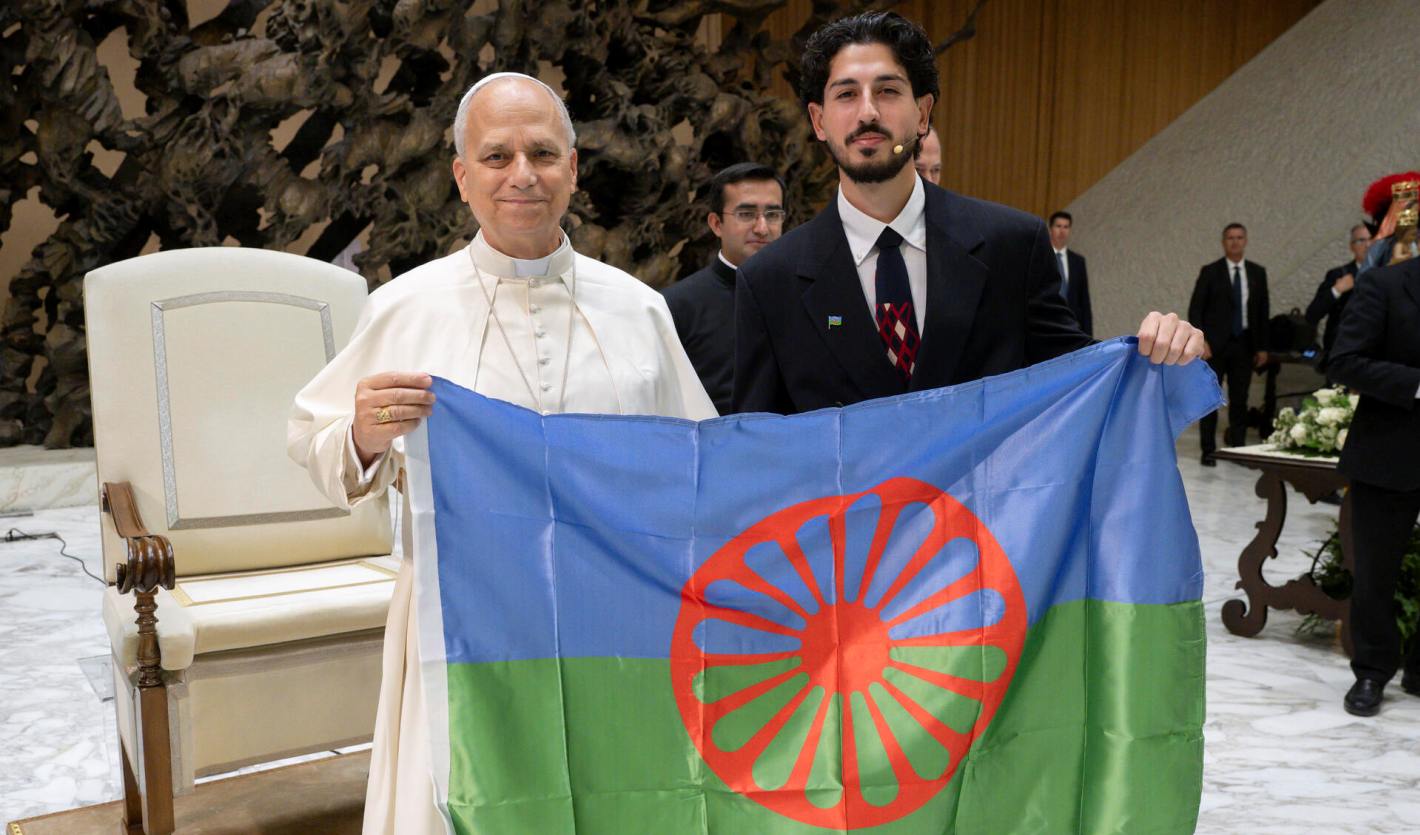
The day of the event was very intense. One of the most powerful moments was meeting the Pope. I gave him our flag and explained its meaning; he wanted to unfold it and take a photo with me holding it open. It is not just a picture of a young Roma man with the Pope, but a concrete sign of recognition and closeness of the Church with the Roma community.
I also wrote a poem that I got to recite, which begins with the words “Aracì, Adzives, Atehara,” meaning “yesterday, today, and tomorrow.” It’s about one of the worst times for my people – the persecution during World War II, when about 2 million Romani people were killed in concentration camps - but also the dignity of the present, and the hope for a different future.
When a young Roma man is given the chance to speak with his own voice – his own language, even – the idea of the “Roma problem” collapses, and the reality of a living community appears, full of stories, talents, and futures. In my own small way, I felt like I was helping to build a bridge between my community and the Church, between the Roma world and the rest of society. It was a great moment that I will always cherish.
Do you have any plans for the future?
After finishing high school, I took one year off for myself. I traveled and actively participated in the Romà Onlus projects. I had the chance to meet many Roma people from all over the world, people who helped me see my community as multi-faceted and a good addition to society. My interest in Business Administration is closely tied to my desire to intervene concretely in my community.
Our history is closely connected with European history. The Roma people have a strong identity. One of the projects I hold closest to my heart is the creation of a Romanò Kher, meaning a “Roma house.” This would be a place for cultural projects, where people can get to know the Roma culture, and a space for training and community building for young Roma. A place where Roma are transformed from being perceived as a “problem to solve” into a positive resource for society.
The Roma people are not recognized as a minority in many European countries, Italy included. The Jubilee representation and the idea of the Kher are about Roma people claiming spaces for themselves. We simply want to be – freely and with dignity.
My dad and I wrote a speech and a clear message for the Jubilee in our language:
Inaij bitno te san kalò o parno, inaij bitno te san barvalò o choro, inaij bitno te paca ando Del o ando Allah, inaij bitno te itut barì educazia o te inaijtut, ah hi bitno kai sam romane chave. (“It doesn't matter if you're black or white, it doesn't matter if you're rich or poor, it doesn't matter if you believe in God or Allah – what matters is that we're Roma children.”)