John Cabot University is pleased to announce the winners and finalists of the Fall 2025 Triggering Change competition. This semester, the competition focused on Sustainable Development Goals (SDG) 3, Health and Wellbeing, and SDG 15, Life on Land. As in the past, JCU students interacted with others from universities in the UK, Italy and South Africa. JCU was honored to host philanthropist Nanette Medved-Po as guest speaker during the prep session. A champion in the fight against plastic pollution and women’s empowerment, Medved-Po has received several awards including Asia Game Changer’s Climate Hero and Forbes Asia’s Hero of Philanthropy.
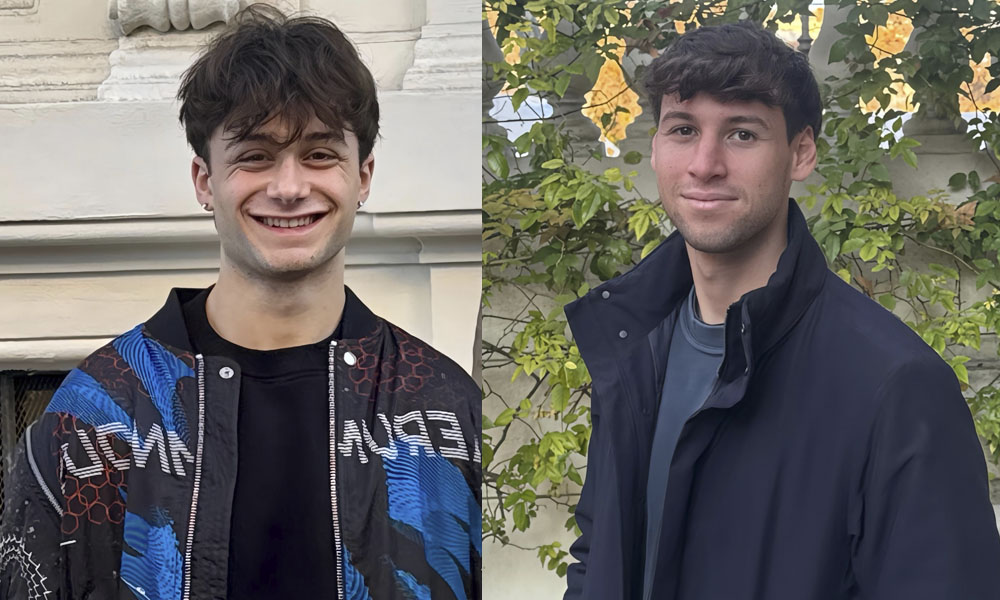
From left: students Davide D’Antoni and Matias Tornaboni
The winners and finalists
The two winning teams included JCU students Davide D’Antoni and Matias Tornaboni, who created a pitch addressing SDG 3, specifically the problem of poor sleep quality among university students. This team suggested the idea of an app, SleepLink, that helps students track their sleep and improve their health.
“We believe that good health and well-being cannot be achieved without addressing sleep as a fundamental pillar of physical and mental health,” said Matias. “Working on this pitch allowed us to connect a personal, everyday issue to a global sustainability framework, showing how sleep deprivation is not just an individual problem but a systemic one, linked to education, work culture, and social expectations.”
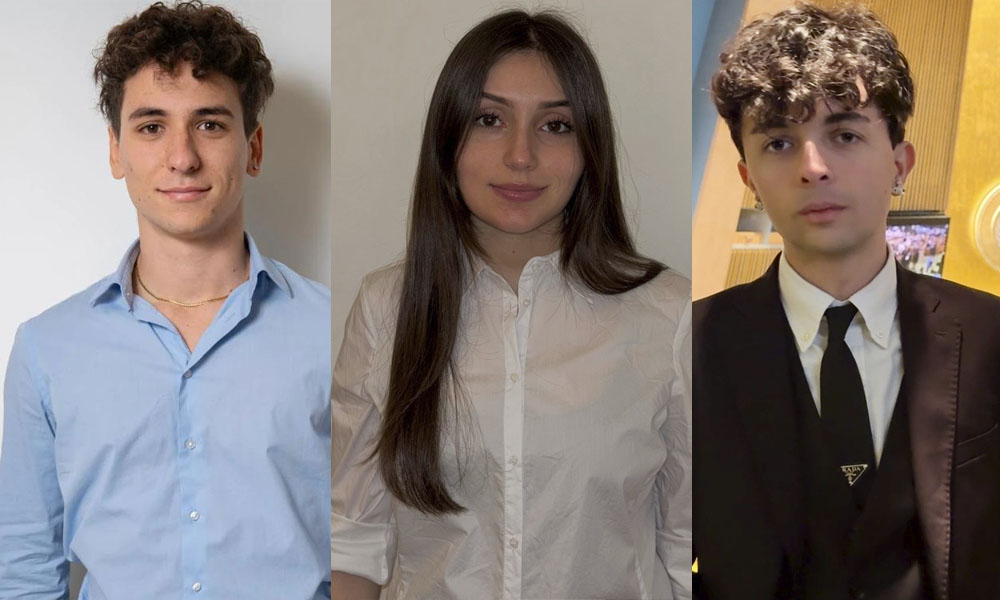
From left: students Alessio Berta, Giulia Tatangelo, and Francesco Calcagno
The second winning team included JCU students Alessio Berta, Francesco Calcagno, and Giulia Tatangelo. This group also focused on SDG 3 and proposed the idea of an app that encourages students to be more active and lead less sedentary lives by creating a point system that rewards walking.
Giulia commented: “This project encouraged me to think creatively about designing a media project and finding effective solutions. It expanded my understanding of the Sustainable Development Goals and deepened my awareness of environmental issues. It also taught me how meaningful progress often comes from small steps rather than overly ambitious plans.”
Finalists also created insightful projects, all focused on SDG 3. This group included: Gabriela Todaro, who addressed women’s health issues and proposed an educational app for women; Caitlin Laborce, who created a drawing-based pitch on fair vaccination for underprivileged children; Giulia Sillitti and Aurora Vito, who suggested solutions to encourage the use of electric cars and walking as a way of cutting the hazards from car pollution.