Francesco Lapenta, Director of the Institute of Future and Innovation Studies (IFIS) at JCU, was invited to speak at two plenary international policy panels during the Bharat Summit, held on November 13–14, 2026, at the Hyderabad International Convention Centre in Telangana, India.
Under the theme “Forging a New World,” the summit brought together more than 1,000 delegates from approximately 70 countries, including senior government officials, current and former ministers, parliamentarians, political leaders, academics and representatives of international organizations. Convened by the Government of Telangana and organized by Samruddha Bharat Foundation, the gathering examined the political, economic and technological transformations reshaping the international order and the role of international cooperation in addressing them.
The program included Rahul Gandhi, Leader of the Opposition in India's Lok Sabha, Anumula Revanth Reddy, Chief Minister of Telangana ; Mallu Bhatti Vikramarka, Deputy Chief Minister, and Duddilla Sridhar Babu, and Telangana's Minister for Information Technology and Industries. International participants included Pascal Affi N'Guessan, former Prime Minister of Côte d'Ivoire, and other political representatives from Europe, Asia, Africa and the Americas.
Across two days, the program featured panel discussions addressing AI, global economic governance, democratic accountability, climate change, international cooperation, institutional reform and the future of media. Lapenta participated as a speaker, contributing IFIS's research perspectives on the relationships between technological innovation, systemic transformation and democratic governance.
AI, Cloud Capitalism and the New World Order
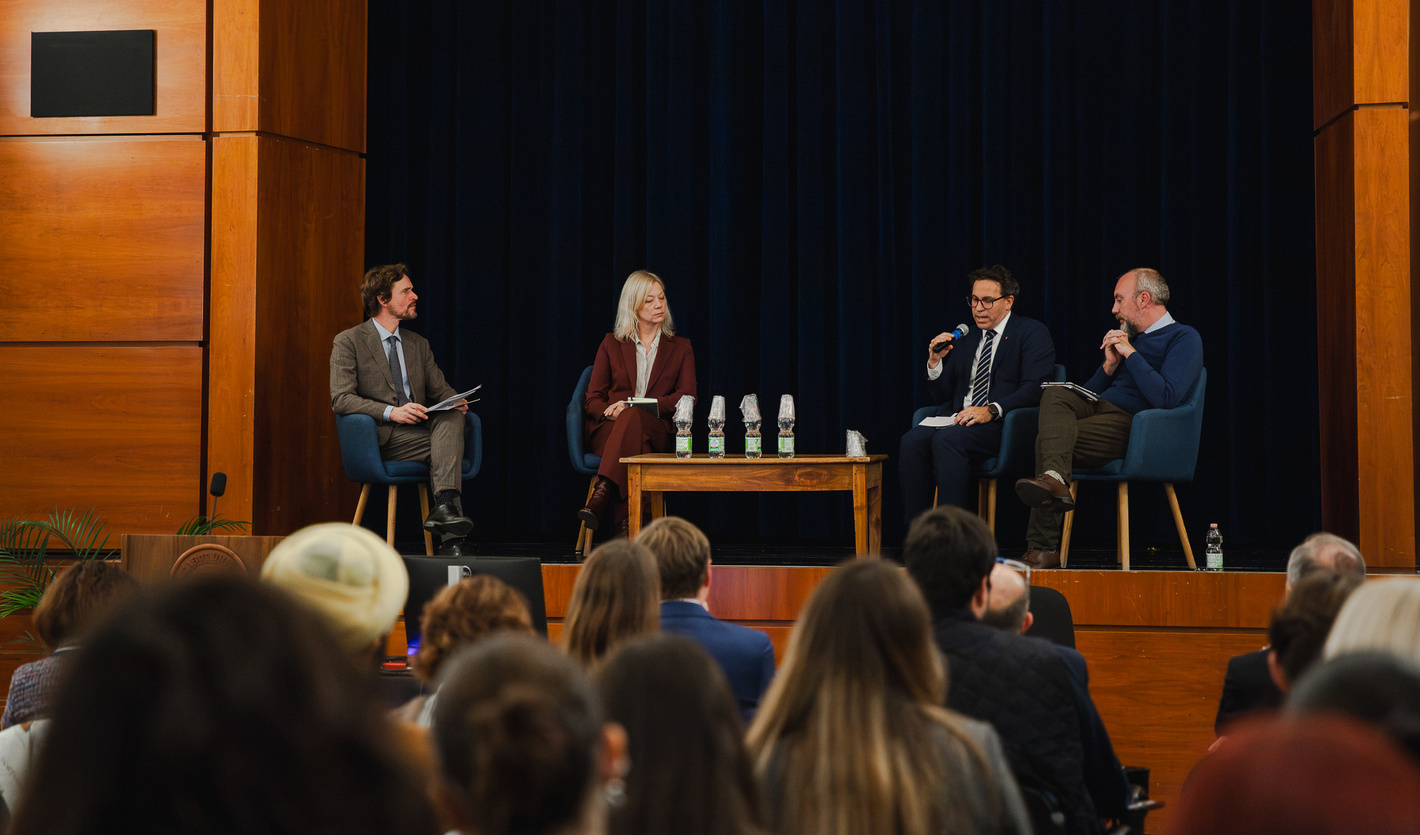
Lapenta joined Minister Babu and international experts for the panel “AI, Cloud Capitalism & the New World Order,” moderated by politician Supriya Shrinate.
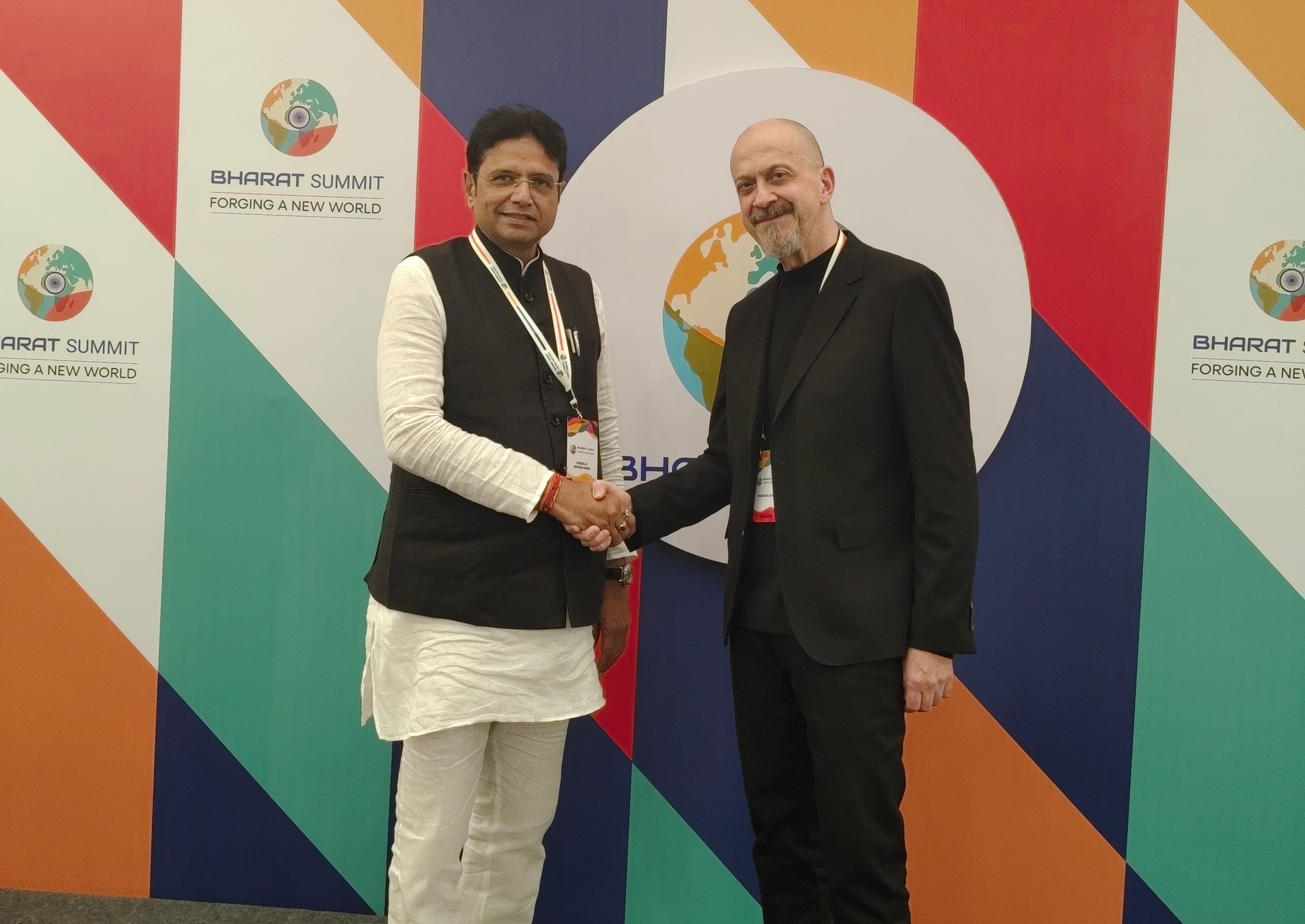
Duddilla Sridhar Babu and Francesco Lapenta
The discussion examined the growing concentration of technological and economic power, the role of cloud infrastructure and AI in contemporary societies, and the implications for national sovereignty, economic development and international governance.
In his speech, Lapenta challenged the tendency to understand AI primarily through its technological components and capabilities. Drawing on complexity theory, he examined how AI is becoming increasingly integrated into independently developed systems, including financial markets, energy networks, satellite infrastructure, industrial production and public institutions.
As these systems become more interconnected, their interactions generate new forms of dependency, vulnerability, and concentrated power that cannot be adequately understood by examining individual technologies in isolation.
His contribution emphasized the need to move beyond questions of technological performance towards the governance of interconnected infrastructures, including who controls them, how their benefits are distributed, and what new responsibilities emerge for public institutions.
The Future of Media and Information Democracy
Lapenta also participated in the panel “The Future of Media,” alongside Sangeeta Barooah Pisharoty, President of the Press Club of India; Leonard Novy, Director of the Institute for Media and Communications in Germany; and Frederico Assis, Special Envoy for Information Integrity at COP30. The discussion was moderated by Pawan Khera, Member of Parliament for the Indian National Congress.
The panel addressed the transformation of journalism, freedom of expression, digital platforms, political communication, and the growing influence of AI-generated information.
Lapenta proposed approaching these developments through the broader concept of information democracy, distinguishing the institutional protection of journalism from the conditions necessary for citizens to access information, evaluate competing claims, and exercise independent political judgement.
His analysis placed contemporary technological changes within their historical context, noting that political interference, concentrated media ownership and restrictions on expression preceded the emergence of social media and AI. He also highlighted the continuing importance of television and traditional media across generations and societies, challenging the assumption that the transition to digital information systems is occurring uniformly worldwide.
Lapenta focused on the distribution of informational power and the need for institutional pluralism, technological accountability, independent knowledge production, and democratic safeguards that protect freedom of expression without concentrating authority over political information.
International Dialogue and the Launch of the Our World Institute
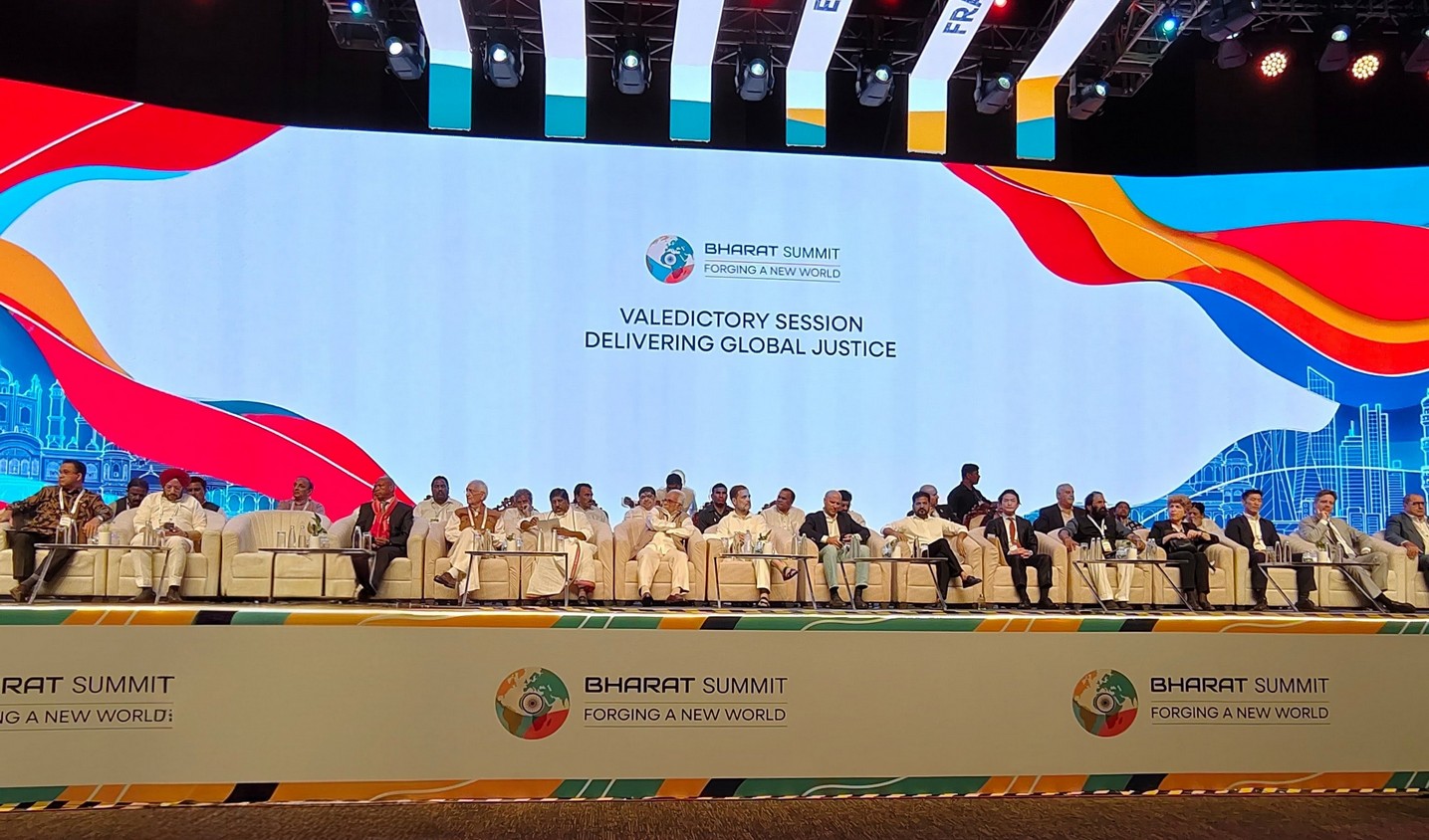
The summit concluded with a session addressed by Rahul Gandhi and international political representatives, alongside the announcement of the Our World Institute, conceived as an international policy research and cooperation initiative based in Hyderabad, India.
The initiative was presented as a way to sustain dialogue and collaboration on global policy challenges beyond the summit.
Through its research, conferences, and international collaborations, the IFIS contributes to JCU's engagement in global discussions on technological transformation, political accountability, and international governance. Participation in the Bharat Summit further extended these activities, bringing IFIS's research perspectives into dialogue with senior policymakers, academic experts, and institutional representatives from different regions of the world.