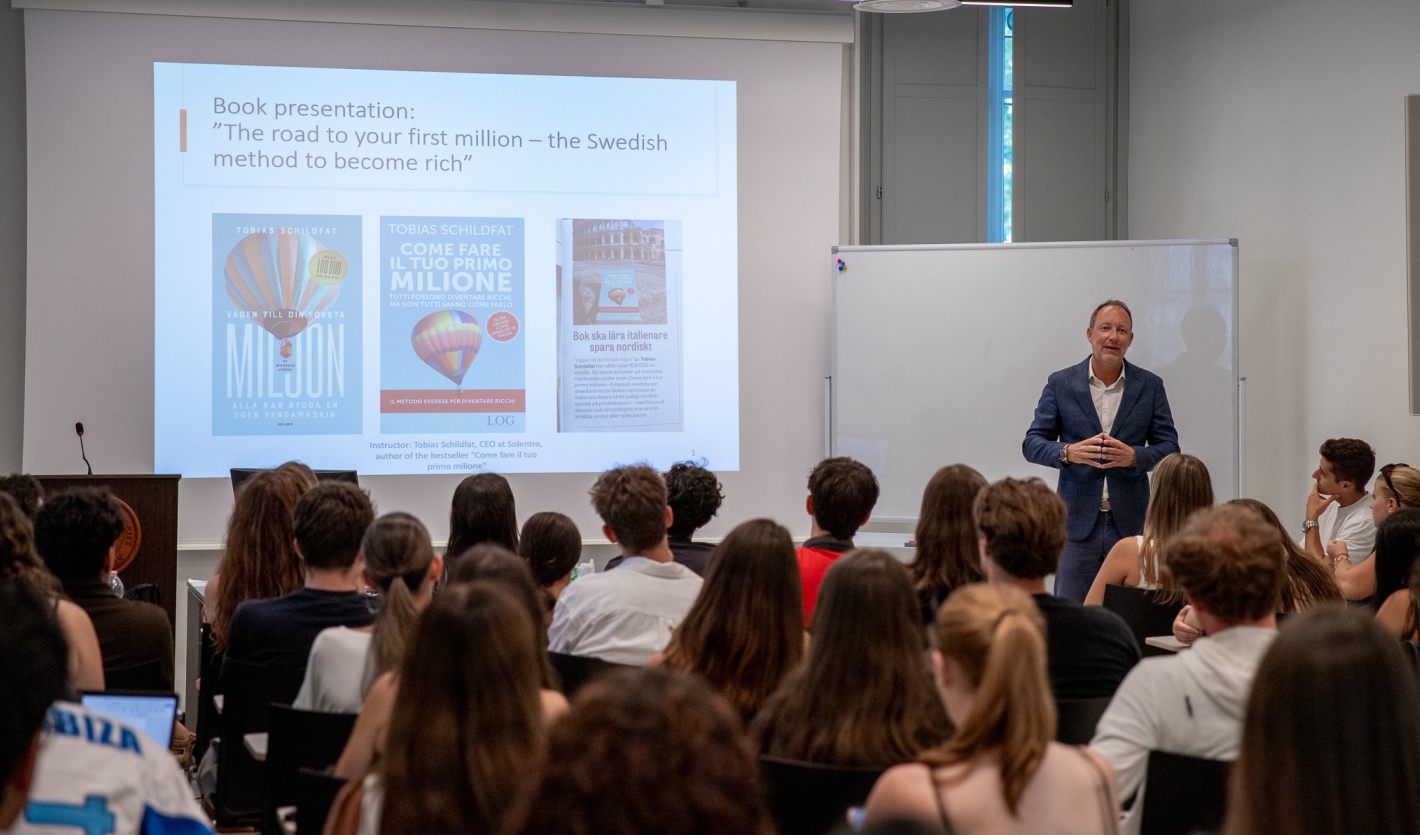
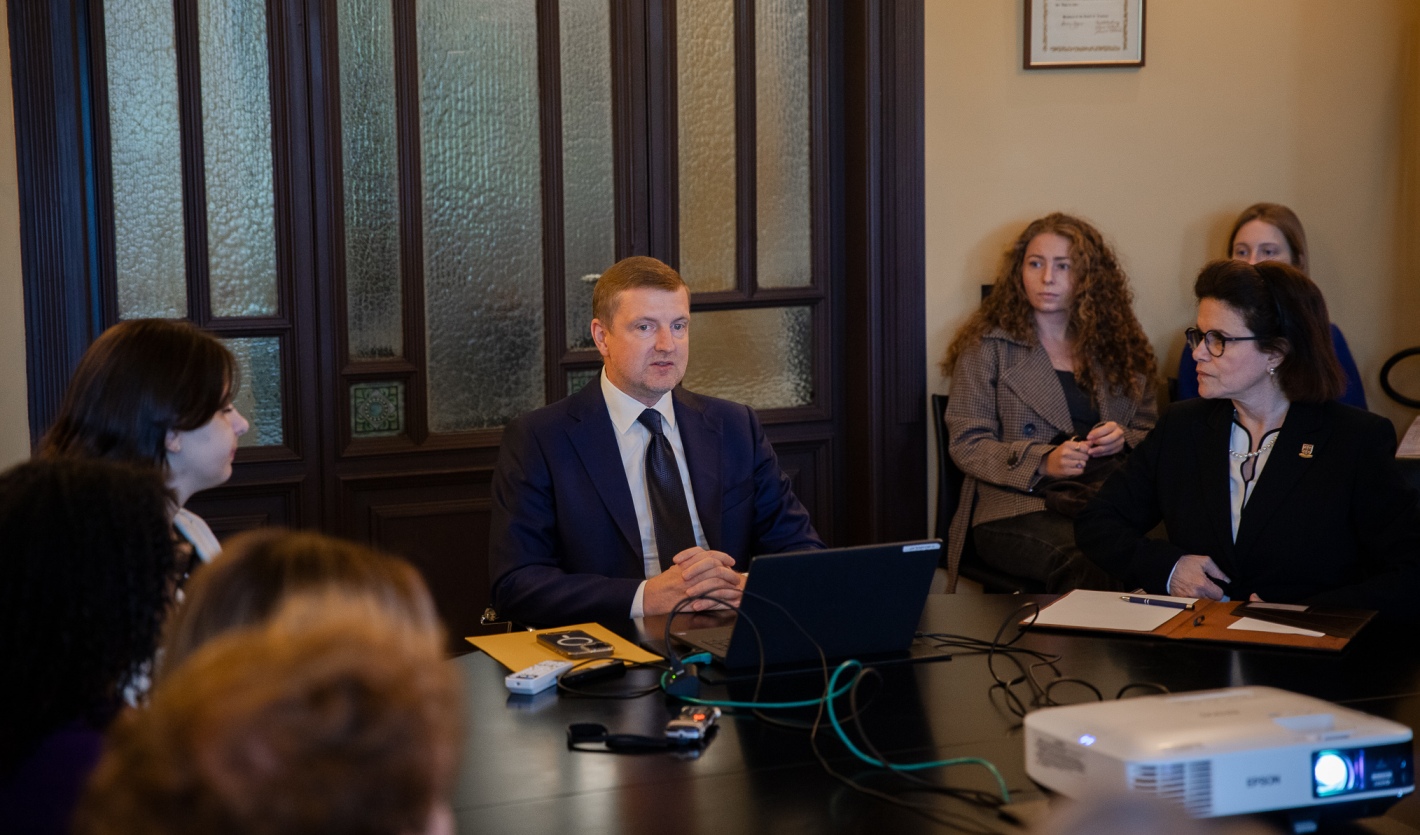
On September 9, 2026, Business Administration Professor Tobias Schildfat spoke to JCU students about his journey toward financial independence at an event dedicated to the latest Italian translation of his book The Road to Your First Million (Bokförlaget Polaris, 2024). The presentation introduced Schildfat’s approach to building wealth through saving, long-term investing, and the power of compound growth. Rather than presenting a traditional academic lecture, he shared personal experiences, practical lessons, and financial strategies that could benefit anyone.
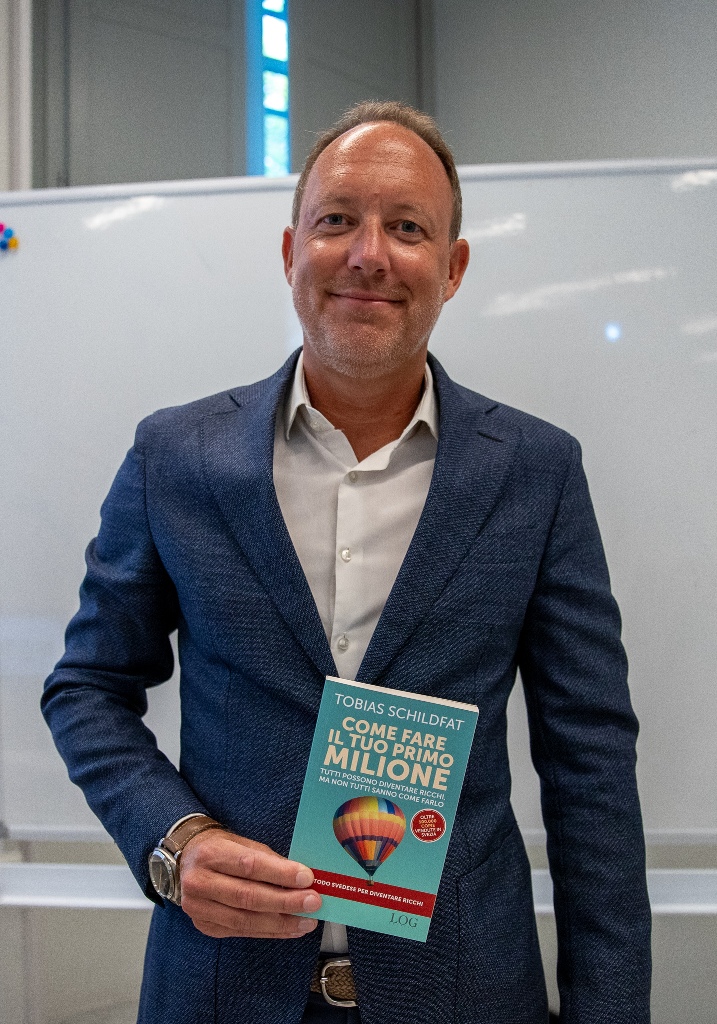
The book was originally published in Schildfat’s native Sweden in 2010 and quickly became a bestseller, remaining at the top of the country’s non-fiction lists for more than a decade. The Italian edition was released in 2026, Come fare il tuo primo milione (How to Make Your First Million) by Edizioni Guerini.
Professor Tobias Schildfat
First Step into Financial Independence
Schildfat’s interest in personal finance began in his youth. As a teenager, he worked a summer job at an industrial bakery. Although the job taught him discipline and the value of earning money, it also gave him time to reflect on his future. He realized that he wanted to obtain an academic degree and find a way to gain greater freedom through financial independence.
A turning point came when his grandparents gave him two shares in an investment company. This gift introduced him to the idea of owning part of a traded company and allowing money invested to generate additional income. He learned that investment companies own shares in other businesses, offering investors exposure to a diversified portfolio rather than relying on just one company.
The following spring, Schildfat received his first dividend—a payment representing a share of the company’s profits. He then used some of the money he had saved from his summer job to purchase more shares. As the company continued to perform well and increased its dividend payments, he began to recognize the potential of investing over time. This early experience became the foundation for his later work as an author and financial educator.
Principles of Financial Freedom
The presentation focused on the importance of creating a surplus: money left over after covering everyday expenses. Schildfat explained that people do not need to begin with large sums to start investing. He also emphasized that investing should not mean sacrificing everything that makes life enjoyable. He encouraged the audience to find a balance between spending money and setting some aside for the future.
“The most important thing is health, love, and friendship.” This reminder established an important principle: financial success should support a fulfilling life, not replace it. Schildfat’s goal in writing the book was not simply to encourage people to accumulate money, but to help them gain the freedom to make choices about their careers, time, and priorities.
Another major theme was compound interest, which allows returns on investments to generate further returns. Schildfat described time and interest as two powerful allies. He explained that growth may appear insignificant in the beginning, but consistent saving and investing can produce a snowball effect over many years.
Schildfat also discussed the difference between saving money in a bank account and investing in the stock market. He recommended that beginners first establish a secure cash reserve, ideally in an account that pays interest. This reserve provides protection if an unexpected expense arises or if the stock market declines at the wrong moment. Only after building a suitable financial cushion, he suggested, should individuals consider gradually investing money they can afford to leave untouched for the long term.
One part of the presentation was dedicated to investment companies. These businesses invest in other companies, potentially providing diversification and professional management. Schildfat explained that this approach appealed to him because it allows investors to participate in the market without constantly monitoring individual stocks or making short-term trades.
Financially Resilient
He also warned attendees not to confuse a high salary with financial independence. Drawing on his experience as a stockbroker, he described wealthy professionals whose substantial incomes were consumed by expensive lifestyles and debt. By contrast, he presented a more financially resilient household: one with manageable liabilities, controlled spending, a surplus, and assets that could generate additional income.
To conclude, Schildfat encouraged the audience to begin with small, manageable steps. He suggested reviewing monthly expenses to identify those that brought little satisfaction, then redirecting some of that money toward savings or investments. He also reminded students not to compare their progress with others, since financial independence is a personal journey that develops at different speeds.
Ultimately, Schildfat’s presentation was about developing financial awareness, using time wisely, and creating options for the future. His message was straightforward: start with what you have, build a surplus, invest carefully, and allow patience to work in your favor.
Professor Schildfat has been Lecturer in Marketing at John Cabot University since 2024. He is currently teaching courses on Understanding and Managing Personal Finance and Retailing Applied to the Fashion Industry.