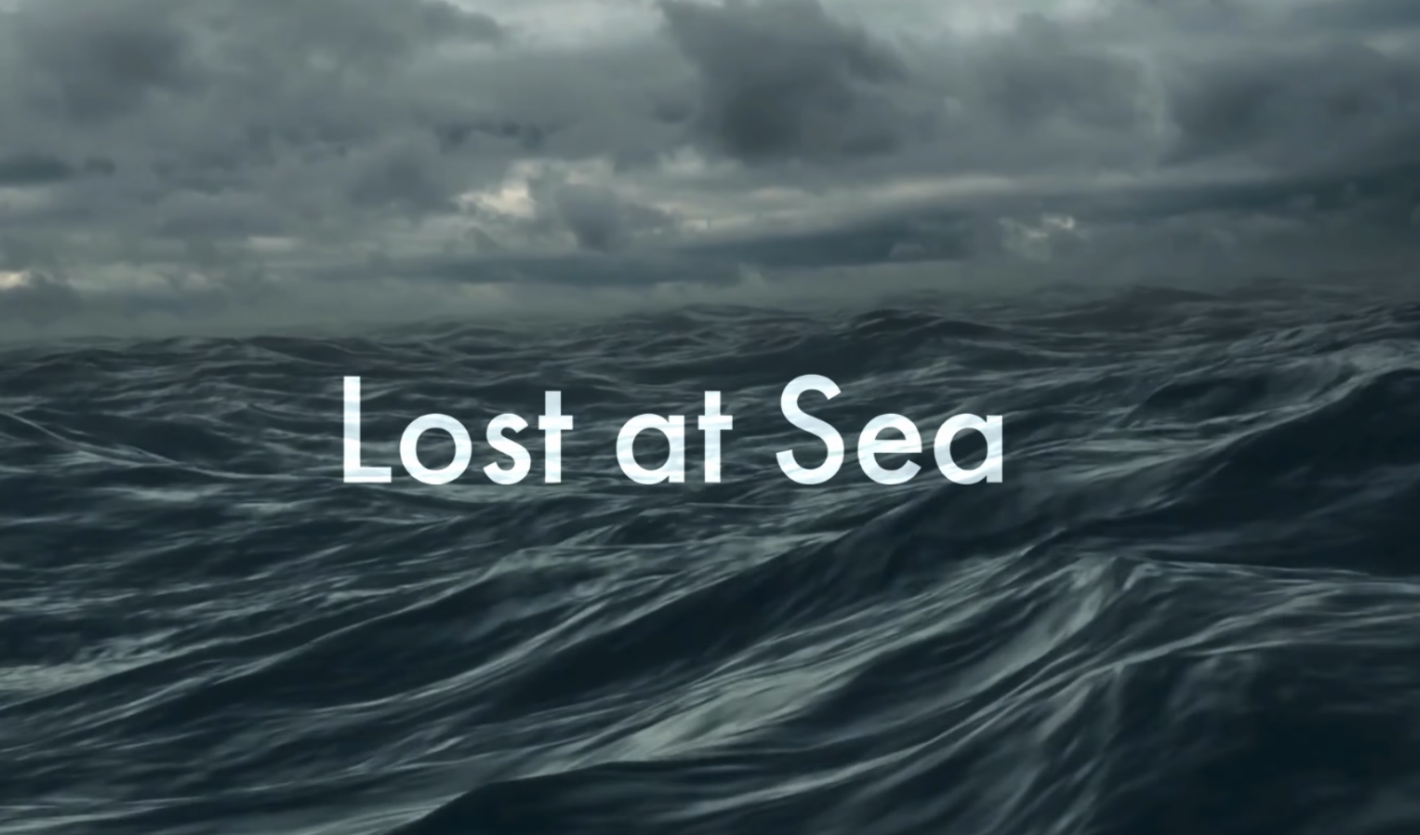
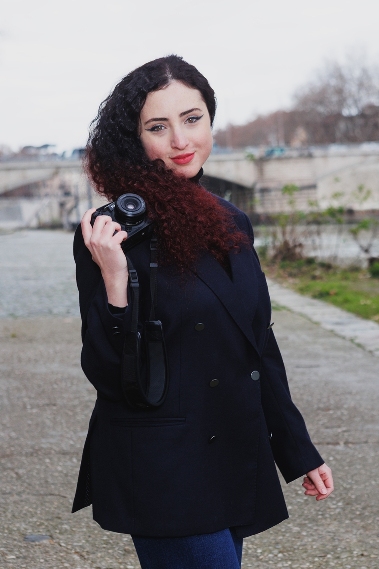
Thanks to the Dean of Academic Affairs' Fund for Student Academic Activities, Aurora Caruso was recently invited to participate in a masterclass in Milan focused on artificial intelligence (AI) and virtual reality (VR). During the course, Aurora, who studies Communications and Art & Design, presented her VR project, “Lost at Sea,” a 10-minute immersive experience inspired by the humanitarian migration crisis. Aurora developed the project during her semester abroad at The New School in New York.
How did you develop the idea for “Lost at Sea”? I started writing the script for this project a few years ago. Then, last year, when I studied abroad at to The New School in New York, my project finally took shape.
The inspiration came from my own background. My parents are from Sicily, which is one of the Italian regions most impacted by the humanitarian migration crisis. The story is about a mother whose daughter drowned during the migration journey from Ethiopia to Sicily. I created the VR experience so that the viewer takes on the role of the mother, who, 20 years in the future, enters an AI-generated memory simulation hoping to relive the memory of her child. At some point, the simulation begins to glitch, and the viewer must decide whether to remain in the digital world searching for the daughter’s memories or return to reality.
Aurora Caruso
How did your semester abroad in New York influence your project? During my time at The New School, I took a film screenwriting class and an immersive storytelling class. Comparing the two made me realize that the story I wanted to tell would be better suited to the VR format. I learned that, unlike traditional films, immersive experiences do not require long, detailed scripts. Instead, they can start with a visual concept, such as a storyboard. The key is to understand what interactions will trigger the next part of the experience and allow the viewer to move forward. I could also choose this format because, compared to Rome, I found many people in New York working with VR.
How is AI used in your project? Do you think that AI is going to influence art going forward? AI is an important part of this project because of the narrative. The main character goes to a studio, where she uses an AI-generated memory simulation. I used AI to create the audio for the AI narrator in the story.
I think AI will definitely influence art. Computers and phones already have an impact on our lives, and AI is just another tool that will influence the way we think, behave, and act. And because AI impacts people, it will impact art too. I don't think it will be a negative change. Technology can be scary, but it really depends on how it’s being used, who's developing and selling it, and why it was made.
You recently completed an XR Storytelling and Generative AI Masterclass in Milan. What did you learn there? The masterclass was very intensive, with 10 hours of classes every day for a week. I participated in workshops on generative AI, augmented reality, and key components of VR, such as immersive audio. We had access to specialized equipment and technologies, as well as interactive VR games.
For me, the most important part of the masterclass was learning how to position a project in the market. My goal in attending the course was to learn more about protecting copyright and how to commercialize my project. At the end of the course, we had to pitch our project idea to a panel of experts and museum directors. I learned about many ways in which I could improve my project.
Do you think you will keep working on new VR projects in the future, or will you go back to traditional filmmaking? I think some stories are meant for VR, and some are meant for traditional films. For sure, there is a way, as a creator, to move between different film formats and play with them. For example, Alejandro González Iñárritu is a well-known film director, but he also made a VR project called “CARNE y ARENA” about Latin American migration.
I like that in my project I was able to give the viewer the freedom to choose the ending of the story. Compared to traditional filmmaking, VR offers more possibilities for making an impact, as you are not just watching the story but experiencing it from the perspective of the main character.
More information about “Lost at Sea” is available on the project’s website.