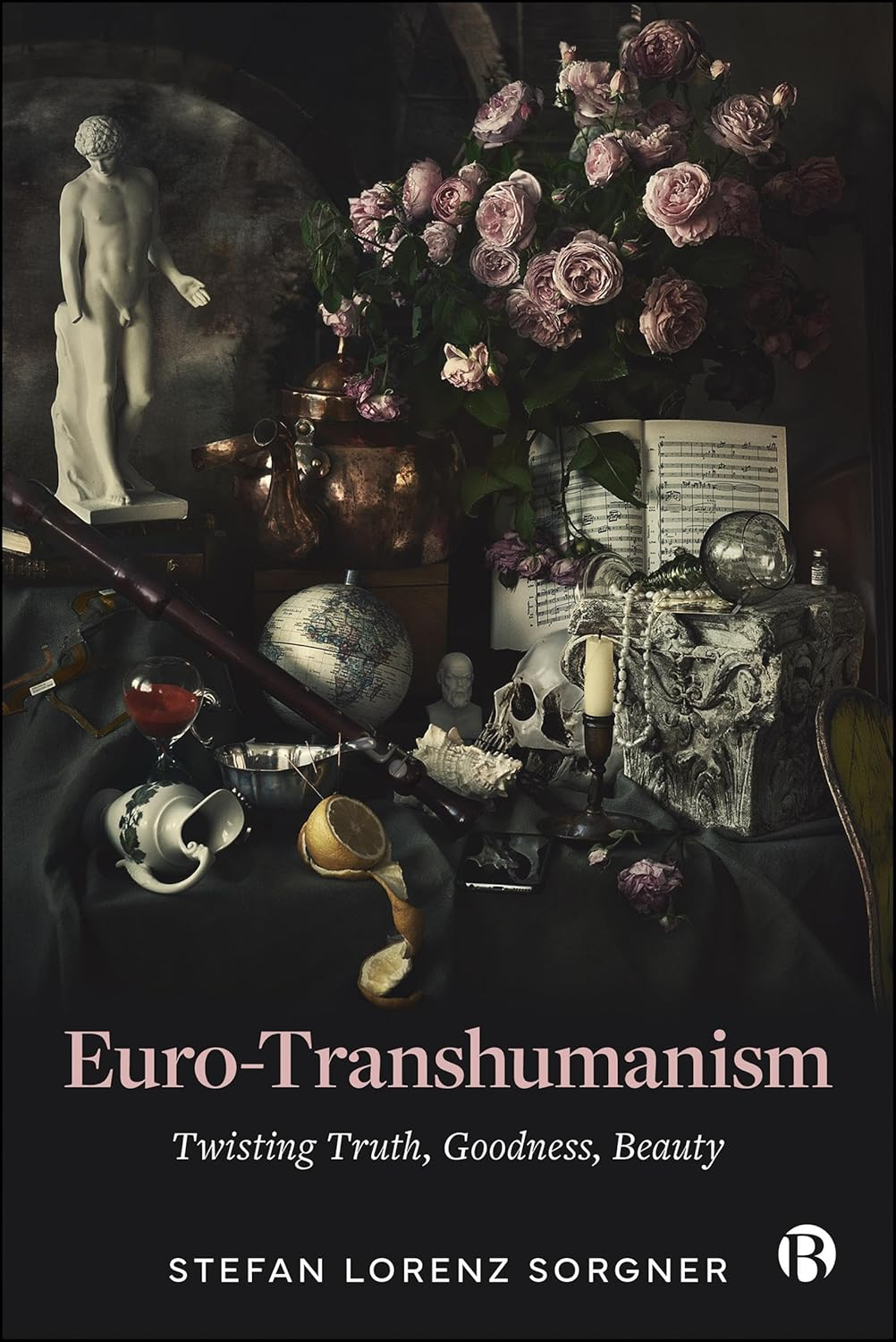
John Cabot University is pleased to announce the publication of Euro-Transhumanism (Bristol University Press, 2026), the new monograph by JCU’s Professor Stefan Lorenz Sorgner, an internationally recognized philosopher whose work has helped shape contemporary debates on transhumanism, posthumanism, and emerging technologies.
Book cover for Euro-Transhumanism
In Euro-Transhumanism, Sorgner offers a timely examination of some of the most challenging questions facing contemporary societies. As artificial intelligence, biotechnology, and digital technologies continue to transform human life, the book provides a distinctly European philosophical framework for navigating the opportunities, risks, and ethical dilemmas of technological progress.
Euro-Transhumanism engages directly with many of today's most pressing and controversial issues. Sorgner explores the implications of large-scale data collection and digital surveillance, asking how individual freedom can be protected in increasingly data-driven societies. He addresses the rapidly evolving relationship between creativity and technology, examining whether artificial intelligence can produce art and that this means for our understanding of artistic value and human expression.
The book also tackles the phenomenon of cancel culture and the growing challenges it poses for open dialogue, intellectual diversity, and democratic discourse. In addition, Sorgner investigates the future of education in an age of emerging technologies, considering how artificial intelligence and other innovations may reshape teaching, learning, and the skills required for human flourishing in the decades ahead.
Drawing on European intellectual traditions while engaging with cutting-edge technological developments, Sorgner develops a vision of transhumanism that emphasizes pluralism, personal autonomy, and human flourishing. His analysis challenges simplistic narratives of technological optimism and pessimism alike, offering readers a nuanced and compelling alternative.
Euro-Transhumanism is essential reading for anyone seeking to understand how technological change is transforming culture, politics, education, and everyday life. Combining philosophical depth with practical relevance, the book invites readers to engage with the defining questions of the 21st century, and to reconsider what it means to be human in a rapidly changing world.
The book is now available for purchase through major academic and commercial booksellers.