Professor Matteo Caravani recently published the article “Social assistance or capital protection? Accumulation by (un)certainty in the era of global food crises” in The Journal of Peasant Studies (JPS), a leading journal in the field of rural politics and development.
Another global food crisis is unfolding, and cash transfers are often presented as the obvious solution. In the article, Professor Caravani investigates what happens when large amounts of cash flow into regions that depend heavily on imported food and are shaped by an increasingly concentrated corporate global food system.
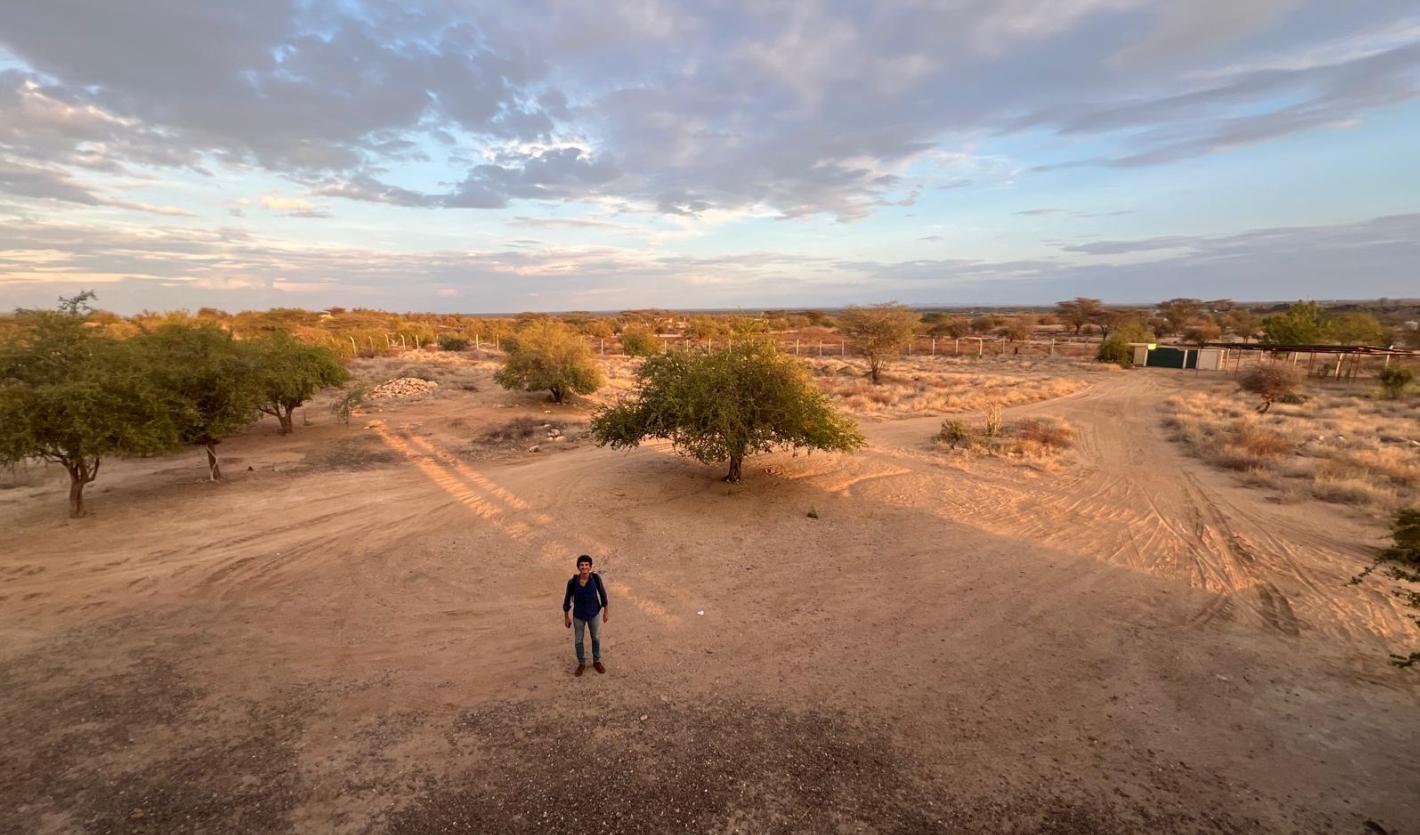
Professor Caravani, who conducted research for the article in the Turkana region of Kenya, argues that cash transfer schemes do more than support poor households. They also act as a form of “de-risking” for international capital, reducing uncertainty for market actors while reshaping the relationship between states and markets.
Cash transfers can strengthen the bargaining power of poor households by helping them buy food and agricultural inputs, even during periods of inflation. In some cases, they save lives and provide temporary protection for the poorest. Yet they do not break the chronic cycles of hunger that persist within the corporate food regime. Instead, in crisis contexts, cash transfers can help safeguard the circulation of international capital through food markets shaped by financialization and corporate concentration.
Professor Caravani describes this dynamic as “accumulation by (un)certainty:” cash transfers reduce uncertainty for corporations and investors while creating new opportunities for accumulation within the global food system.
“This article is a detour into the political economy of uncertainty. My broader argument is that the agrarian question and the social question must be addressed together, rather than treated as separate policy areas. In an increasingly uncertain and precarious world, we need to ask: who produces this uncertainty, and who benefits from it?” explains Professor Caravani.
Matteo Caravani teaches development and environmental economics at JCU. He is a political economist with a PhD in Development Studies from the University of Sussex (Institute of Development Studies) and over 15 years of experience in international development, including extensive work with the United Nations World Food Programme (WFP). He currently lectures in Development and Environmental Economics at John Cabot University, International Development at Roma Tre University, conducts empirical research on local environmental politics at Tufts University as part of an international research team in the Horn of Africa, and advises WFP in the Caribbean on adaptive social protection. His work focuses on the political economy of development, social protection, food systems, and environmental change. It is grounded in long-term empirical research, particularly in Africa, where he lived for more than a decade and conducted extensive fieldwork, as well as in a sustained commitment to teaching and student supervision across diverse institutional settings.