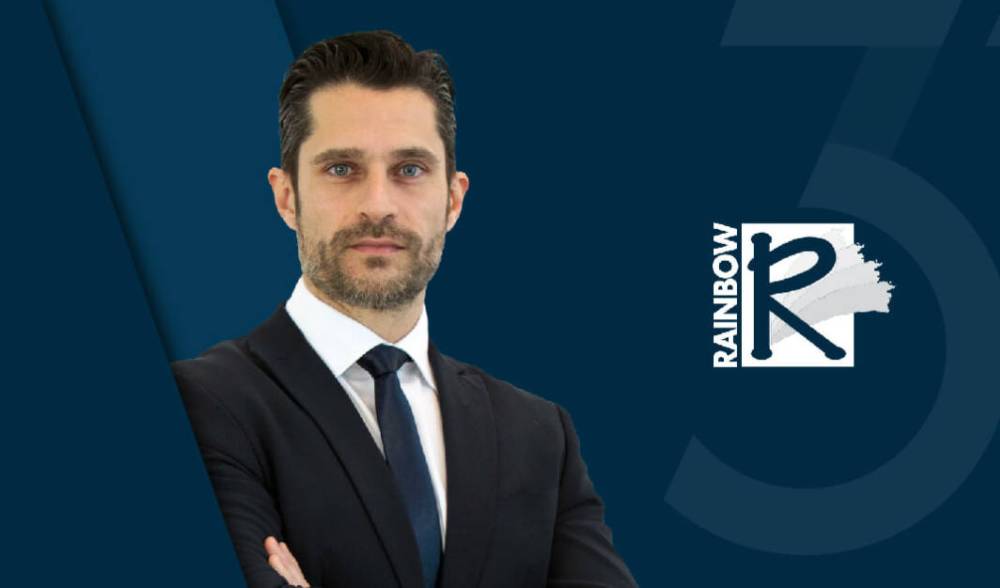
On December 3, 2025, John Cabot University welcomed Riccardo Tiranti, Chief Financial Officer and Board Member of Rainbow Group S.p.A., one of Italy's top entertainment firms. Tiranti’s lecture provided JCU's Economics students with valuable information regarding the history of the CFO role and the significance of such a position in firms.
A case study: Rainbow Group
In his talk, Tiranti introduced his company, Rainbow Group, an Italian corporation known for its success with the animated series Winx Club. Rainbow Group has grown significantly in the last decade, establishing production facilities around Canada. It has worked with some of the greatest names in the worldwide entertainment sector, including Disney.
Currently, Rainbow Group's production divisions are grouped into three key categories. The first is Kids' Intellectual Properties, which focuses on the creation of intellectual property for children. The second area is Live Action, which deals with films and television series starring real-life actors that are frequently broadcast via internet streaming platforms. Lastly, the provides high-quality animation services to production firms around the world. Along with its production divisions, the corporation founded the Rainbow Academy, a training institution that teaches artists and professionals about animation and digital art.
Tiranti then discussed one of Rainbow Group's most recent success, the feature film The Tearsmith (2024), which rapidly became one of Netflix's top-ranked titles. The film enhanced the company's international visibility, particularly in the United States, and showed Rainbow Group’s ability to compete effectively in global markets.
The role of the CFO today
The role of Rainbow Group’s CFO is complicated by the company’s engagement with global markets. Tiranti said, “Dealing with global clients means dealing with different legal systems and cultural backgrounds.” In these kinds of situations, the CFO is critical in the areas of cost and risk management, as well as dealing with multiple jurisdictions.
Tiranti’s presentation highlighted one of the unique features of the entertainment industry, which is the project-based workforce that it employs. This is characterized by a high turnover of employees who are given contracts for a given time determined by the length of a specific production cycle. This pool of employees is more concerned with the quality of their work rather than the security of their employment.
In concluding the lecture, Tiranti talked about the new role of CFOs today. The CFO not only deals with accounting and finance issues but also matters related to human resources, information technology, and law. This is the reason that many CEOs start as CFOs of their companies. The current role of the CFO is that of a strategic leader who is able to integrate financial, human resources, and new approaches to ensure growth in this dynamic industry.