

BA, Université Laval, Québec City, 1984
MA, Carleton University, Ottawa, 1986
PhD, Northwestern University, Illinois, 1992
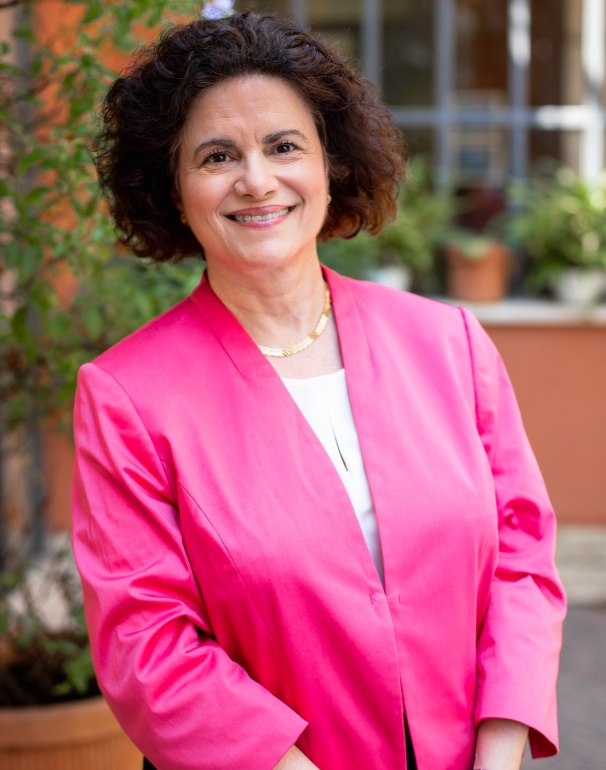
Born and raised in Montreal, Canada, Antonia Maioni is JCU’s seventh President and the first woman to lead John Cabot University. She brings to the presidency a distinguished record of academic leadership, international engagement, and a deep commitment to student-centered education.
Her academic journey includes an undergraduate degree from Université Laval in Quebec City, an MA in international affairs from Carleton University in Ottawa, and a PhD in political science from Northwestern University in Evanston, Illinois. She has held visiting and research appointments internationally, including as the William Lyon Mackenzie King Professor at Harvard University’s Weatherhead Center for International Affairs and as a Fellow at Johns Hopkins SAIS in Bologna. Dr. Maioni speaks English, French, and Italian, and is a citizen of both Canada and Italy.
President Maioni joined JCU following a long and accomplished career at McGill University, where she served as Dean of the Faculty of Arts from 2016 to 2021 — the first woman to lead the university’s largest faculty, home to the social sciences, humanities, and liberal arts. During her tenure, she oversaw significant academic renewal, including the launch of the Max Bell School of Public Policy and the expansion of international programs, notably in Italy through partnerships with Sapienza University of Rome and the Johns Hopkins School of Advanced International Studies (SAIS) in Bologna. She also previously served as Associate Vice-Principal for Research and International Relations and as Director of the McGill Institute for the Study of Canada.
A scholar of political science and public policy, President Maioni has built an international reputation for her research in comparative health policy and politics. Over the course of her career, she has exemplified the role of the public intellectual, bringing scholarly insight into broader public conversations and helping to make complex issues accessible and relevant beyond academia in the service of democratic life.